


Pull Out Leaf Dining Table
A pull out leaf dining table brings generous proportions and clever engineering to your dining room, offering flexible seating for family gatherings.
Pull Out Leaf Dining Table
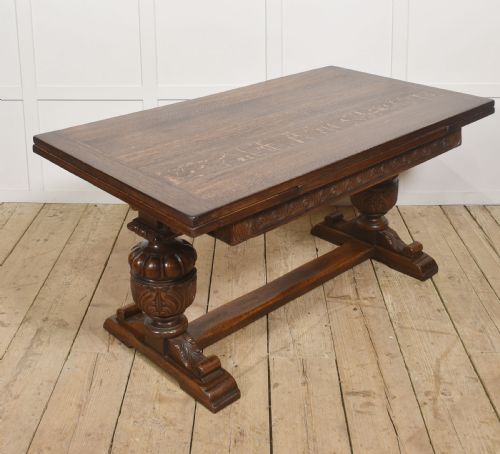
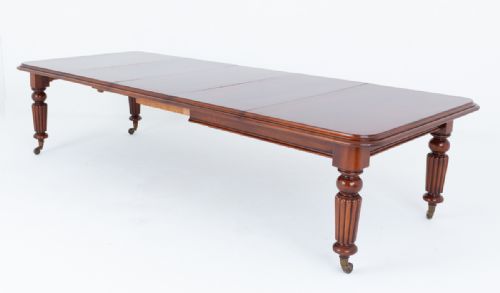
A pull out leaf dining table provides an adaptable surface that expands to accommodate extra guests when needed. These tables appear across multiple periods, including the Regency, William IV, and Victorian eras.
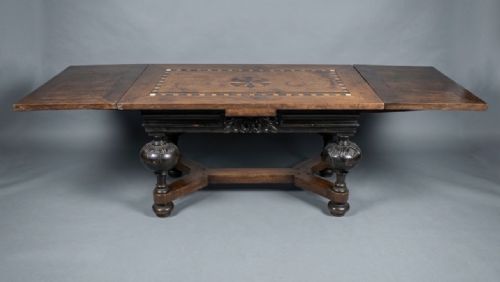
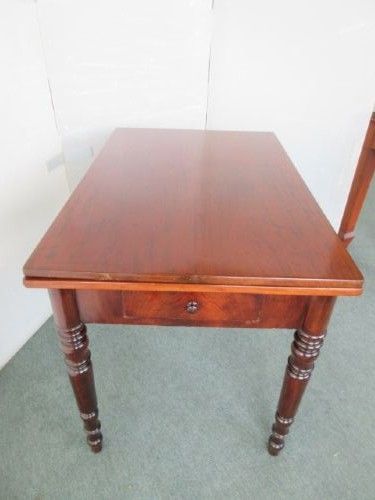
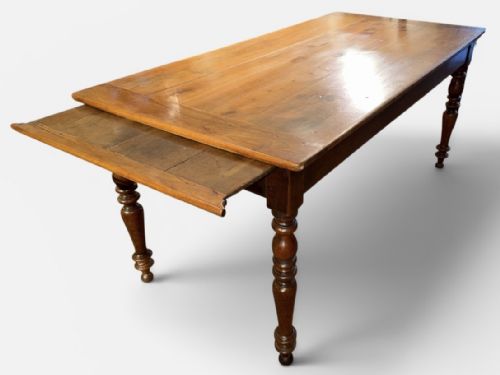
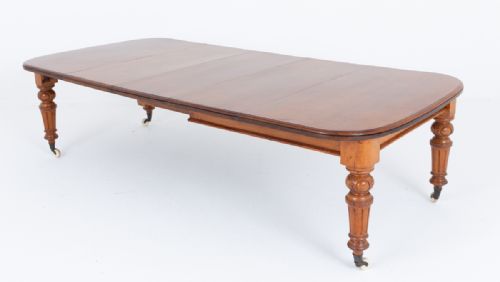
The versions met most frequently on this page are constructed from mahogany or oak, featuring draw-leaf mechanisms or drop-in extra leaves. They range from compact farmhouse pieces to grand twelve-foot examples suitable for large dining spaces.
How they were made
Timber selection dictated the character of these tables, with solid mahogany, blonde oak, pollard oak, and walnut providing durable surfaces. Cabinetmakers utilised wood inlay and brass fittings to complement the primary timbers.
Extending mechanisms relied on smooth wooden runners or draw-leaf frames concealed beneath the top boards. Master workshops employed turned supports, carved pedestals, and quadrapartite bases to stabilise the heavier expanding tops.
Some nineteenth-century tables extend up to fourteen feet, practically demanding a small expedition just to pass the salt.
What varies in quality
The refinement of the timber and the precision of the extending mechanism dictate the tier of a piece. Finer examples display carefully matched grain patterns across the main top and the additional leaves.
Structural integrity depends on the robustness of the underframe and the smoothness of the pull-out action. Superior craftsmanship ensures the leaves align flush with the primary surface without sagging.
Gillows
The Pull Out Leaf Dining Table Glossary
- Draw leaf
- A table design where extension leaves are stored underneath the main top and pulled out from the ends when required. This mechanism allows for quick expansion without storing separate loose boards.
- Quadrapartite base
- A heavy four-way pedestal support common on nineteenth-century extending tables. It provides vital stability to the floor when the table is pulled out to its full length.
- Refectory table
- A long narrow dining table traditionally used for communal meals. Examples with pull-out extensions combine rustic farmhouse utility with adaptable modern seating.
- Pollard oak
- Oak timber taken from pollarded trees, noted for its dense and highly figured cluster grain. Cabinetmakers utilised this material on high-status Victorian dining tables.
- Fruitwood
- Dense secondary timber used for provincial furniture and occasional inlay work. It offers a smooth texture and warm tone.
Pull Out Leaf Dining Table: Frequently Asked Questions
How do pull out leaves work?
Pull out leaves typically slide on concealed wooden runners mounted beneath the main table top. Users pull the ends outward to reveal and drop the extra sections into place.
Some period examples utilise separate loose leaves supported by a central runner system. Both methods allow the table length to adjust according to the number of guests.
Where should I place an extending table?
Position your table centrally in the dining room with adequate clearance around all sides. This ensures the leaves can be pulled out fully without hitting walls or sideboards.
Allow sufficient space for chairs to be pulled out comfortably when the table is at its maximum length.
How do I care for mahogany tables?
Dust mahogany surfaces regularly with a soft, dry cloth to prevent grit accumulation. Apply a quality beeswax periodically to nourish the timber and maintain the lustre.
Keep the table away from direct sunlight and heat sources to prevent the wood from drying out or splitting.
How can I date my table?
Examine the timber species, leg turning style, and the construction of the extension mechanism. Regency and William IV tables often feature heavier mahogany pedestals and brass fittings.
Victorian and later nineteenth-century pieces frequently incorporate walnut or blonde oak alongside standard draw-leaf hardware.