



Project Wing Chair
A project wing chair offers the foundational framework of a classic fireside seat, inviting full customisation in fabric and finish.
Project Wing Chair
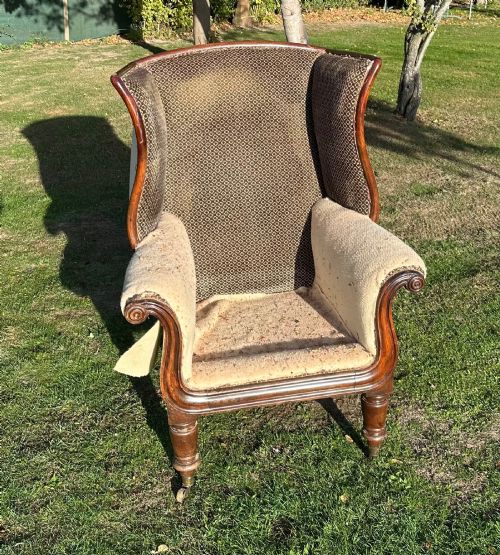
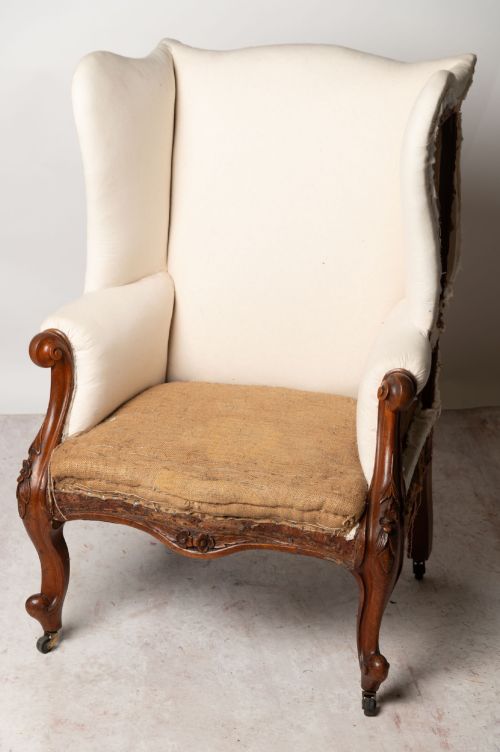
A project wing chair represents a traditional upholstered armchair in need of restoration, stripping, or re-upholstering by the new owner. These frames span multiple eras, including 18th Century walnut Queen Anne examples, Georgian Chippendale style mahogany pieces, Victorian incarnations, and later Edwardian variants.
The most common items encountered on this page are armchairs presented in bare materials such as hessian and calico, specifically prepared for a new layer of covering. Buyers often find pieces described for re-upholstery or listed at the calico stage, meaning the internal webbing and foundational stuffing are complete while the decorative top cloth remains unchosen.
How they were made
Internal upholstery techniques utilise traditional materials including horsehair, cotton, and hessian to build resilient padding within the wings and arms. Brass tacks and careful stitching secure these foundational layers before the outer textile is applied.
Project Wing Chair Retail Price Guide 2026
Typical asking prices for project wing chair among the pieces listed under this phrase on Sellingantiques today, from the lower quarter to the upper quarter. They describe what is for sale here now, not the wider market.
Current listings feature frames spanning from the 18th century through to the Edwardian period, utilising mahogany, walnut, and hardwood.
What varies in quality
The integrity of the underlying timber frame dictates the primary tier of craftsmanship, where untouched 18th century walnut or early mahogany structures command greater attention than later revival pieces. Finer framing exhibits precise joinery and well-proportioned wings designed to shield the sitter from draughts.
The completeness and historical accuracy of the internal stuffing influence the restoration potential of the armchair. Retaining original horsehair and sound webbing provides a superior baseline for conservation compared to modern synthetic replacements.
Howard And Sons
The Project Wing Chair Glossary
- Calico stage
- The intermediate phase of upholstery where a plain cotton cloth is tightly fitted over the stuffing before the final decorative fabric goes on. This stage exposes the fundamental lines of the chair.
- Wingback
- An armchair style featuring characteristic protective flaps or wings attached to the arm rests and framing the back. Originally designed to trap heat from a fireplace and block draughts.
- Hessian
- A coarse woven fabric, typically made from jute fibres, utilised as the sturdy base layer for supporting internal padding. It forms the unseen foundation beneath the outer textile.
- Horsehair
- Traditional stuffing material prized for its springiness and durability in antique upholstery. It offers firm support that maintains its shape over decades of use.
Project Wing Chair: Frequently Asked Questions
What does a project wing chair involve?
A project wing chair requires stripping, repairing, or recovering the upholstery using traditional methods and materials. Buyers purchase these frames to apply their own choice of fabric.
Most pieces arrive bare, in calico, or stripped back to the hessian and horsehair layers. This allows complete customisation of the final aesthetic.
How do I date a wing armchair?
Dating relies on examining the timber frame, leg style, and construction methods hidden beneath the upholstery. Walnut Queen Anne pieces and mahogany Chippendale styles display distinct period characteristics.
Later Victorian and Edwardian examples often feature heavier proportions or machine-assisted joinery. Consulting the underlying woodwork reveals the true era of manufacture.
Are these chairs comfortable to use?
Comfort depends entirely on the quality of the internal springing and stuffing restored within the frame. Traditional horsehair stuffing provides a firm and supportive sit once properly layered.
During restoration, the depth and angle of the seat can be adjusted to suit modern preferences. The high wings also offer exceptional head and neck support by the fire.
What fabrics suit a project chair?
Traditional heavy wovens, wools, and damasks suit period frames from the Georgian and Victorian eras. Selecting a textile with appropriate weight ensures the upholstery hangs and wears correctly.
Plain calico serves as the initial tight cover, upon which patterned or textured top cloths are layered. Matching the fabric scale to the size of the wings creates a balanced visual result.