

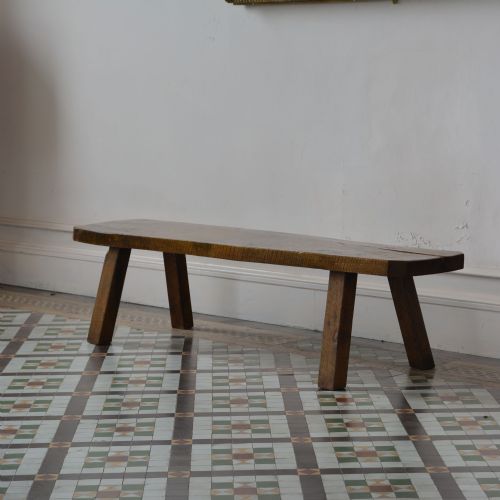
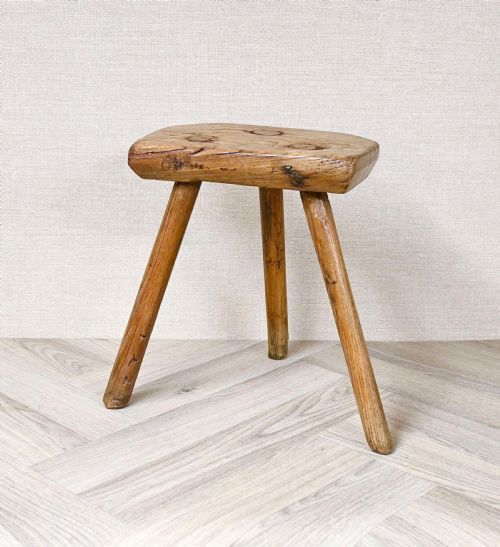


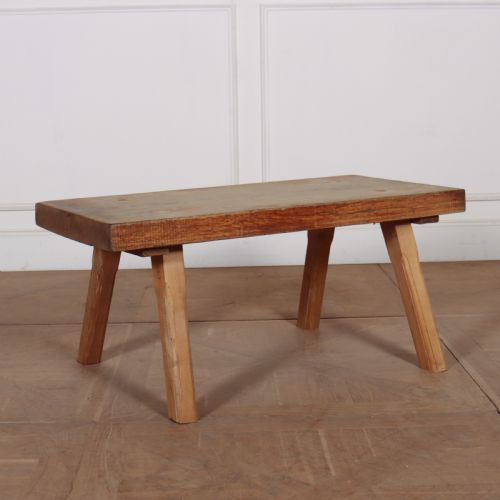

Primitive Low Stool
A primitive low stool brings honest, weathered character to a room, offering simple utility carved from solid timber by hands long gone.
Primitive Low Stool
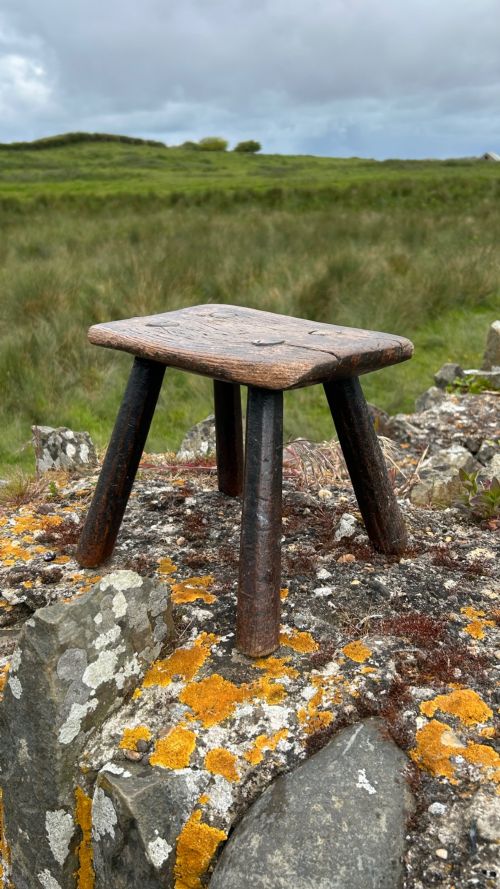
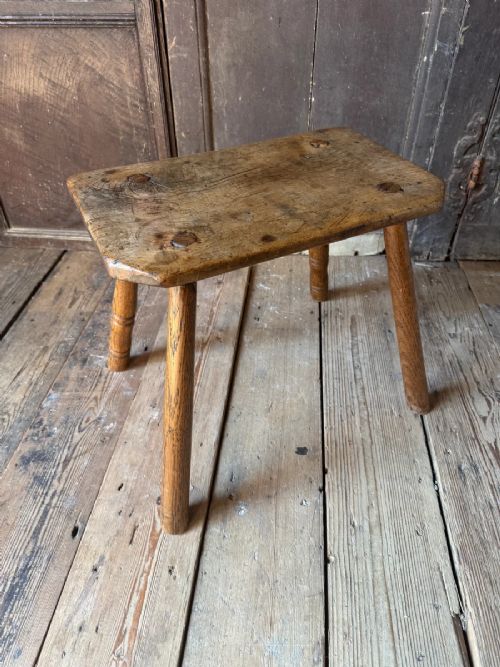
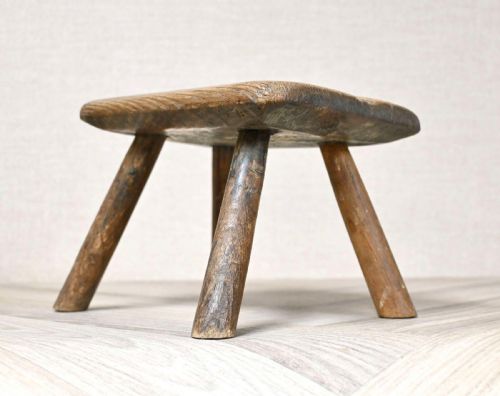
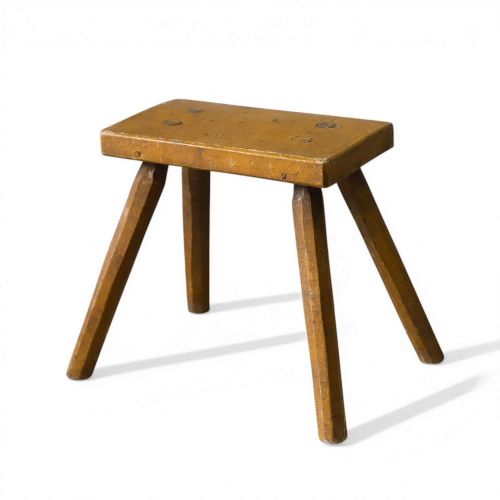
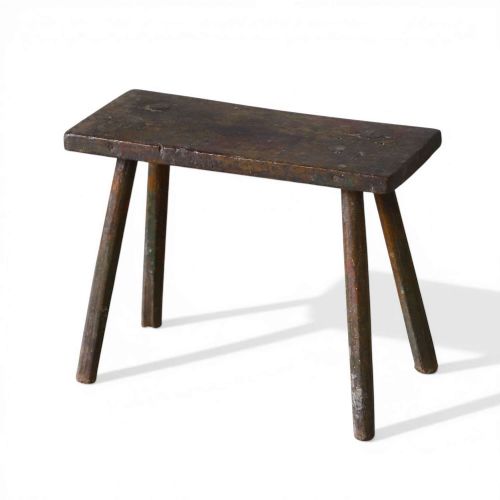
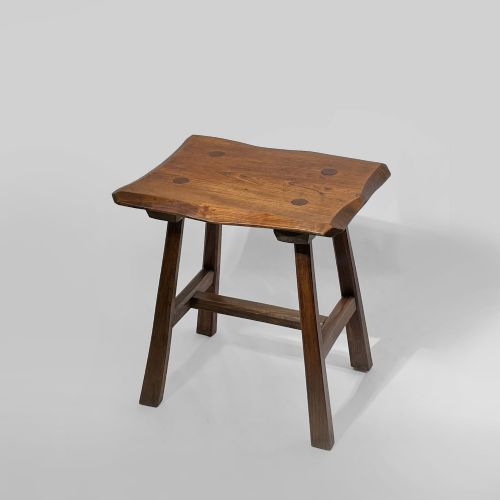
The versions most commonly met on this page include three-legged milking stools, low hearth benches and small rustic seats originating from various regions across Europe and beyond. Alongside traditional seating, related forms such as small occasional tables and low work benches appear within this rustic group.
Makers shaped these low forms from whatever local timber came to hand, resulting in robust everyday objects designed for heavy use. Their simple silhouettes reflect the practical needs of rural life rather than the fashionable tastes of city workshops.
How they were made
Craftsmen shaped these pieces using solid indigenous hardwoods and softwoods such as oak, elm, ash, sycamore, pine and mixed timber. Legs were typically turned or shaved green and wedged directly into bored seats, creating a sturdy pegged construction.
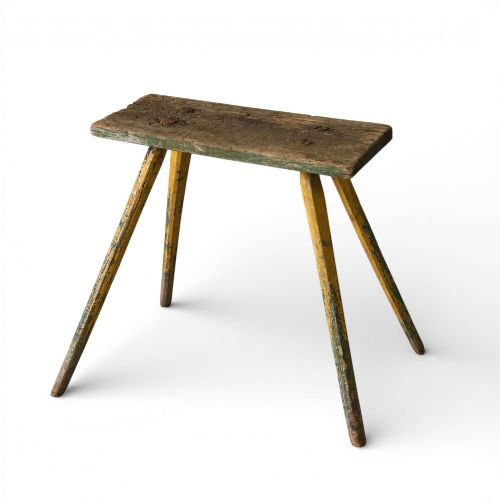
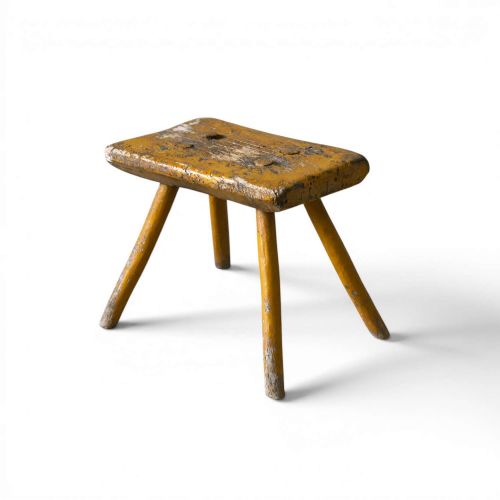
Many surviving examples retain layers of original paintwork, including ochre, yellow and green pigments applied to protect the wood and brighten dark interiors. Surfaces show the straightforward tool marks of drawknives, adzes and spoon augers rather than factory finishing.
Primitive Low Stool Retail Price Guide 2026
Typical asking prices for primitive low stool among the pieces listed under this phrase on Sellingantiques today, from the lower quarter to the upper quarter. They describe what is for sale here now, not the wider market.
The furniture styles recorded span rustic country, vernacular, folk art and tribal traditions from various European and African origins.
What varies in quality
The distinction between ordinary and exceptional pieces lies in the integrity of the original timber and the survival of early surface finishes. Original paint layers that remain largely intact elevate the character of a piece far above stripped or over-restored examples.
Proportion and the honesty of construction also define the upper tier of these objects. A well-balanced silhouette with pleasing wear from decades of daily use demonstrates superior country craftsmanship.
The Primitive Low Stool Glossary
- Vernacular
- Everyday objects made by local tradesmen or makers for practical use rather than following high-style academic designs. This term describes items rooted in regional building traditions.
- Milking stool
- A small, usually three-legged seat designed to be stable on uneven earthen floors while a worker sat close to an animal. They are prized for their compact forms and organic wear.
- Hearth stool
- A low seat positioned near an open fireplace for warmth or household tasks. These pieces frequently show deep heat patina and smoke staining.
- Pig bench
- A low wooden bench or platform used historically in rural yards or kitchens. They share the robust, low-slung build of primitive stools.
- Drawknife
- A woodworking hand tool consisting of a blade with two handles used to peel bark and shape green timber. Tool marks from this implement often remain visible on rustic seats.
Primitive Low Stool: Frequently Asked Questions
What is a primitive low stool used for today?
These compact pieces serve well as low side tables, plant stands or decorative accents beside armchairs and baths.
Their sturdy build also allows them to function as extra impromptu seating when guests gather in a rustic interior.
Are these stools comfortable to sit on?
While designed for brief utilitarian tasks rather than long lounging, their sculpted wooden seats often fit the body surprisingly well.
Their primary appeal today lies in their sculptural presence and historical texture rather than ergonomic cushioning.
How should I care for original paint on old wood?
Protect fragile painted surfaces by keeping them away from direct sunlight, excessive heat sources and damp conditions.
Dust gently with a dry cloth and avoid applying modern polishes or harsh chemical cleaners that might lift the historic pigment.