




Primitive Elm Furniture
Primitive elm furniture brings heavy country character indoors, offering tactile timbers and honest construction that root any room in working history.
Primitive Elm Furniture
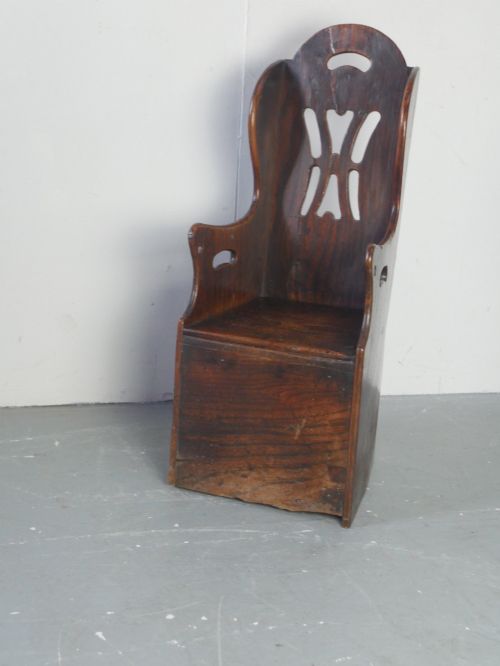
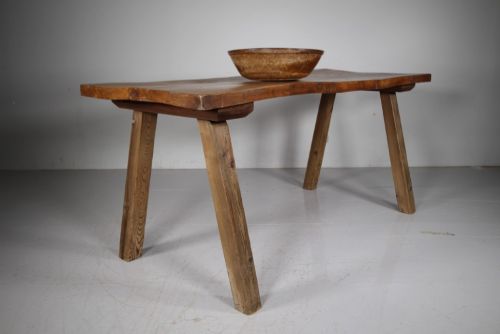
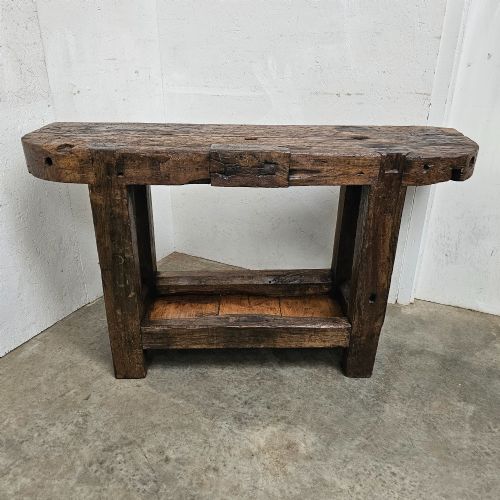
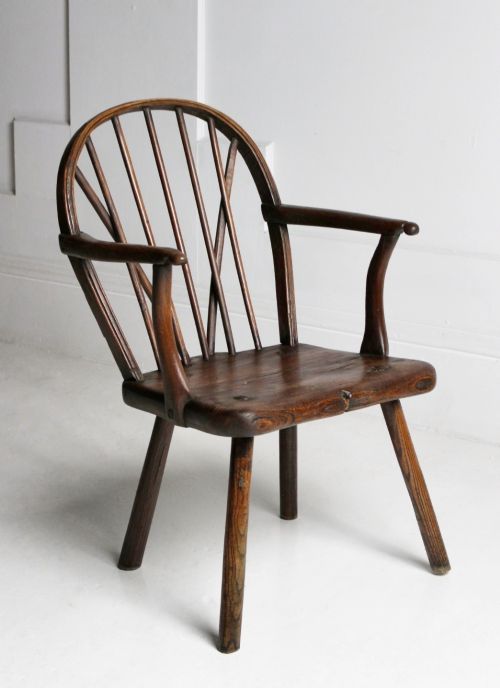
The version most commonly met on this page is the stick back or Windsor armchair, alongside solid tables and work surfaces. Makers utilised elm primarily for seats and table tops, combining it with ash, oak, yew, fruitwood, and laburnum for structural stability.
These items originate from regional traditions across Britain and France, reflecting the practical needs of rural households and trades. Their forms remain unpretentious, relying on solid timber thickness and straightforward joinery rather than fashionable ornamentation.
How primitive elm furniture was made
Makers selected elm for its interlocking grain and resistance to splitting, particularly for chair seats and heavy chopping blocks. This timber is combined with ash for spindles and legs, or yew and fruitwood for curved comb backs.
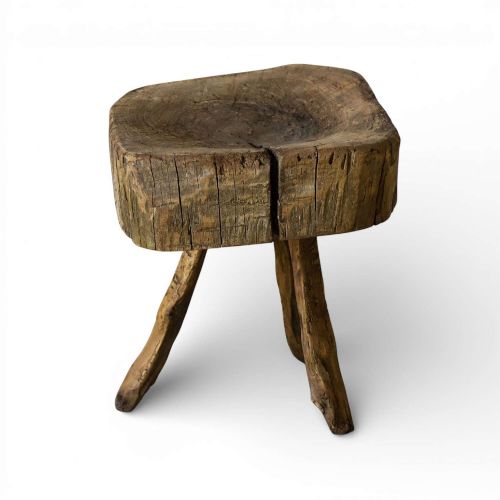
Construction relies on straightforward pegged joints, wedged tenons, and cleft timber worked with drawknives and adzes. Surfaces display the tool marks and gnarled natural shapes of the wood, utilising original legs cut directly from branches.
Primitive Elm Furniture Retail Price Guide 2026
Typical asking prices for primitive elm furniture among the pieces listed under this phrase on Sellingantiques today, from the lower quarter to the upper quarter. They describe what is for sale here now, not the wider market.
Some nineteenth-century French chopping blocks retain their original gnarled legs, looking ready to stand up and walk away.
What varies in quality
Quality in these pieces rests on the balance of the proportions and the choice of secondary timbers. A piece showing varied wood selection like burr elm combined with yew and laburnum displays greater ambition than a plain utilitarian example.
The integrity of the original structure and the survival of untouched surface patination determine the standing of each piece. Minimal replacement of components and honest wear from long domestic use separate finer examples from heavily restored ones.
The Primitive Elm Furniture Glossary
- Comb back
- A Windsor chair design where the vertical spindles extend through a high top rail, resembling the teeth of a comb. This construction offers robust support for the sitter's back.
- Vernacular
- Architecture and furniture built by local craftsmen using traditional regional methods and materials, without academic design input. Such objects serve immediate practical functions.
- Stick back
- A chair type constructed by inserting individual turned or cleft wooden sticks directly into a solid wooden seat. It represents a straightforward approach to seating manufacture.
- Burr elm
- A woody growth on an elm tree that produces highly figured, swirling grain patterns. Craftsmen prize this material for prominent parts like chair seats.
- Windsor
- A chair built with a solid wooden seat into which the legs and back spindles are separately tenoned. These chairs often combine multiple native timbers for different structural components.
Primitive Elm Furniture: Frequently Asked Questions
What woods make up primitive elm furniture?
Makers used elm alongside ash, oak, yew, pine, fruitwood, and laburnum. Different timbers served specific structural needs within a single piece.
Elm provided strong, split-resistant seats and table tops, while ash and yew formed flexible spindles and bentwood parts.
How do I date an elm Windsor chair?
Dating relies on construction details, tool marks, and the thickness of the seat slab. Eighteenth-century examples often feature broader saddle seats and thicker components.
Nineteenth-century pieces tend toward more standardised turning and lighter construction methods while retaining vernacular traits.
Were these pieces made in workshops?
Country joiners and local bodgers produced these items in regional workshops across Britain and France. They worked close to the source of the timber.
Production met local agricultural and domestic demands rather than following urban fashion trends.
Can I use an antique chopping block daily?
These heavy blocks of timber were built for hard kitchen or workshop use and remain robust. Their solid construction handles everyday weight easily.
Care should focus on maintaining the timber surface with appropriate oils rather than heavy cleaning.