



Pressed Glass Light
These pressed glass light fixtures bring architectural weight and filtered illumination to a room, spanning the Victorian period through to the 1930s.
Pressed Glass Light
A pressed glass light takes the form of ceiling lights, chandeliers, table lamps, and wall lights made during periods including the Victorian era, 1900, 1920, and 1930. These pieces function as decorative and functional illumination sources for period interiors.
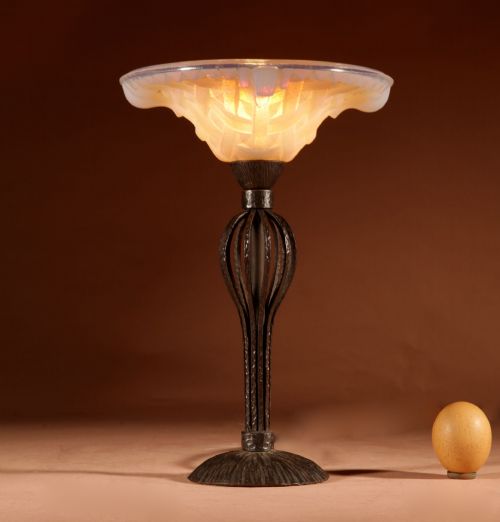
The version most likely to meet a buyer on this page is the Art Deco ceiling light or table lamp from the 1930s, featuring pressed satin, frosted, or opalescent glass combined with mounts of wrought iron, brass, or chrome.
How they were made
Makers produced these fixtures by pressing molten glass into metal moulds to create patterned shades, bowls, and panels with relief decoration. This technique allowed for the efficient production of heavy, textured glass components with frosted, satin, or opalescent finishes.
Metalwork frames in wrought iron, bronze, copper, and brass provided the structural support and suspension for the glass shades. Pine also appears in related cabinetry, while the lamp fittings integrate metal mounts tailored to each style.
Pressed Glass Light Retail Price Guide 2026
Typical asking prices for pressed glass light among the pieces listed under this phrase on Sellingantiques today, from the lower quarter to the upper quarter. They describe what is for sale here now, not the wider market.
A pink clam shell shade proves that someone once wanted their dining room to glow inside a giant glass mollusc.
What varies in quality
The definition and depth of the moulding separate standard production from finer work, as sharper relief and cleaner lines in the glass indicate superior manufacturing skill. The choice of glass treatment, such as rich opalescence or subtle satin finishes, also defines the tier of the piece.
The integration between the glass shade and its metal mountings reveals the maker's hand, with heavier wrought iron or bronze frames and refined hardware marking out the better examples over simpler utilitarian fixings.
Lacroix Lalique·Maple Co·René Lalique·Ezanville Ezan France·Jean Gauthier·Walther and Sohne
The Pressed Glass Light Glossary
- Pressed glass
- Glass shaped by pressing molten metal into a mould using a plunger, creating raised patterns on the interior or exterior surface. This method became widespread for decorative objects and lighting fixtures during the nineteenth and twentieth centuries.
- Opalescent glass
- Glass that displays a milky, iridescent appearance with milky-blue or pink highlights when lit or viewed against the light. This effect results from the addition of specific chemicals to the molten batch.
- Plafonnier
- A ceiling-mounted light fixture featuring a bowl-shaped shade held close to the ceiling by metal hardware. These fixtures were popular in French Art Deco interiors.
- Satin glass
- Glass treated with an acid bath or sandblasting to produce a dull, velvety surface texture that diffuses light evenly. It was widely utilised across 1930s lighting design.
Pressed Glass Light: Frequently Asked Questions
What periods do these lights cover?
The selection spans from early Victorian pieces through to the 1900s, 1920s, and the 1930s Art Deco movement. Each era brings distinct manufacturing methods and stylistic traits to the glass and metalwork.
Buyers will find that 1930s examples dominate the offerings, showcasing characteristic geometric and organic motifs typical of Art Deco design.
How were these lights used originally?
These fixtures served as primary illumination for domestic interiors, suspended from ceilings as chandeliers or ceiling lamps, or placed on surfaces as table lamps. Wall lights provided ambient side illumination in hallways and reception rooms.
The heavy glass shades were designed to diffuse bright electric or gas light into a softer, more atmospheric glow suitable for period rooms.
How do I live with antique lighting?
Integrating these pieces into modern spaces involves pairing their period character with compatible wiring and contemporary interior backdrops. Their substantial glass shades and metal frames act as focal points in a room.
Maintenance involves gentle cleaning of the textured glass surfaces and ensuring the structural stability of the original metal mounts and suspensions.