



Post War Portrait Art
Post war portrait art captures individual character through mid-century modernism and realist painting.
Post War Portrait Art
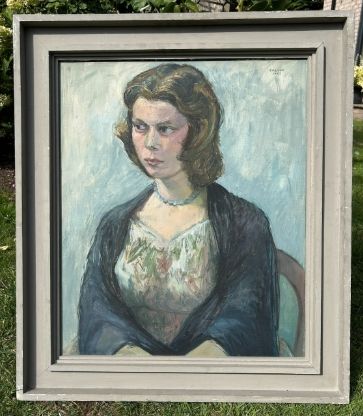
Post war portrait art encompasses oil paintings and prints produced during the middle decades of the twentieth century. These works range from expressive studio interiors and male head studies to female subjects wearing specific period attire like a blue necklace.
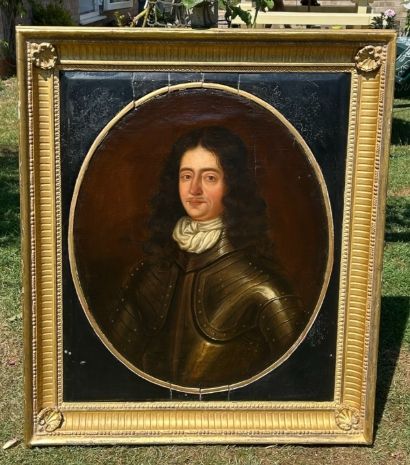
The selection includes mid-century expressionism and post-war British realism alongside occasional earlier pieces such as a seventeenth-century baroque cavalier portrait. Buyers frequently encounter canvas supports alongside paper prints and board mediums.
Dated examples centre around the nineteen forties, nineteen fifties, and nineteen sixties, reflecting both traditional academic settings and avant-garde new figuration. Artists capture sitters ranging from named baronets and known models to anonymous subjects.
Materials and Technique
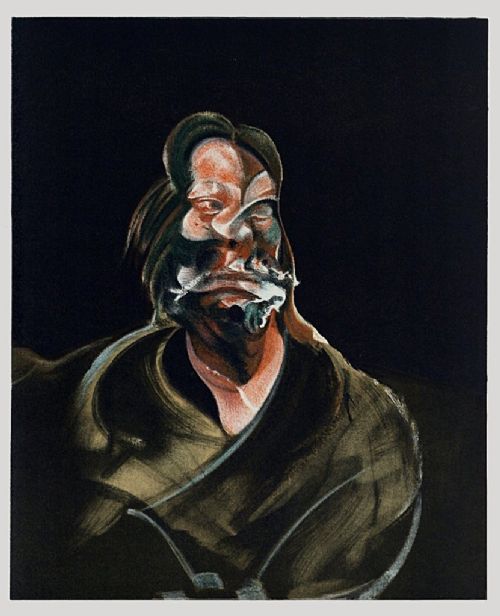
Makers utilised oil paint applied to canvas, board, and paper supports to build texture and depth in these portrait compositions. Lithography also appears in the production of fine art prints after established creators.
Frames of giltwood complement select canvases, while ink and mixed mediums occasionally support the primary pigment layers. Brushwork varies from tight realist representation to looser mid-century modern abstraction and expressionism.
Post War Portrait Art Retail Price Guide 2026
Typical asking prices for post war portrait art among the pieces listed under this phrase on Sellingantiques today, from the lower quarter to the upper quarter. They describe what is for sale here now, not the wider market.
Materials in this category span oil paint, canvas, paper, ink, board, and giltwood frames.
Evaluating Quality
Depth of characterisation and confidence of brushwork distinguish the more compelling pieces from simpler decorative works. Stronger examples demonstrate deliberate command over colour harmony and spatial arrangement within the studio or interior setting.
The presence of signatures, recorded exhibition histories, and documented provenance elevate specific paintings. Condition of the pigment layer and the original support stability also influence the standing of each artwork.
Kenneth Cozens·Francis Bacon·Richards Rubin·John Osborn·John Gilroy
The Post War Portrait Art Glossary
- Oil paint
- A slow-drying paint made by mixing pigments with a drying oil, commonly linseed. This medium allows for rich blending and textured impasto applications on canvas.
- Lithography
- A planographic printing process based on the repulsion of oil and water. Artists use this technique to produce fine art prints on paper.
- Giltwood
- Wood carved and treated with a thin layer of gold leaf. This material frequently forms the decorative frames surrounding canvas paintings.
- Avant-garde
- Artworks that push boundaries and experiment with unconventional methods. Such styles appeared in mid-century figure paintings alongside traditional realism.
Post War Portrait Art: Frequently Asked Questions
What periods do these portraits cover?
The available selection primarily dates from the nineteen forties, fifties, and sixties, reflecting post-century modernism and realism.
Earlier works, including seventeenth-century baroque pieces, also appear to provide historical contrast within the category.
Are these works signed by artists?
Certain pieces feature artist signatures or are attributed to listed painters such as John Gilroy and Kenneth Cozens.
Other works remain anonymous or represent studio studies by unidentified hands from the period.
What mediums were used for these portraits?
Oil paint on canvas, board, and paper forms the primary medium for the majority of the portrait artworks.
Lithographic prints on paper also feature among the available selections alongside occasional ink works.
How do I display oil portraits at home?
These works suit wall art placement in living spaces, studies, or hallways, often housed within matching giltwood frames.
Owners should protect them from direct sunlight and excessive humidity to preserve the oil pigment layers.