


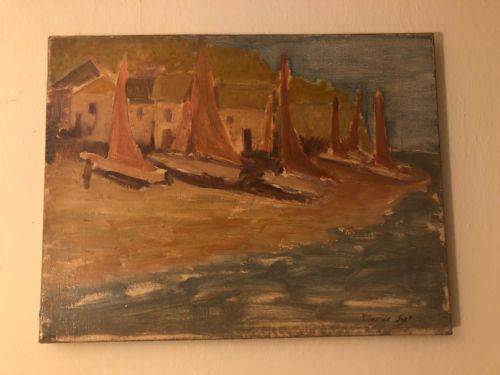
Post Impressionist Harbour Scene
These post impressionist harbour scene works capture coastal life with bold brushwork and bright colour, making them a vibrant addition to any wall.
Post Impressionist Harbour Scene
A post impressionist harbour scene presents coastal life, fishing ports, and moored boats through expressive brushwork and vivid colour. These oil paintings record maritime subjects from locations such as St Ives, Polperro, Martiques, and the French Riviera.
The pieces on this page span several decades, originating from the late nineteenth century through to the mid twentieth century. Buyers encounter works aligned with the Newlyn School alongside continental European scenes.
Canvases often depict sunrise over a fishing port or quiet Breton seascapes. Each piece uses oil paint to explore light and water in coastal settings.
How they were made
These works rely on oil paint applied to canvas, often supported by a wooden stretcher. Artists built up textures using confident brushstrokes to capture the movement of water and the structures of harbour walls.
Many frames incorporate gold leaf and gesso, adding traditional ornamentation around the canvas edges. The combination of oil on canvas and gilded wood defines the physical construction of these coastal paintings.
Several artists clearly preferred painting before breakfast, given the number of sunrise fishing port scenes.
What varies in quality
Quality in a post impressionist harbour scene rests upon the confidence of the brushwork and the handling of coastal light. Stronger works demonstrate a deliberate composition where paint application defines the atmosphere of the port rather than rigid detail.
The framing contributes to the overall presentation, particularly where period gold leaf and gesso mouldings survive in good condition. The presence of a recognised artist signature and documented regional context elevates individual pieces.
George Turland Goosey·Doyly-John·Hendrik Yan Wolter·Henri Ottman·Augustus William Enness·Maurice Sijs
The Post Impressionist Harbour Scene Glossary
- Post-Impressionism
- A style that follows Impressionism, focusing on symbolic content and expressive use of paint rather than naturalistic rendering. Artists extend the boundaries of colour and form.
- Newlyn School
- An artist colony based in Cornwall that focused on plein air painting of coastal life and local fishermen. Their work emphasises natural light and maritime subjects.
- Gesso
- A plaster mixture used as a smooth base for framing before applying gold leaf. It provides the foundation for traditional ornate frames.
- Oil on Canvas
- A painting medium consisting of pigments suspended in drying oils applied to stretched fabric. This combination allows for rich texture and lasting durability.
Post Impressionist Harbour Scene: Frequently Asked Questions
How do I date a harbour scene?
Dating relies on the stylistic markers of Post-Impressionism and the construction details of the canvas and frame. Artists active in the late nineteenth and early twentieth centuries utilised specific palettes and brush techniques.
Examine the stretcher bars and any signatures or inscriptions on the reverse of the canvas. These elements often provide direct clues to the period of creation.
Where were these scenes painted?
These paintings originate from various coastal locations in Britain and continental Europe. Common settings include Cornish fishing ports like St Ives, alongside French locations such as Martiques and the French Riviera.
Artists travelled to working harbours to capture maritime activity and coastal light firsthand. Regional characteristics often appear in the architecture and boats depicted.
How should I hang an oil painting?
Hang oil paintings away from direct sunlight and fluctuating heat sources to protect the canvas and paint layers. Stable indoor environments prevent the wood and canvas from warping over time.
Ensure the wall fixings match the weight of the frame and canvas. Proper hardware secures the artwork safely against the wall.
What is the Newlyn School?
The Newlyn School refers to a community of artists based in Cornwall who painted rural and coastal subjects in the open air. Their output captures the daily lives of fishermen and harbour scenes.
Works associated with this movement feature realistic depictions of coastal communities combined with impressionistic brushwork. They form a distinct category within British art.