

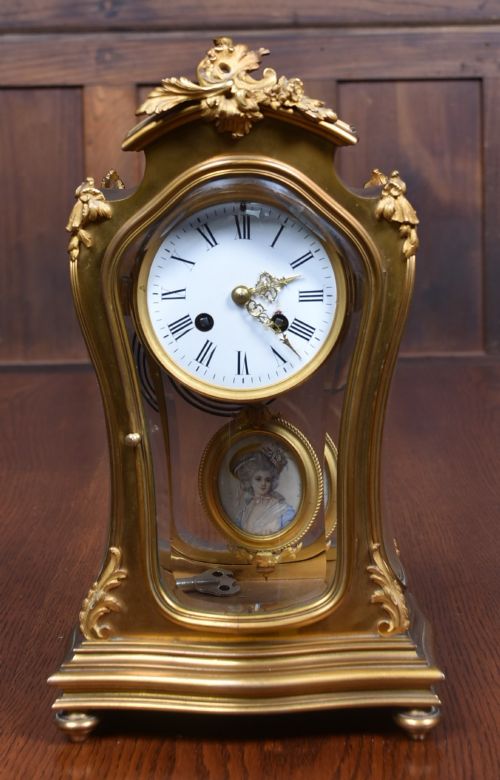


Portrait Miniature on Enamel
A portrait miniature on enamel captures an intensely personal likeness in glowing, vitreous colour on copper, gold, or porcelain.
Portrait Miniature on Enamel
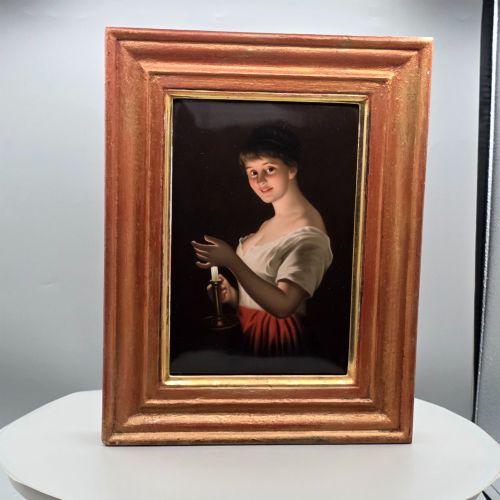
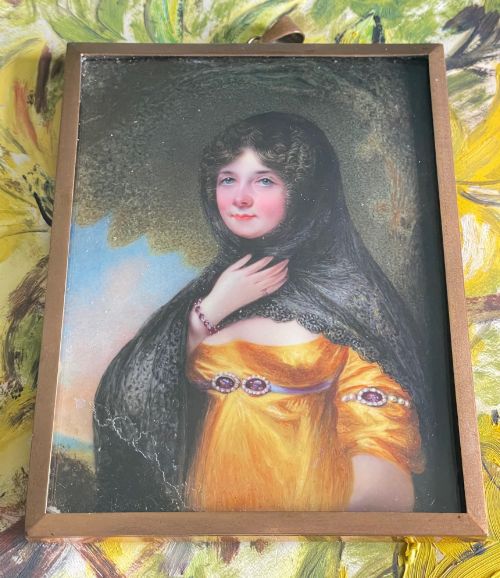
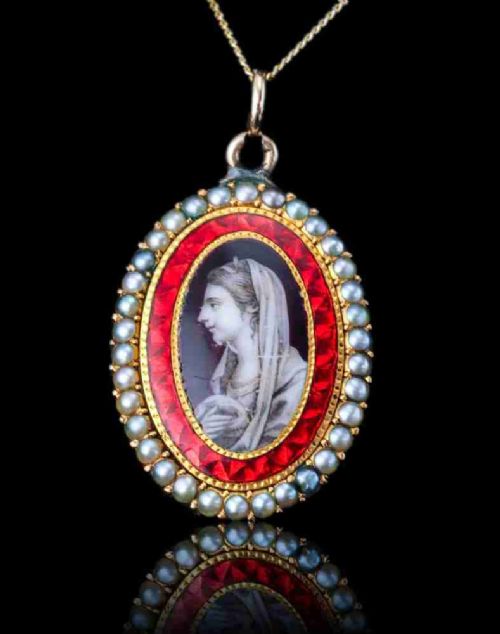
A portrait miniature on enamel represents a distinct tradition of portable painting where powdered glass pigments are fused to a metal or ceramic base by heat. The pieces found here span the eighteenth and nineteenth centuries, taking the form of framed wall plaques, jewellery such as brooches and pendants, and decorative objects including snuff boxes and clocks.
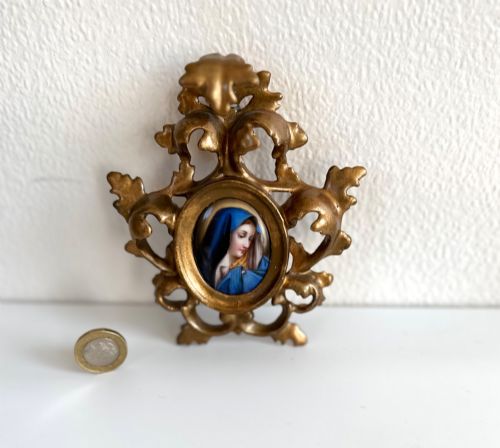
Most examples you will encounter date from the Georgian and Victorian eras, alongside Edwardian and later interpretations. These works often depict named gentlemen, noblewomen, or religious subjects like the Madonna, executed with remarkable precision on small oval or rectangular surfaces.
Makers utilised various mounting options, housing the enamel work in gilt metal, brass, or high-carat gold frames, sometimes augmented with pearls or ormolu mounts. The subjects range from sentimental love tokens to detailed copies of classical paintings, reflecting the diverse applications of enamel portraiture across European workshops.
How they were made
Artists painted these miniatures using finely ground metallic oxides mixed with oil or water, applying successive layers to a prepared enamel ground on a copper, gold, or porcelain support. Each layer required firing in a kiln to permanently vitrify the colours, creating a glossy surface impervious to fading.
The metalwork housings were cast, chased, or gilt to complement the central miniature, using materials like 9ct and 18ct gold, silver, gilt bronze, and ormolu. Artisans then secured the delicate plaques within bezels or hinged frames, often pairing the enamel with glass covers or mirrored backs.
Some sitters gaze out with such intense eighteenth-century judgement you might feel obliged to straighten your tie.
What varies in quality
The quality of the surrounding mount also signals the grade of the piece, with hand-chased gold, heavy ormolu, and integrated precious stones marking out works by celebrated enamel specialists. Well-preserved surfaces free from stress cracks or heavy restoration retain their visual clarity and historical value.
Horace Hone·Christian Friedrich Zincke·Henry Bone ARA·Jean-Baptiste Isabey·Henry Pierce Bone·Meyle & Mayer
The Portrait Miniature on Enamel Glossary
- Enamel
- A glassy substance fused to a metal or ceramic substrate through high-temperature firing. This technique provides a durable, lustrous finish that preserves pigment brilliance over centuries.
- Ormolu
- Gilt bronze ornamentation applied to furniture, clocks, and frames. The technique involves treating brass or bronze with a mercury-gold amalgam to achieve a rich golden sheen.
- Pendant
- A piece of jewellery designed to hang from a necklace or chain. In this context, it often houses a miniature portrait behind a protective glass cover.
- Plaque
- A flat ornamental plate, usually made of porcelain, copper, or enamel, intended for wall hanging or inset mounting into furniture and boxes.
- Snuff box
- A small, pocket-sized container used for holding dry tobacco. Enamelled lids featuring portrait miniatures were especially popular for these luxury items during the eighteenth century.
Portrait Miniature on Enamel: Frequently Asked Questions
Were these miniatures worn or displayed?
Both uses were common depending on the format of the piece. Brooches, rings, and pendants were worn close to the heart as sentimental love tokens or mourning jewellery.
Larger plaques, wall art, and items like snuff boxes or table mirrors were designed for domestic display in parlours and studies.
How can I tell Georgian from Victorian pieces?
Georgian examples often feature softer sepia tones, simpler gold bezels, and intimate hairwork compartments on the reverse. The portrait styles reflect eighteenth-century costume and coiffure.
Victorian pieces typically display brighter polychrome enamels, heavier cast gold or ormolu mounts, and more romanticised or sentimental subject matter.
What is the difference between porcelain and copper plaques?
Copper plaques utilise a fused glass enamel ground painted with metallic oxides, offering a slightly convex surface and a warm metallic backing. Porcelain plaques consist of a fired ceramic body painted directly and glazed.
Both were fired in kilns, but porcelain pieces from factories like Berlin or KPM tend to have a rigid, flat rigidity compared to enamelled metal.