
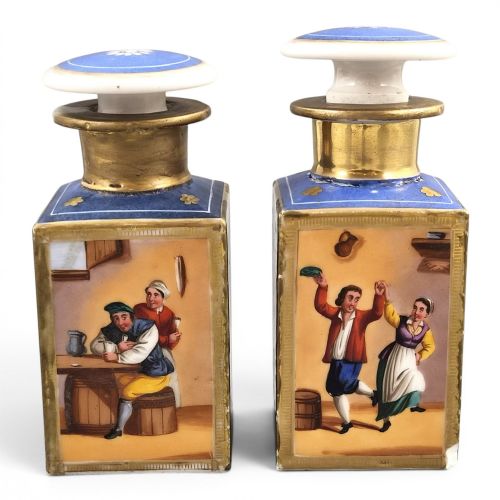


Porcelain Scent Flask
These porcelain scent flask pieces bring miniature ceramic artistry to dressing tables and cabinets, offering collectors intricate hand-painted detail in compact forms.
Porcelain Scent Flask
A porcelain scent flask represents a specialised form of ceramic container designed to hold perfumes, rose water, or snuff, appearing across nineteenth-century and early twentieth-century periods. These vessels range from French cabinet pieces and English factory wares to Chinese snuff bottles and miniature vases adapted for fragrance.
The most common formats on this page include nineteenth-century scent bottles and snuff bottles featuring painted figurative scenes, floral motifs, or gilded highlights. Buyers also encounter Regency rose water sprinklers and Edwardian miniature porcelain vessels serving similar aromatic functions.
Origins span European factories like Worcester alongside Qing Dynasty and nineteenth-century Chinese workshops, reflecting diverse cultural approaches to portable ceramic containers.
Materials and construction methods
Makers shaped these objects using hard-paste porcelain and ceramic bodies, often applying cobalt oxide underglaze or polychrome enamel painting to the exterior surfaces. Firing techniques achieved smooth glazed finishes capable of sealing volatile fragrance oils.
Many examples incorporate applied gold leaf and heavy gilding to accent moulded relief details, collars, and borders. Silver mounts and stoppers frequently complement the ceramic bodies on Victorian pieces.
Some nineteenth-century makers hid tiny erotic scenes inside unassuming snuff bottles, designed to surprise curious beholders.
Assessing quality in porcelain scent flask items
Quality rests in the precision of the hand-painted decoration, where fine brushwork on figurative or botanical scenes distinguishes master workshops from standard production. Crisp moulding and well-defined cobalt oxide or enamel colours elevate a piece.
The presence of original stoppers, matching mounts, and documented factory provenance significantly influences the standing of a flask within its period.
Jacob Petit·Crown Staffordshire·Flight Barr And Barr·Macintyre
The Porcelain Scent Flask Glossary
- Hard-Paste Porcelain
- A dense, vitrified ceramic compound fired at high temperatures using kaolin and petuntse. It provides a durable, non-porous body suitable for holding liquids.
- Cobalt Oxide
- A mineral pigment used under the glaze to produce deep blue decoration on ceramic surfaces. It withstands high kiln temperatures without fading.
- Famille Rose
- A palette of opaque enamel colours dominated by pink, introduced to Chinese ceramics in the eighteenth century. It allowed artists to render soft tonal gradations on porcelain.
- Rose Water Sprinkler
- A vessel featuring a globular body and a long, narrow neck designed for sprinkling scented water. Regency and earlier examples often utilised porcelain construction.
- Gilt
- A thin layer of gold applied to the surface of porcelain or metal mounts for decorative effect. It highlights moulded elements and frames painted panels.
Porcelain Scent Flask: Frequently Asked Questions
How were Chinese snuff bottles used?
Chinese snuff bottles held powdered tobacco used for inhaling through the nose, a fashionable habit introduced during the Qing Dynasty. The small size allowed users to carry tobacco conveniently in pockets or pouches.
Artisans decorated these bottles with intricate inside-painting, carving, or fine ceramic glazes.
How do I care for antique porcelain scent flasks?
Keep porcelain scent flasks away from direct sunlight and dramatic temperature fluctuations to protect enamel pigments and gold leaf. Dust gently with a soft dry cloth without using abrasive cleaning agents.
Handle flasks by the body rather than protruding stoppers or delicate mounts to prevent accidental damage.
How can I tell Victorian pieces apart?
Victorian porcelain scent flasks often display distinctive nineteenth-century styling, ranging from parian ware to heavy enamel decoration and silver mounts. Hallmarks on associated metal fittings help narrow down manufacturing years and locations.
Comparing glaze characteristics and painting styles against documented factory output assists in period identification.