


Polychrome Figure Candle Holders
Polychrome figure candle holders bring vibrant colour and character to a room, combining sculpted human or animal forms with functional illumination.
Polychrome Figure Candle Holders
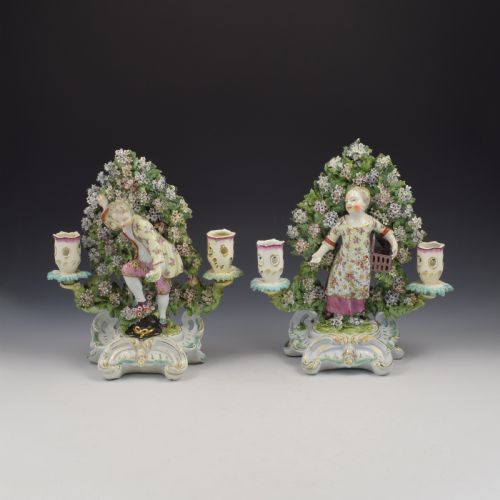
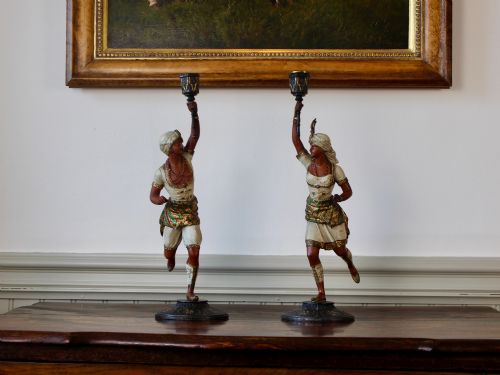
These polychrome figure candle holders combine sculpted ceramic or metal figures with sconces for lighting, often taking the form of musicians, children, dancers, or allegorical subjects. When searching this phrase, you primarily encounter eighteenth-century English porcelain pairs from factories such as Derby and Bow, alongside nineteenth-century Continental porcelain and spelter pieces.
The aesthetic ranges from elaborate rococo revival bocage backgrounds adorned with foliage and flowers to striking orientalist figural designs. Eighteenth-century examples frequently feature detailed patch-mark periods and hand-painted enamel decoration, while later nineteenth-century pieces from Germany and Austria introduce cold painting and distinct regional modelling.
How they were made
Makers shaped soft-paste porcelain or cast spelter into intricate figural forms, frequently applying delicate applied foliage known as bocage around the central figures. Craftsmen then hand-painted the details using rich polychrome enamels, occasionally enhancing the composition with gilding or gold leaf.
Porcelain pieces required precise kiln firings to set the intricate glazes and colours, while metal examples relied on cold painting techniques applied directly to the cast spelter surface after initial shaping.
Keep your candles straight while a tiny porcelain bishop or dancing child watches from beneath the flame.
What varies in quality
Quality rests in the crispness of the modelling and the finesse of the hand-painted enamel work across the figures and their floral backgrounds. Superior examples preserve delicate bocage foliage without extensive loss and maintain the original vibrancy of their polychrome palette.
The distinction between standard production and exceptional output also shows in the anatomical precision of the sculpted subjects and the careful integration of the sconce into the sculptural narrative.
Derby Porcelain·Bow Porcelain·Sitzendorf Porcelain·Helena Wolfsohn·Minton Porcelain
The Polychrome Figure Candle Holders Glossary
- Bocage
- An ornamental background of applied porcelain leaves and flowers surrounding a figure. This technique was widely utilised in eighteenth-century English porcelain manufacture.
- Cold painted
- A method where metal figures, typically spelter, are painted without a subsequent high-temperature firing. The pigments rely on binders to adhere to the metal surface.
- Polychrome
- Decorated in multiple colours. This term describes the varied enamel palettes seen across both porcelain and earthenware figures.
- Spelter
- A zinc alloy used as a cost-effective substitute for bronze in nineteenth-century metalwork. It accepts cold painting and patination readily.
- Sconce
- The socket or cup designed to hold a candle securely in place. On these pieces, it is integrated into the figural or botanical design.
Polychrome Figure Candle Holders: Frequently Asked Questions
How were figural candle holders used?
These pieces served both to illuminate dining tables and mantelpieces and to display wealth and artistic taste through elaborate sculptural narratives. Owners placed them in prominent entertaining spaces where the candlelight would catch the bright enamel colours and gilded details.
Over time, their function shifted from primary light sources to decorative ornaments that anchored room aesthetics, particularly when arranged as symmetrical pairs.
How do I spot eighteenth century porcelain?
Look for the characteristic weight, glaze texture, and unglazed foot rims typical of early soft-paste porcelain bodies. Eighteenth-century examples often display specific factory traits, such as patch marks on Derby figures.
The hand-painted polychrome enamel work on these early pieces also tends to show subtle variations in tone compared to later mass-produced alternatives.
How do I care for antique porcelain?
Keep porcelain candle holders away from direct sunlight and areas prone to rapid temperature fluctuations to protect the enamel colours and delicate bocage. Dust them gently with a soft, dry brush rather than using liquid cleaners.
Avoid burning candles down completely inside antique sconces, as excess heat can stress the historic ceramic or metal body.
What is bocage decoration?
Bocage is the intricate, tree-like foliage made from applied porcelain clay that frames the figures in many eighteenth-century designs. It creates a lush, natural backdrop intended to mimic a garden setting.
Because these delicate leaves and flowers are fragile, surviving examples often show minor, professional restoration within the foliage.