







Pleated Fabric Sewing Table
These pleated fabric sewing tables combine ingenious compartments with refined timbers, offering a practical workspace that doubles as an elegant occasional table.
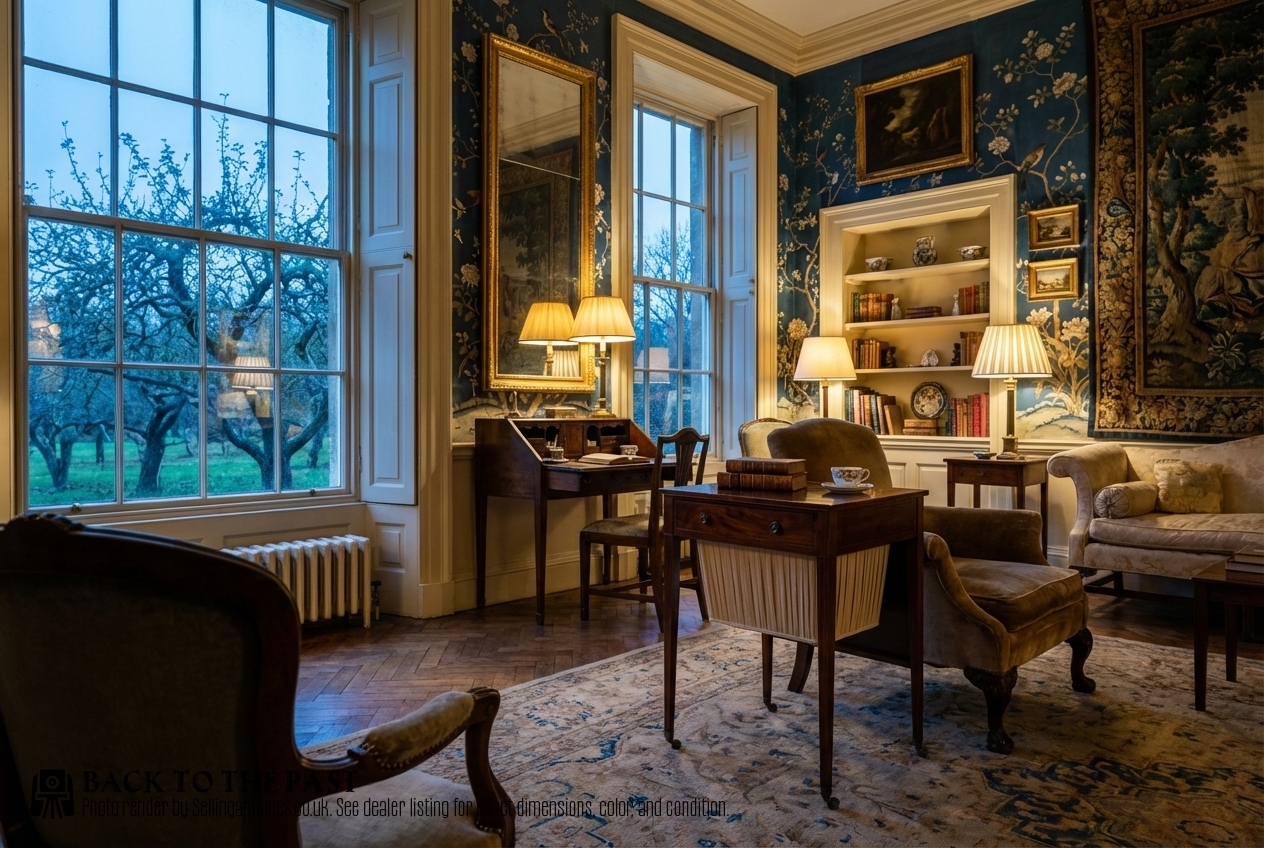
Pleated Fabric Sewing Table
A pleated fabric sewing table functions primarily as a specialised work table or sewing table designed for needlework and domestic crafts. These pieces frequently appear in forms such as side tables, occasional tables, dressing tables, and sewing stands.
The selections span distinct periods including the Georgian era, the Regency period, the Victorian epoch, and the Edwardian years. Regional origins represented include English craftsmanship spanning the eighteenth through the early twentieth century.
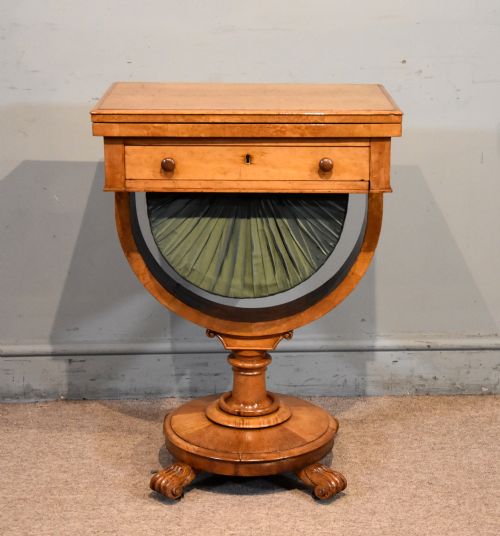
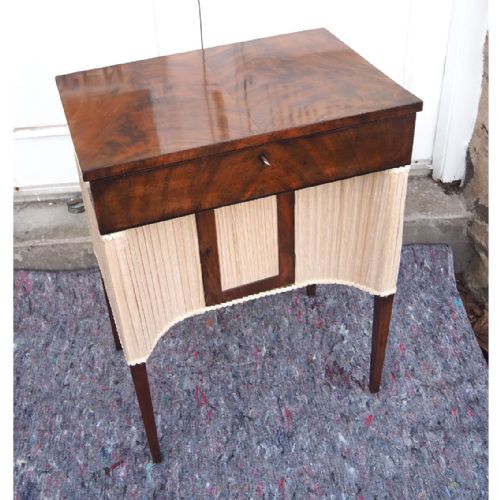
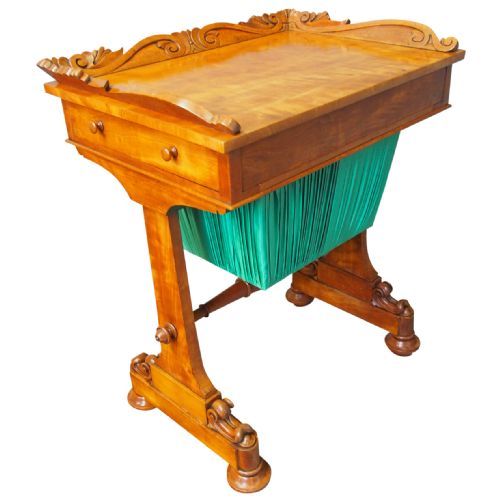
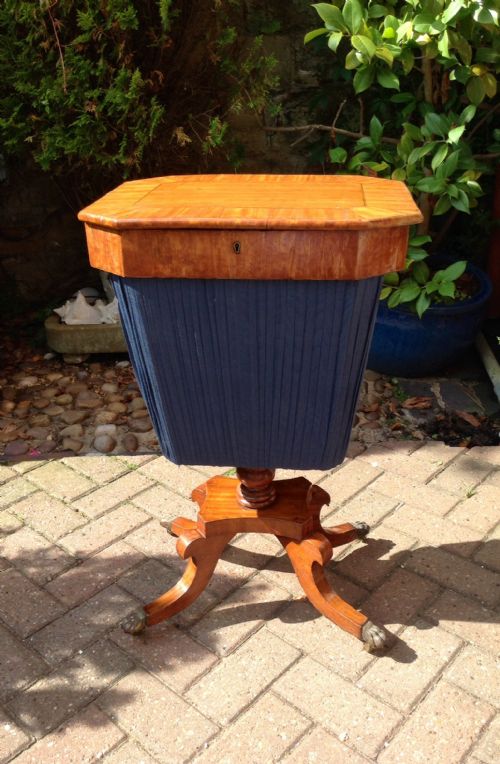
Makers and styles encompass Sheraton designs, William IV iterations, and pieces attributed to Gillows of Lancaster. The defining characteristic is the suspended fabric bag beneath the top, intended to hold threads, textiles, and implements.
Materials and construction
Cabinet makers utilised dense, richly figured hardwoods such as mahogany, rosewood, satinwood, maple, pollard oak, and burr walnut for the frames and tops. These timbers were often selected for their striking grain patterns and finished with smooth French polish.
Silk and other fine textiles form the characteristic pleated bags and hangings suspended below the main body. Brass details frequently appear in the form of castors, escutcheons, and hinges that support the mobility and function of the work table.
Pleated Fabric Sewing Table Retail Price Guide 2026
Typical asking prices for pleated fabric sewing table among the pieces listed under this phrase on Sellingantiques today, from the lower quarter to the upper quarter. They describe what is for sale here now, not the wider market.
Listings feature timbers including mahogany, rosewood, satinwood, maple, and burr walnut across Georgian, Regency, Victorian, and Edwardian periods.
Distinctions in quality
The refinement of a pleated fabric sewing table rests on the selection of timber veneers and the intricacy of the cabinet work. Superior examples demonstrate tight joinery, precise inlay, and well-proportioned pedestals or legs.
The condition and execution of the pleated fabric bag dictate much of the visual integrity. Finer pieces retain sophisticated drapery and intact interior compartments designed to organise small sewing tools.
Gillows of Lancaster
The Pleated Fabric Sewing Table Glossary
- Work table
- A small movable table fitted with drawers and a bag for holding needlework or sewing materials. It serves multiple functions within a domestic interior.
- Rosewood
- A heavy, dense timber with a dark, richly figured grain frequently utilised in Regency and Victorian cabinet making. It takes a high polish and provides a luxurious surface.
- Satinwood
- A luminous, yellowish wood prized for its smooth texture and subtle sheen, often employed in fine Edwardian and Georgian inlay work. It brings brightness to smaller occasional furniture.
- Drop flap
- A hinged leaf on the side of a table that can be raised to extend the surface area or lowered when space is restricted. It adds versatility to sewing and games tables.
- Pollard oak
- Oak timber obtained from trees that have been pollarded, producing a heavily knotted and gnarled grain pattern. Cabinet makers utilised this timber for decorative veneer panels.
Pleated Fabric Sewing Table: Frequently Asked Questions
What is a pleated fabric sewing table?
A pleated fabric sewing table is a small antique desk or stand featuring a suspended textile basket beneath the top surface. It was designed to store fabrics, threads, and sewing equipment close at hand during handcraft sessions.
These pieces typically incorporate drawers, compartments, and drop leaves, allowing them to function as decorative side tables when not in active use.
How do I date a sewing table?
Dating relies on observing the timber species, structural hardware, and stylistic motifs present in the piece. Earlier Georgian and Regency models often feature rosewood or mahogany with delicate inlay, while Edwardian versions frequently utilise satinwood.
The presence of specific leg styles, such as pedestal bases with brass castors or tapered legs, provides further clues regarding the manufacturing period.
Were these tables only used for sewing?
While primarily built for needlework, many of these tables served multiple purposes within the home. Some incorporated chessboard tops or integrated compartments suitable for writing and dressing.
Their compact proportions made them versatile enough to sit beside seating areas as occasional tables or side tables.
How do I care for the pleated fabric?
Maintaining the fabric bag requires gentle dusting with a soft brush and protection from direct sunlight to prevent fading. The delicate silk or textile panels benefit from stable indoor humidity levels.
Avoid applying liquid cleaners directly to the fabric or the polished wooden frame surrounding it.