
Platinum Dress Jewellery
Platinum dress jewellery spans delicate Edwardian mountings and bold geometric Art Deco designs set with diamonds and coloured stones.
Platinum Dress Jewellery
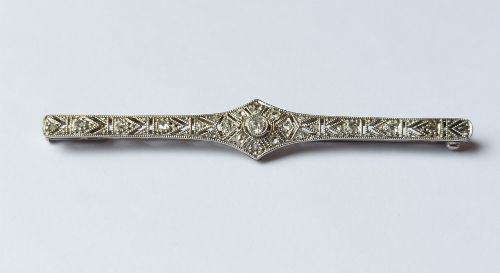
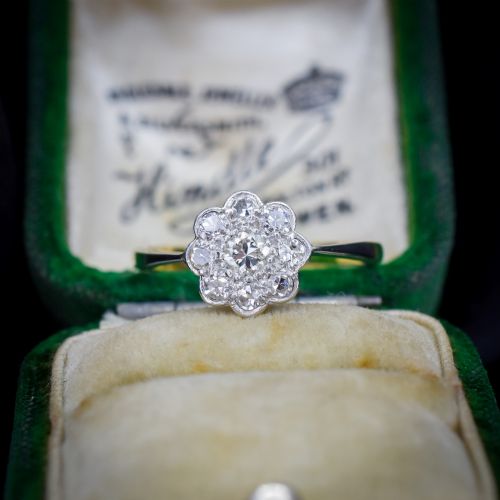
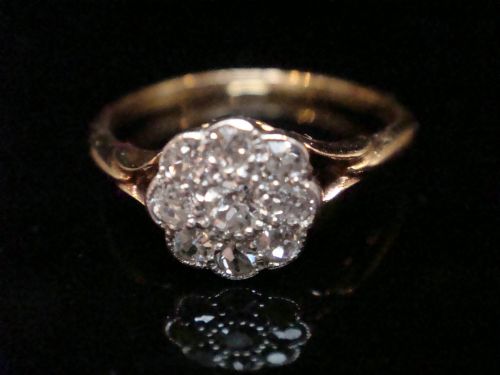
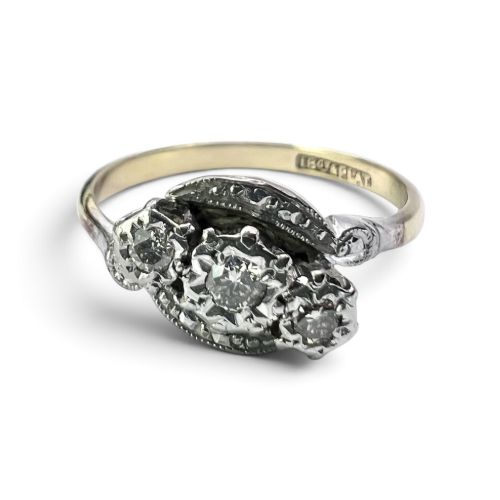
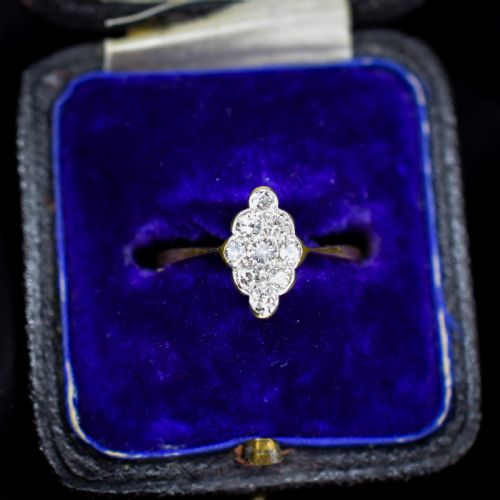
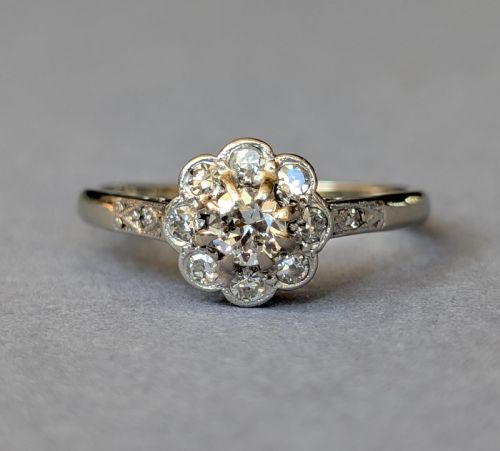
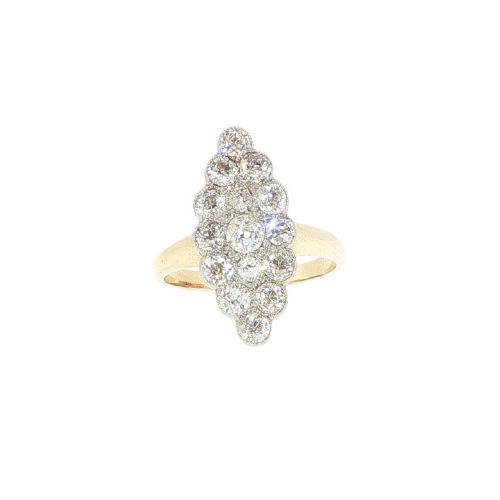
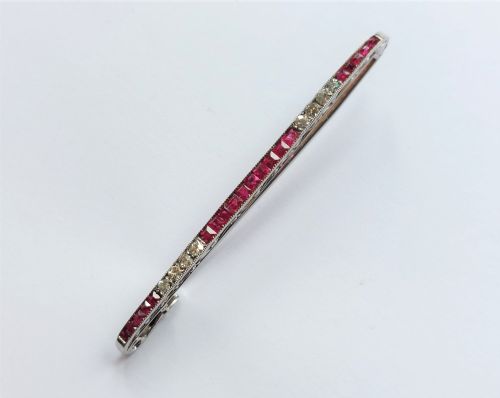
Platinum dress jewellery primarily comprises rings and brooches created across the Edwardian, Art Deco, and mid-century periods. When exploring platinum dress jewellery, the most common discoveries are cluster rings, trilogy rings, and bar brooches.
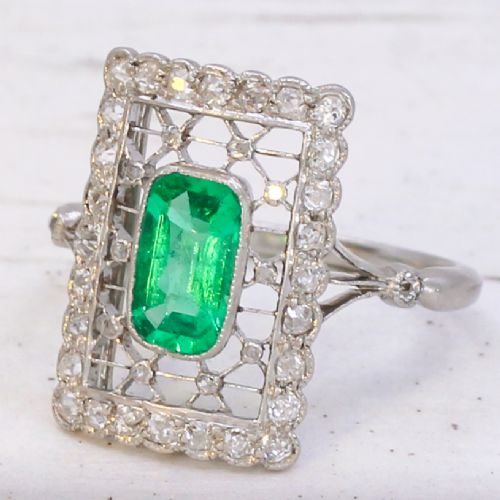
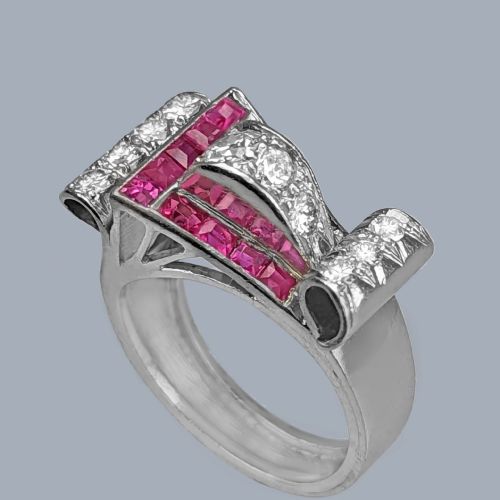
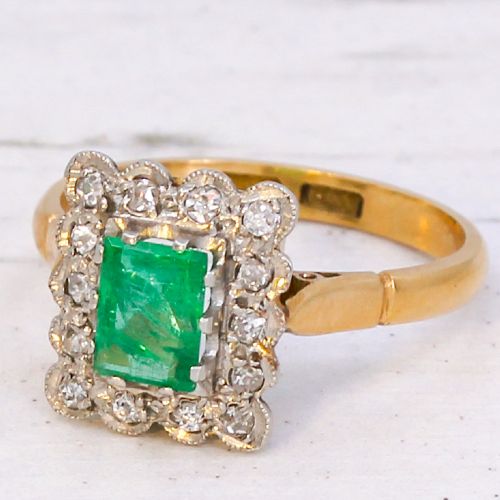
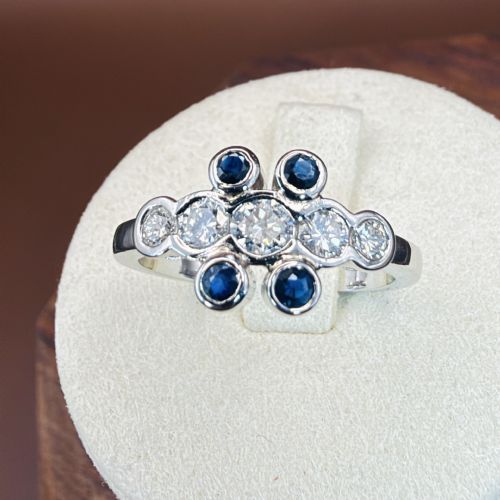
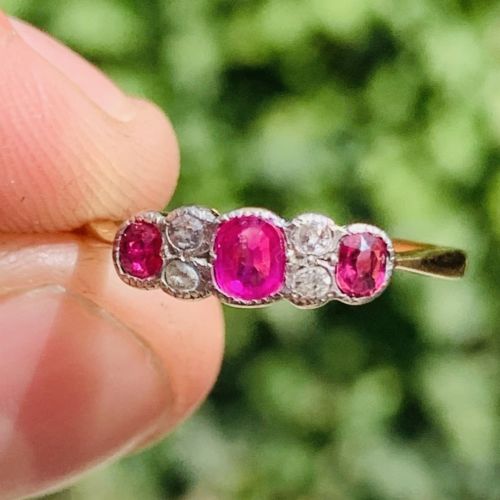
The selection ranges from late Victorian and Edwardian diamond and pearl pieces to geometric Art Deco creations featuring sapphires, rubies, and emeralds. Later mid-century examples incorporate tanzanite, aquamarine, and black diamond within platinum settings.
These items were originally designed for evening wear and social occasions, prioritising decorative impact and gem-setting over everyday utility. The combination of platinum with yellow gold occurs frequently in earlier periods.
Materials and construction
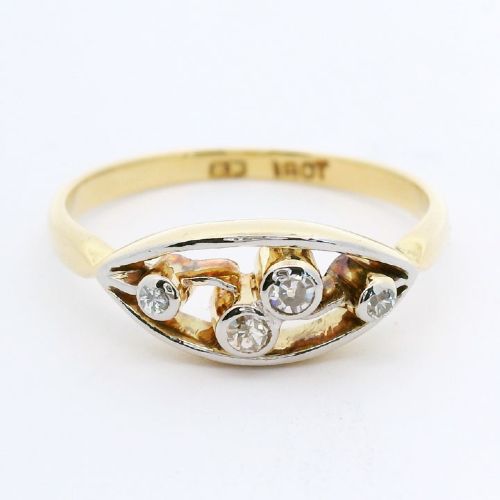
Makers utilised platinum for its strength and ductile qualities, allowing for fine, intricate metalwork that could securely hold precious stones with minimal visible framing. This metal is frequently paired with 18ct yellow gold in shank construction, particularly during the Edwardian and Art Deco eras.
Gemstones including old cut diamonds, sapphires, rubies, and emeralds are secured using claw, bezel, or pavé techniques. The density of platinum permitted sharp millegrain edges and openwork galleries without compromising structural integrity.
Listings feature pieces spanning the Edwardian period through to the 1960s, incorporating platinum, gold, diamonds, sapphires, rubies, and emeralds.
Distinctions in craftsmanship
Quality in these pieces rests upon the precision of the metalwork and the selection of the central gemstones. Finer examples display crisp millegrain borders, symmetrical piercing in the gallery, and uniform stone matching.
The integration of the platinum top with the gold shank reveals the hand of the maker, where superior work shows seamless junctions and balanced proportions. Stone cut and clarity, particularly in old cut diamonds and unheated coloured stones, dictate the upper tier of the range.
Le Vian
The Platinum Dress Jewellery Glossary
- Millegrain
- A decorative technique featuring a row of tiny raised metal beads along the edge of a setting. This detail softens the transition between metal and stone.
- Navette
- A boat-shaped gemstone setting that tapers to points at both ends. It creates an elongated silhouette on the finger.
- Old Cut
- A diamond cutting style prevalent before modern brilliant standards, characterised by a smaller table, higher crown, and open culet. These stones catch candlelight effectively.
- Trilogy Ring
- A ring featuring three main gemstones arranged in a row, often interpreted to represent past, present, and future. They frequently combine diamonds with coloured stones.
- Cluster Ring
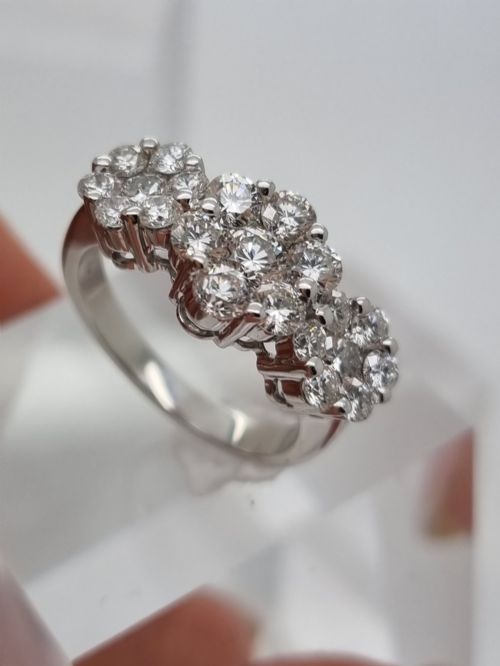
- A design featuring a central stone encircled by a border of smaller gemstones. This layout maximises visual presence.
Platinum Dress Jewellery: Frequently Asked Questions
How do I identify an Art Deco piece?
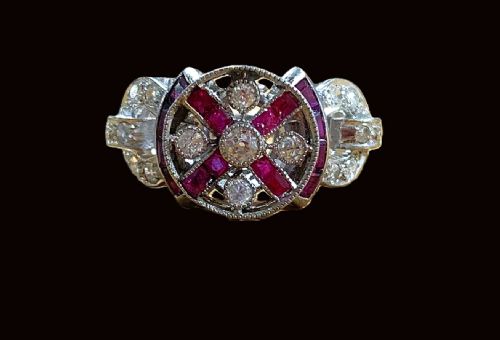
Art Deco pieces typically display geometric motifs, symmetrical lines, and sharp angles. Makers frequently utilised platinum to create openwork designs set with diamonds, rubies, sapphires, or emeralds.
The aesthetic moves away from organic Edwardian curves towards streamlined, architectural forms.
Are these pieces suitable for daily wear?
Platinum is an exceptionally strong and durable metal that withstands regular use well. However, antique and vintage settings require care to protect older stone cuts and delicate millegrain edges.
It is advisable to remove such items during strenuous activities to preserve the integrity of the original mount.
What is the difference between Edwardian and mid-century styles?
Edwardian designs focus on light, airy filigree, garland motifs, and natural pearls alongside diamonds. They favour delicate proportions and lace-like platinum work.
Mid-century pieces tend to feature bolder central stones, such as tanzanite or aquamarine, within heavier platinum cluster configurations.