



Platinum and Aquamarine Jewellery
Platinum and aquamarine jewellery brings together icy blue beryl and bright white metal, offering clean lines and cool elegance from the early to mid-twentieth century.
Platinum and Aquamarine Jewellery
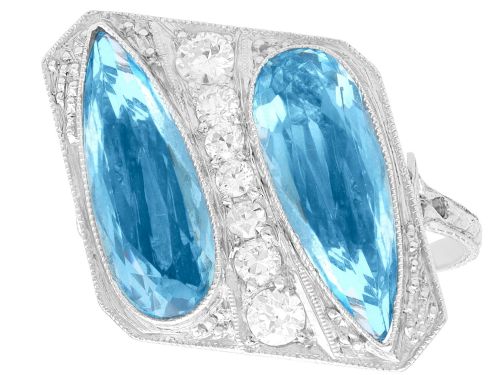
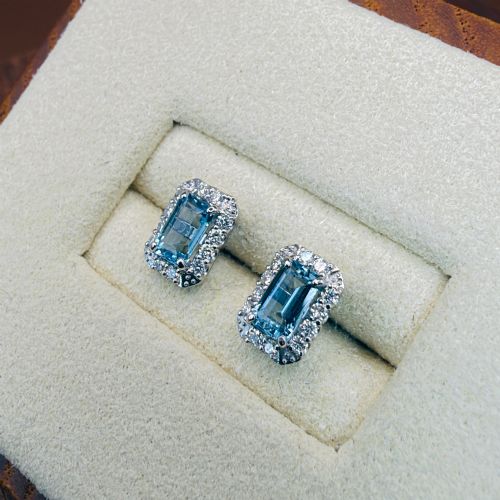
Platinum and aquamarine jewellery encompasses rings, earrings, pendants, necklaces, and brooches created across several distinct periods. Pieces from the Edwardian era sit alongside bolder designs from the 1920s and 1930s, as well as later mid-century creations.
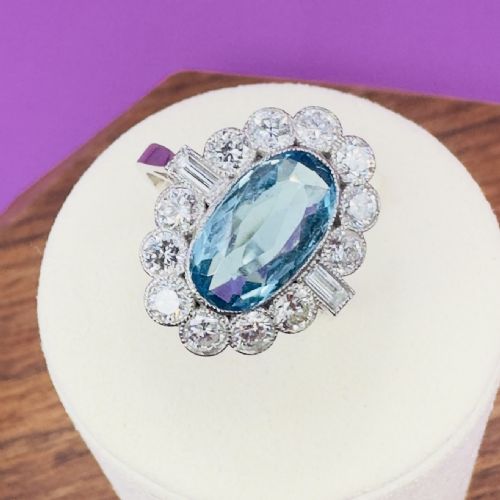
Cocktail rings and cluster rings dominate the selection, frequently pairing substantial emerald-cut or oval aquamarines with sparkling diamond borders. Pendants and drop earrings also feature prominently, often utilising geometric layouts typical of Art Deco design.
The aesthetic ranges from delicate Edwardian lacework to streamlined mid-century forms. Buyers will find significant stone sizes paired with platinum settings that maximise the icy clarity of the beryl.
How they were made
Makers relied primarily on platinum to house these pale blue stones, valuing the metal for its exceptional strength and bright white finish. This allowed for slender claws and intricate wirework without compromising the security of large gemstones.
Diamonds frequently act as accents, set in meticulous clusters, rows, or baguette configurations around the central aquamarine. Combinations with white gold, yellow gold, and occasional contrasting elements like onyx appear in select pieces from the 1920s.
Platinum and Aquamarine Jewellery Retail Price Guide 2026
Typical asking prices for platinum and aquamarine jewellery among the pieces listed under this phrase on Sellingantiques today, from the lower quarter to the upper quarter. They describe what is for sale here now, not the wider market.
Several pieces weigh in with substantial aquamarines exceeding twenty carats, ensuring these jewels make their presence known from across the room.
What varies in quality
The depth and saturation of the aquamarine crystal dictate much of the visual impact, alongside the precision of the stone-cutting. Exceptional pieces display crisp facet junctions and high transparency within large carat weights.
The intricacy of the surrounding metalwork separates standard mass-produced items from finer studio output. Well-executed claw settings and balanced diamond pavé or baguette framing elevate the overall architectural harmony of the jewel.
The Platinum and Aquamarine Jewellery Glossary
- Aquamarine
- A pale blue to light greenish-blue variety of beryl, favoured for large transparent crystals in twentieth-century rings and pendants. Its name derives from seawater.
- Platinum
- A dense, malleable, and ductile precious metal that became the setting of choice for fine jewellery during the Edwardian and Art Deco periods due to its durability.
- Cluster ring
- A ring design featuring a prominent central gemstone encircled by a group of smaller stones, typically diamonds, which enhances the visual presence on the hand.
- Emerald cut
- A rectangular or square step-cut gemstone shape with cropped corners, designed to showcase the clarity and cool depth of stones like aquamarine.
- Bag baguette
- A small, rectangular cut of diamond with straight parallel sides, frequently utilised in linear geometric patterns during the Art Deco era.
Platinum and Aquamarine Jewellery: Frequently Asked Questions
How do I care for platinum and aquamarine jewellery?
Clean your jewellery using warm soapy water and a soft brush to remove everyday oils from the setting.
Store pieces individually in soft pouches to prevent the platinum from scratching or softer stones from rubbing.
Can I wear an aquamarine ring every day?
Aquamarine is a durable gemstone suitable for daily wear, though care should be taken with large cocktail rings.
Removing rings during heavy manual tasks protects both the platinum claws and the facets of the central stone.
How do I distinguish Edwardian from Art Deco pieces?
Edwardian designs tend to feature delicate garland motifs, millegrain edges, and lacy openwork reminiscent of needlepoint.
Art Deco pieces shift toward bold geometric symmetry, clean lines, and contrasting materials like onyx.