



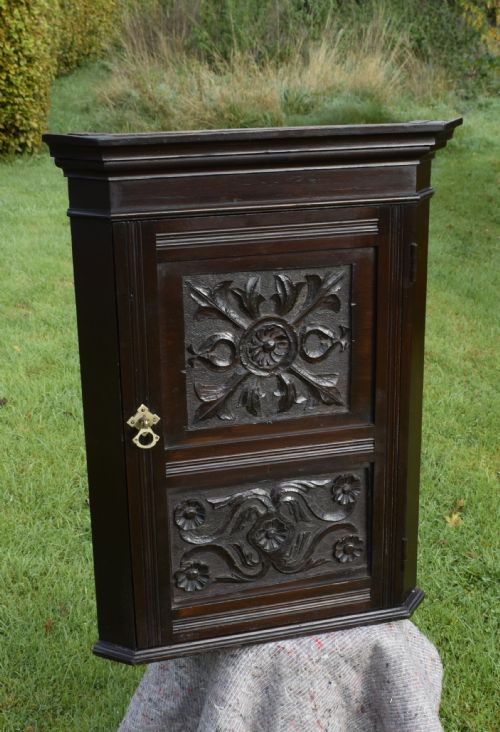

Pine Wall Hanging Cabinet
A pine wall hanging cabinet brings warmth and practical storage to a room, ranging from rustic farmhouse cupboards to painted Scandinavian folk pieces.
Pine Wall Hanging Cabinet
When you search for a pine wall hanging cabinet, you encounter a variety of storage furniture designed to be mounted on a wall rather than floor-standing. These pieces serve functions from kitchen organisation to corner display, appearing in forms such as corner cupboards, spice boxes, and open wall shelves with enclosed compartments.
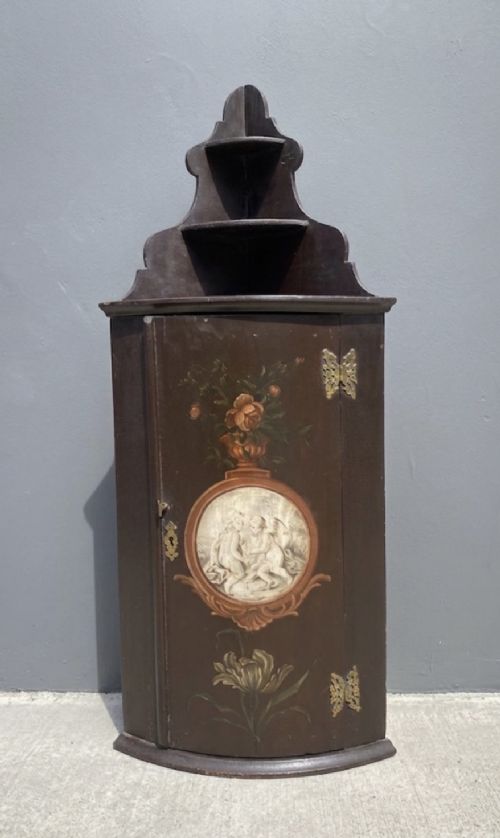
The pieces on this page span the eighteenth and nineteenth centuries, taking in Georgian and Victorian examples alongside Scandinavian, Finnish, and Austrian folk art styles. You are most likely to meet nineteenth-century painted pine wall cupboards originating from Sweden or Britain, often featuring single doors and interior shelving.
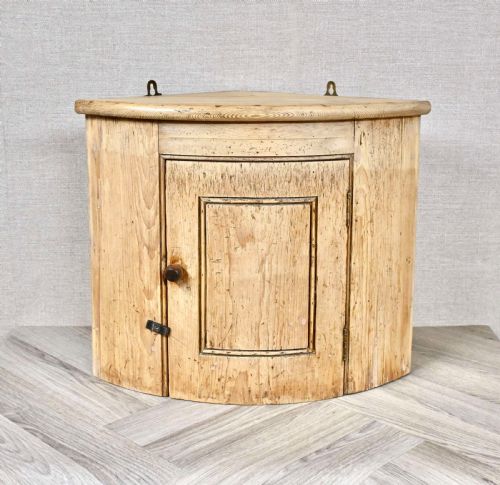
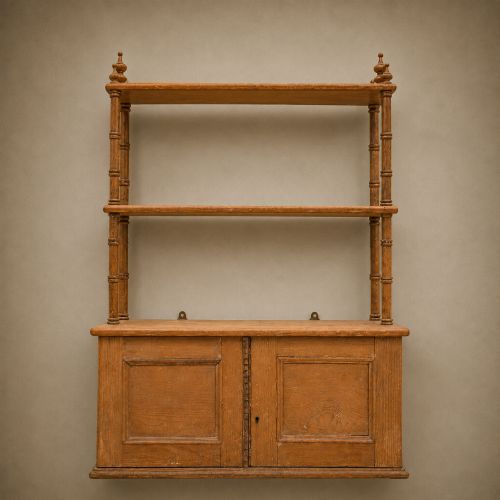
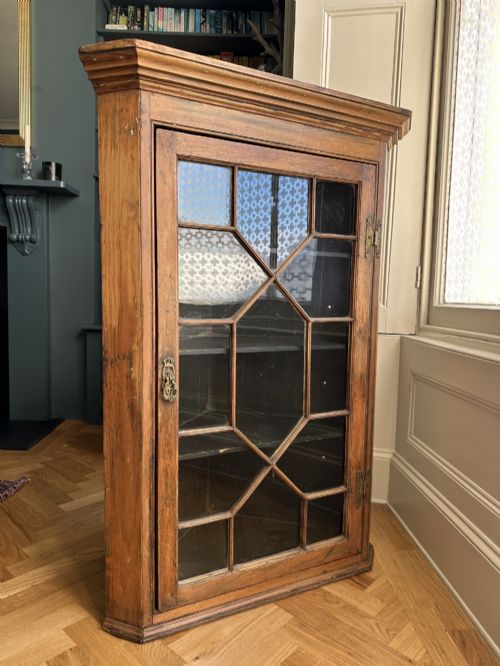
Forms vary significantly based on their original placement and purpose, with flat-backed wall cabinets sitting alongside curved bow front corner cupboards and compact spice cabinets. The integration of glazed doors, open plate racks, and painted finishes distinguishes these items from standard household cabinetry.
How they were made
Makers constructed these cabinets primarily using solid pine, sometimes supplemented with oak for structural strength or interior fittings. Joinery relied on traditional methods appropriate for domestic utility, while hardware such as brass or iron hinges and latches secured the doors.
Surface treatment forms a defining characteristic of many examples, utilising paint in various colours for Scandinavian and Austrian folk pieces or leaving the timber stripped and bare. Glazed doors incorporate small glass panes, and interiors frequently retain their original painted finishes.
Pine Wall Hanging Cabinet Retail Price Guide 2026
Typical asking prices for pine wall hanging cabinet among the pieces listed under this phrase on Sellingantiques today, from the lower quarter to the upper quarter. They describe what is for sale here now, not the wider market.
The selection spans Georgian, Victorian, and rustic farmhouse aesthetics, alongside Scandinavian and Austrian folk art traditions.
What varies in quality
The distinction between standard utility pieces and finer examples rests on the originality of the surface treatment and the sophistication of the joinery. Cabinets retaining untouched original paintwork or regional folk art decoration command greater interest than those with later stripped surfaces or modern repainting.
Proportion and detail differentiate the output of local carpenters, with pieces featuring moulded cornices, bow fronts, or glazed doors showing a higher degree of craftsmanship than plain box cupboards. The survival of original hardware, glass, and interior painted schemes also elevates the character of a piece.
The Pine Wall Hanging Cabinet Glossary
- Bow front
- A convex, outwardly curved cabinet front that softens the angles of a room. This shape appears frequently in corner cupboards.
- Folk art
- Artistic work produced from an indigenous culture or peasant society, encompassing the painted Scandinavian and Austrian pieces seen here. These items often feature traditional regional motifs and pigment colours.
- Spice box
- A small wall-hanging cabinet fitted with internal drawers or compartments for storing culinary ingredients. They frequently combine oak and pine timbers.
- Glazed door
- A frame holding panes of glass to display the contents within the cabinet. This feature allows for the exhibition of ceramics or glassware.
- Cornice
- The decorative moulding crowning the top of a cabinet. It provides a finished architectural transition between the wall and the piece.
Pine Wall Hanging Cabinet: Frequently Asked Questions
Where were these cabinets originally hung?
These cabinets were designed to be mounted securely onto walls in kitchens, living spaces, or hallways to maximise floor space and keep household goods within reach. Corner versions specifically utilised awkward angles in smaller rooms to provide efficient storage.
Many styles, such as spice boxes or shelf combinations, were positioned directly above food preparation areas for easy access to daily essentials while keeping items away from pests.
How do I distinguish eighteenth and nineteenth-century pieces?
Eighteenth-century examples often exhibit heavier pegged joinery and simpler, robust proportions characteristic of Georgian or early country craftsmanship. Painted surfaces from this earlier era tend to show distinct craquelure and mineral pigment wear.
Nineteenth-century pieces frequently incorporate machine-sawn elements alongside hand-planed boards, reflecting transitional workshop practices. Victorian and late nineteenth-century iterations often display more standardised hardware and varied regional revival styles.
How do I care for painted pine furniture?
Painted pine surfaces benefit from gentle dusting with a dry, soft cloth rather than liquid cleaning agents that might compromise historic pigment layers. Keeping the wood away from direct heat sources and strong sunlight prevents the timber from warping and the paint from flaking.
Maintaining a stable room humidity preserves both the pine substrate and any original interior painted finishes found on these cabinets.