

Pine Single Wardrobe
A pine single wardrobe provides essential hanging space and character, offering practical bedroom storage through enduring timber forms crafted in various historical styles.
Pine Single Wardrobe
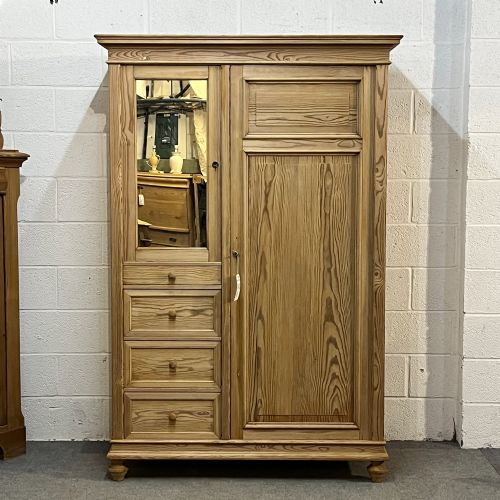
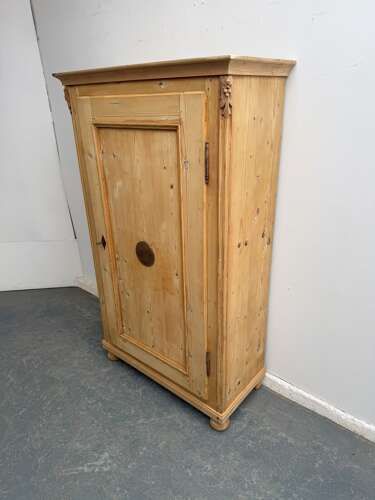
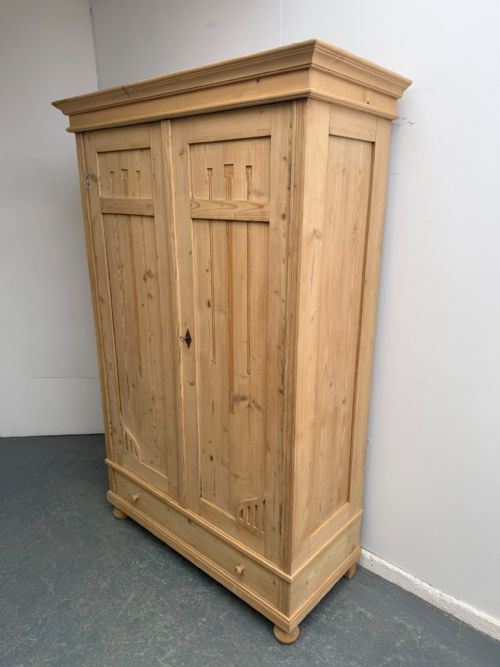
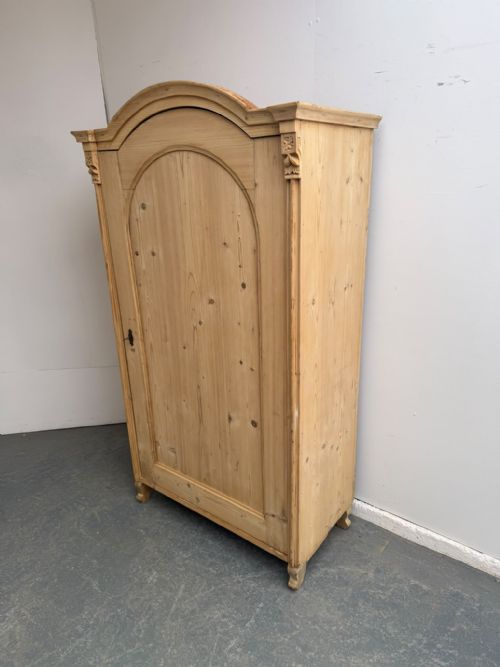
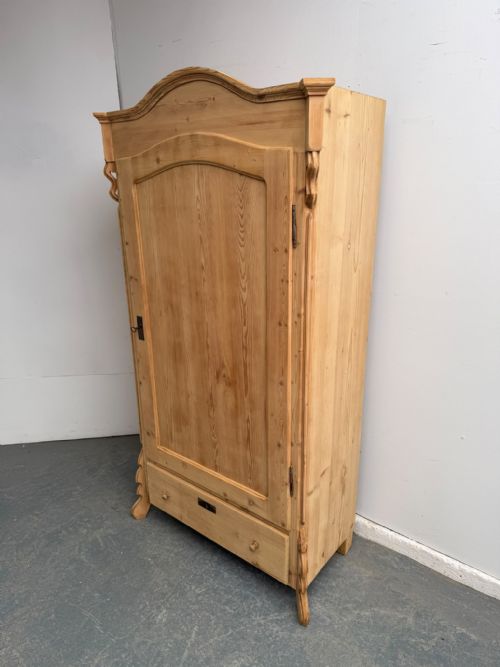
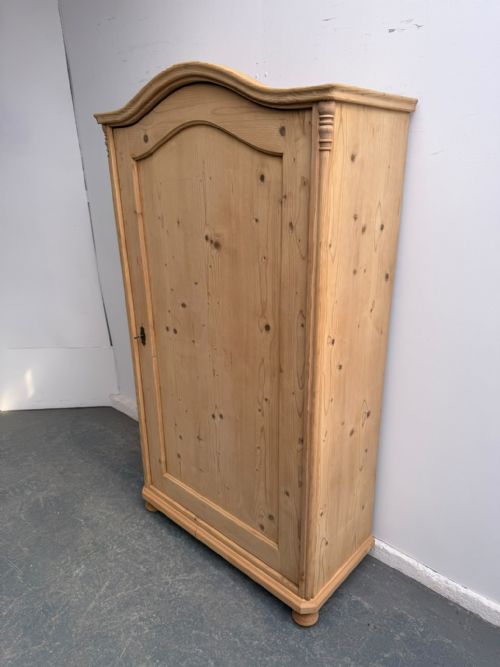
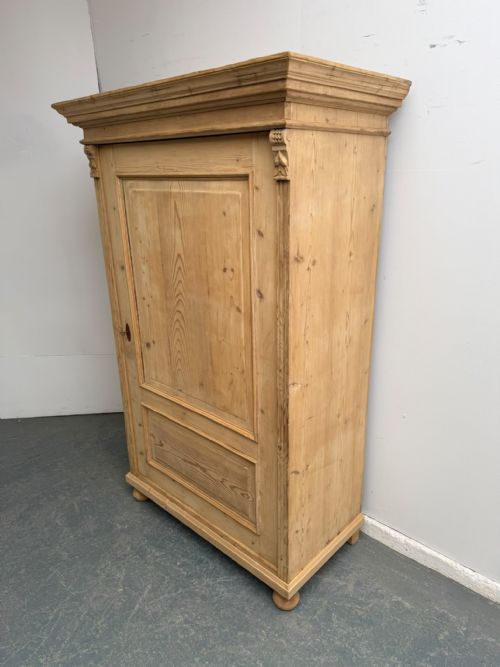
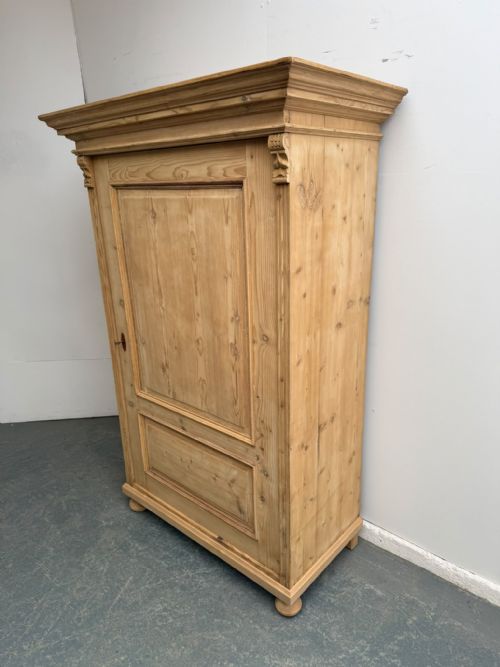
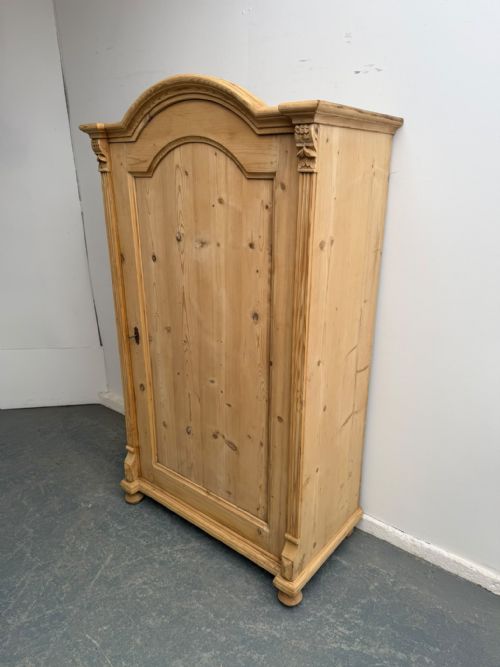
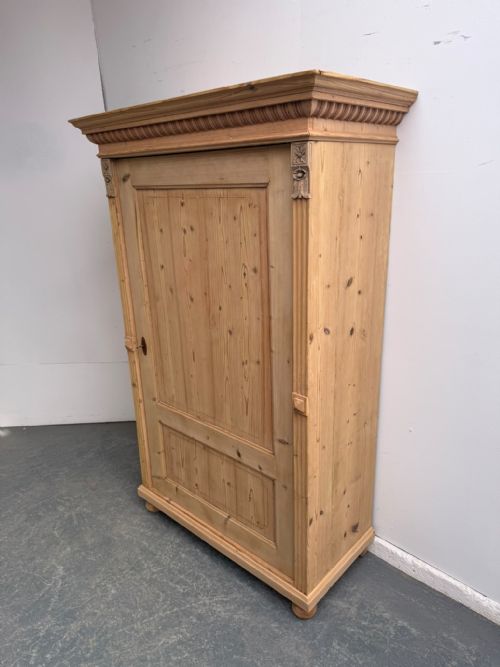
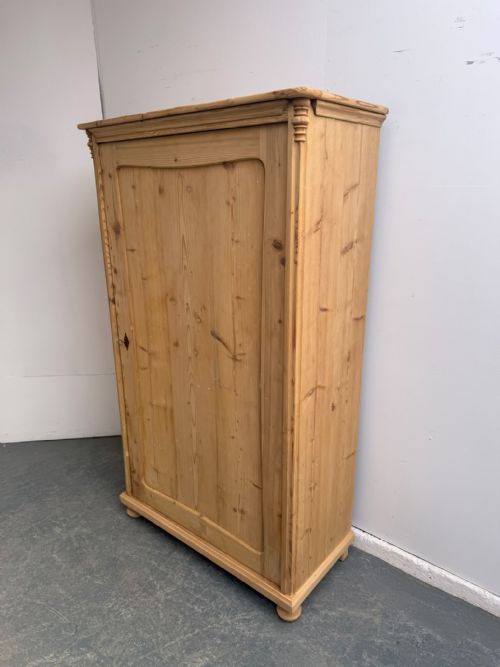
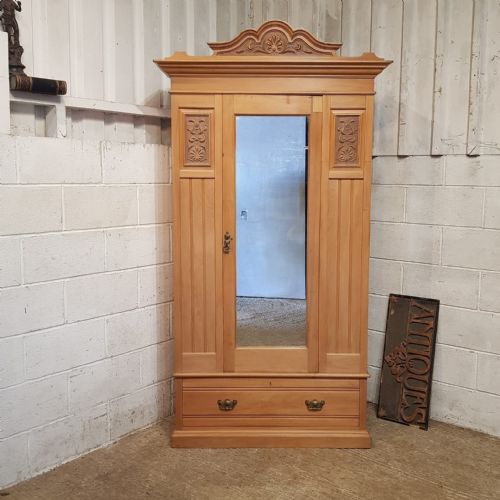
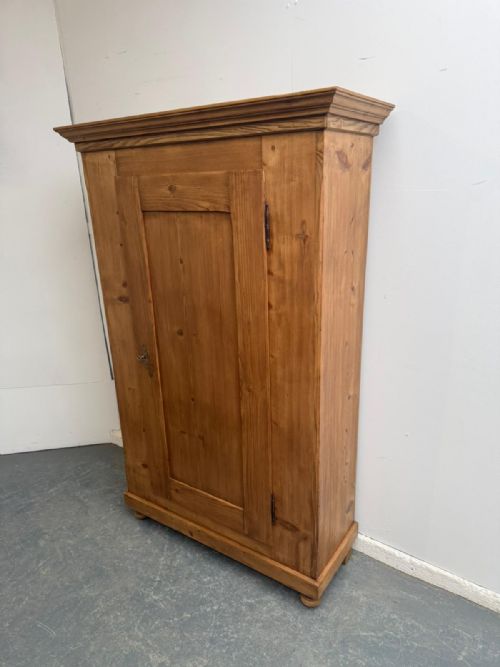
A pine single wardrobe provides compact bedroom storage, appearing in forms such as single door cupboards, compactums, and hall wardrobes. These pieces serve smaller rooms where double doors overwhelm the floor plan, often incorporating a single bottom drawer for additional linens.
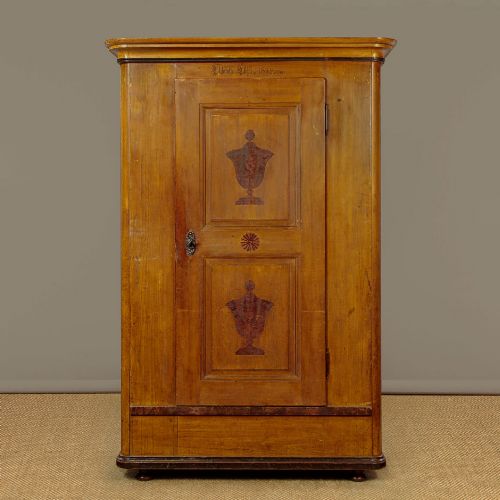
The selections span Victorian, Edwardian, and Georgian periods alongside rustic farmhouse and painted continental styles. Buyers encounter both stripped natural wax finishes and painted surfaces, including Hungarian and Italian polychrome decoration.
Origin varies from English country workshops to continental European pieces, featuring architectural elements like arched tops, mirrored doors, and carved details. Many examples are designed to dismantle for transport, reflecting the practical domestic requirements of their original makers.
How they were made
Construction relies primarily on solid pine and pitch pine timbers, sometimes paired with secondary woods like ash or oak for internal framing and drawer construction. Master joiners utilised traditional panelled doors, pegged joints, and dovetailed drawers to ensure structural stability over centuries of use.
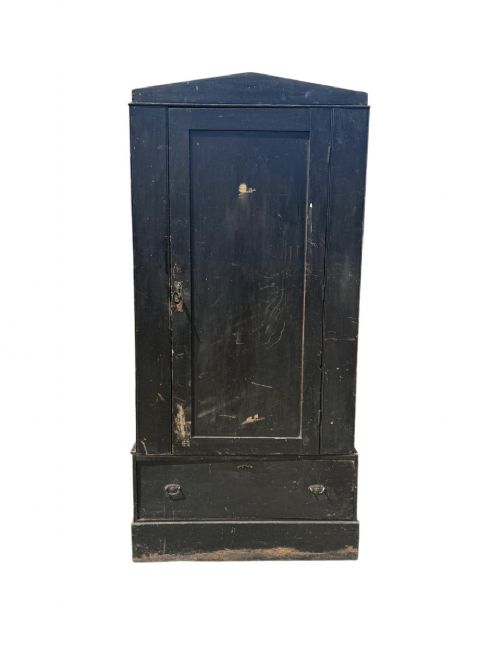
Surface treatments range from clear wax to applied paint, including black, white, and grey finishes, alongside regional decorative techniques like Tyrolean polychrome art. Hardware typically consists of brass or iron handles, hinges, and occasional mirrored glass inserts set into the single door.
What varies in quality
The standard of a pine single wardrobe rests on the integrity of its original timber and the subtlety of its proportions. Pieces retaining their authentic backboards, cornices, and base mouldings command greater appreciation than those altered or stripped down improperly.
Design sophistication distinguishes simpler utilitarian cupboards from finer Arts and Crafts, Edwardian, or continental examples featuring carved panels, arched crests, or original mirrored doors. The presence of functioning knock-down dismantling systems also reflects the ingenuity of the initial cabinetmaker.
The Pine Single Wardrobe Glossary
- Compactum
- A multi-functional wardrobe combining hanging space with internal drawers or shelving compartments. These units offer varied storage within a single footprint.
- Fielded
- A door or panel featuring a central raised portion surrounded by a bevelled edge. This traditional joinery method allows wood to expand and contract safely.
- Dismantles
- A piece constructed to take apart into sections using wedges, pegs, or screws. This feature enabled large furniture to move easily between rooms and properties.
- Polychrome
- Decorated in multiple colours, often found on painted continental cupboards and folk art pieces. This surface treatment adds significant visual character.
- Skeleton Cupboard
- A wardrobe frame designed to hold hanging garments without solid enclosed sides, or retaining an open skeletal framework. Such variants highlight specific functional adaptations.
Pine Single Wardrobe: Frequently Asked Questions
Will a single wardrobe fit my small bedroom?
These pieces are specifically designed for compact spaces, offering full hanging height and occasional drawer storage without occupying excessive wall space.
Most historic examples measure narrower than standard double wardrobes, making them practical choices for alcoves or tight bedroom layouts.
How do I care for waxed pine furniture?
Maintaining waxed pine requires regular applications of quality beeswax to nourish the timber and preserve its soft lustre. Avoiding direct sunlight and extreme heat prevents the wood from drying out or splitting.
Gentle dusting with a soft cloth keeps the surface clean without stripping the historic patina.
How can I tell a Victorian wardrobe from an Edwardian one?
Victorian examples often display heavier architectural proportions, deep cornices, and rich honey tones from decades of waxing. They frequently feature arched panels or simple fielded doors.
Edwardian pieces tend to show lighter construction, occasionally incorporating ash or satinwood elements, simpler lines, and mirrored glass doors.