

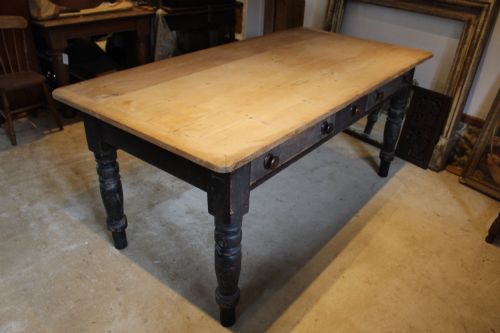
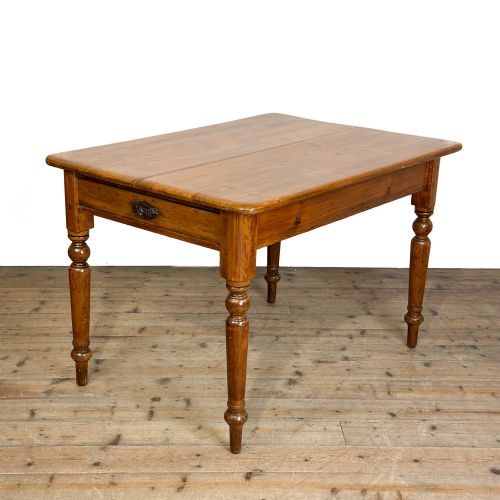
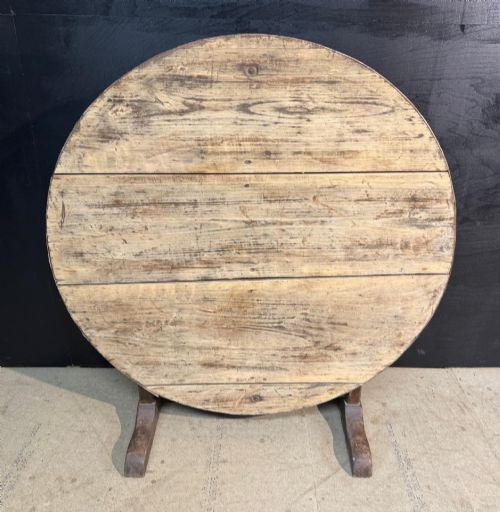
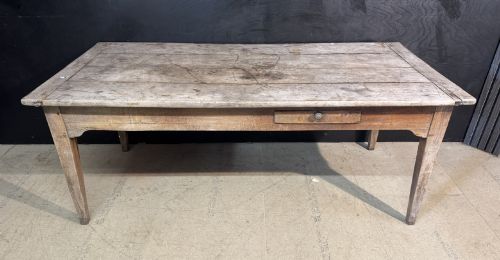
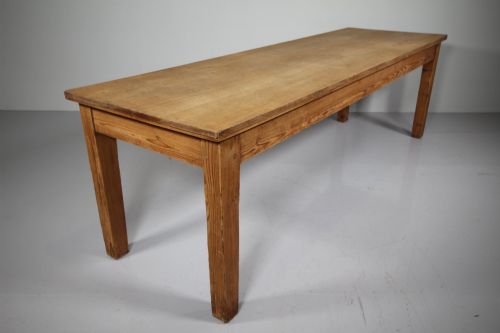
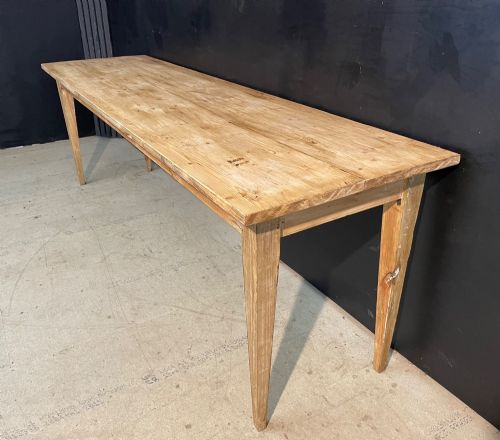
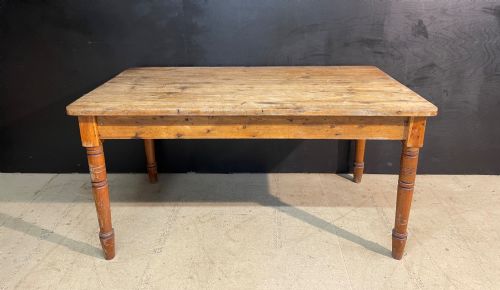
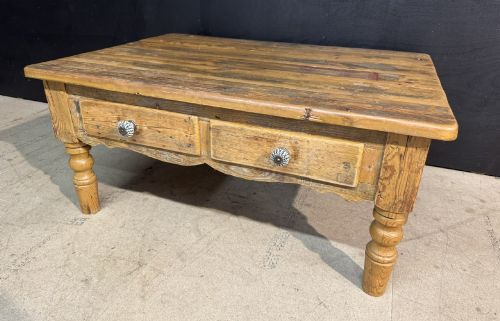
Pine Scrub Table
A pine scrub table brings honest utility to a room, offering scrubbed timber tops and sturdy proportions built for daily work.
Pine Scrub Table
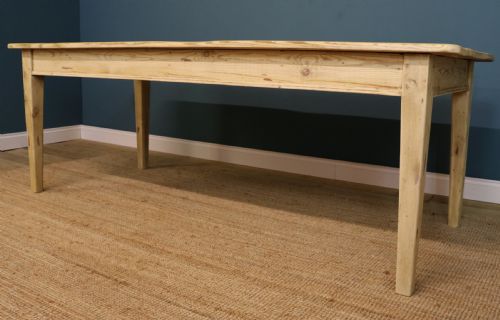
A pine scrub table serves as the traditional workhorse of the kitchen, scullery or dairy, designed for heavy daily use. When searching for a pine scrub table, buyers encounter formats ranging from generous farmhouse and dining boards to smaller prep, tavern and wine tasting tables.
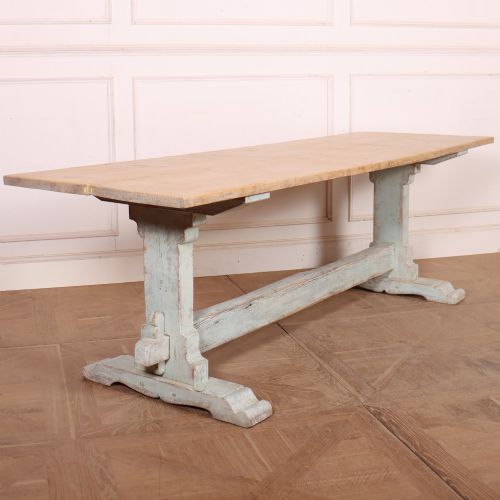
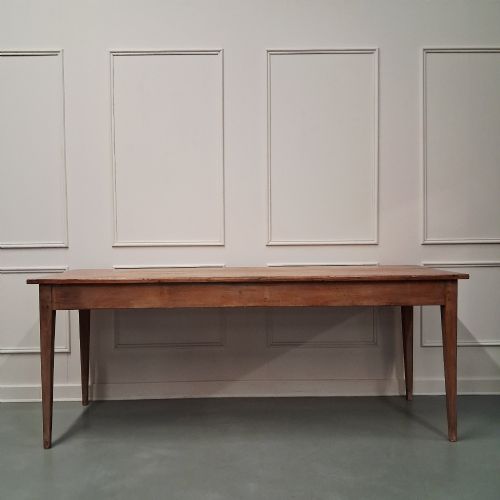
The pieces on this page span the eighteenth, nineteenth and twentieth centuries, originating from English, French, Swedish and Danish workshops. Kitchen tables and farmhouse formats dominate the selection, often featuring scrubbed wooden tops alongside painted or timber bases.
Materials and construction
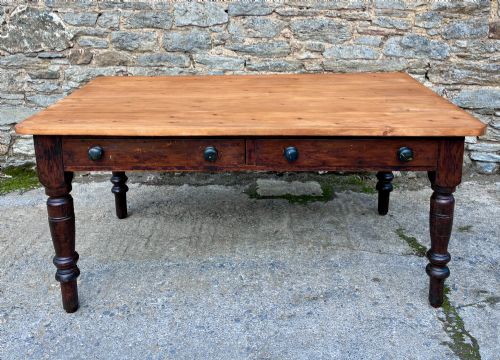
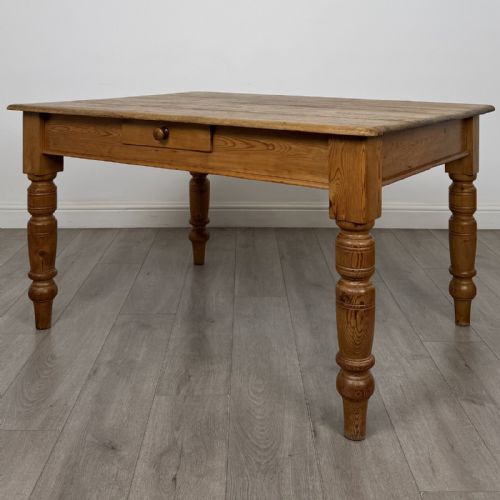
Makers built these tables primarily from pine, frequently pairing the softwood with oak, fruitwood or sycamore for added durability. Tops were left bare for daily scouring and scrubbing, while bases often received coats of paint, including traditional red, Falu paint or later coloured finishes.
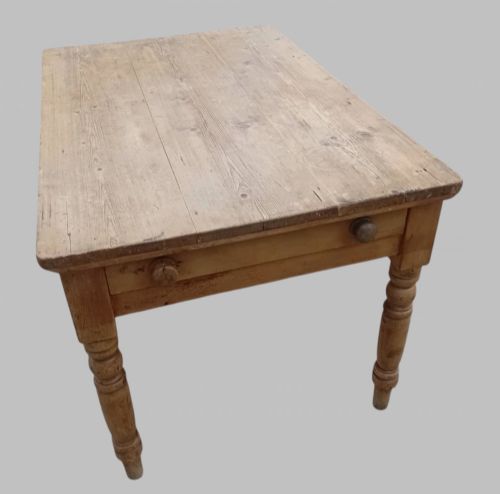
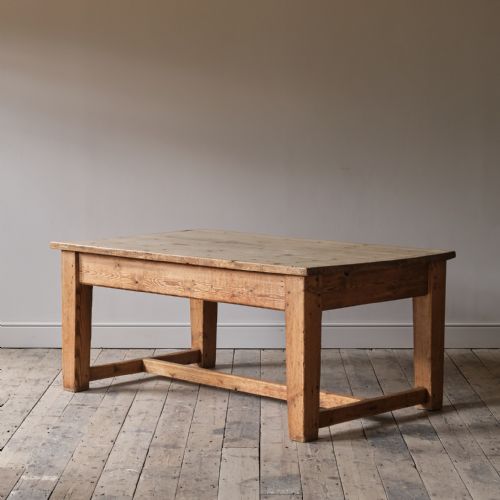
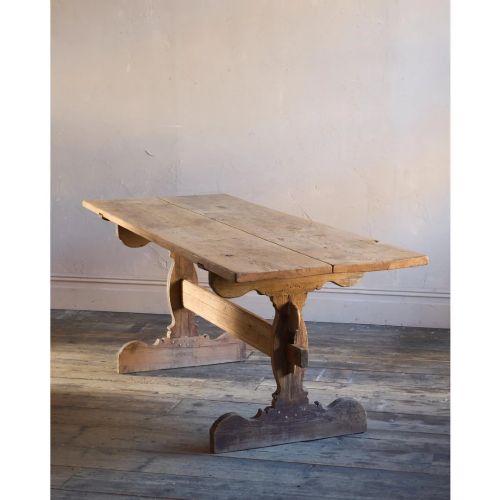
Joinery techniques varied from straightforward square section supports to bobbin turned legs, trestle ends and X frames. Practical additions such as drawers for utensils appear on several variants, alongside lower shelves for storage in potting and prep formats.
Pine Scrub Table Retail Price Guide 2026
Typical asking prices for pine scrub table among the pieces listed under this phrase on Sellingantiques today, from the lower quarter to the upper quarter. They describe what is for sale here now, not the wider market.
Listings span the eighteenth to the twentieth centuries, featuring pine paired with oak, sycamore and fruitwood across English, French and Scandinavian origins.
Assessing quality and character
Quality in these tables rests on the balance between original surface treatment and structural integrity. Pieces retaining authentic period paint on the base stand apart from later painted examples, displaying honest wear from decades of domestic service.
The thickness and depth of the scrubbed pine top also signal quality, as does the harmony between the proportions of the surface and the supporting frame. Regional variations, such as French Normandy or Swedish country framing, add distinct character to individual pieces.
The Pine Scrub Table Glossary
- Scrub top
- A wooden table top left unfinished and repeatedly scrubbed clean with water and sand or soap, producing a pale, weathered surface.
- Tavern table
- A sturdy, compact table traditionally utilised in public houses or rural gathering spaces, often featuring heavy legs and straightforward joinery.
- Prep table
- A utilitarian surface designed for food preparation in kitchens or sculleries, frequently equipped with drawers or lower undershelves.
- Falu paint
- A traditional deep red paint originating from Sweden, utilised extensively on timber buildings and rustic furniture for its preservative qualities.
- X frame
- A structural base design utilising intersecting diagonal timbers for enhanced stability under heavy loads.
Pine Scrub Table: Frequently Asked Questions
Where were these tables used?
These tables served working roles in kitchens, sculleries, dairies and taverns across Britain and continental Europe.
Their robust construction made them suitable for food preparation, kneading dough, potting plants and general communal dining.
How do I date a pine table?
Dating relies on examining the construction methods, tool marks left by saws, and the type of fixings used in the frame.
Earlier pieces from the eighteenth and early nineteenth centuries often display hand-planed surfaces and pegged joinery, while later Victorian and twentieth-century examples show machine-sawn timber.
Should I oil a scrubbed pine top?
Most owners prefer to leave scrubbed pine dry and untreated to maintain the authentic pale, matte finish achieved through historical use.
Applying oils or waxes will darken the timber and alter the natural dry feel characteristic of these working surfaces.