

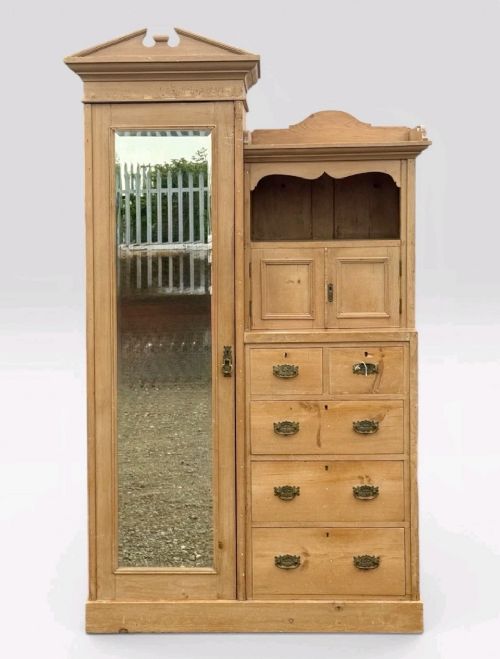


Pine Drawers with Mirror
Pine drawers with mirror combine practical bedside storage and dressing glass, drawing on Victorian and Edwardian craftsmanship to anchor a bedroom.
Pine Drawers with Mirror
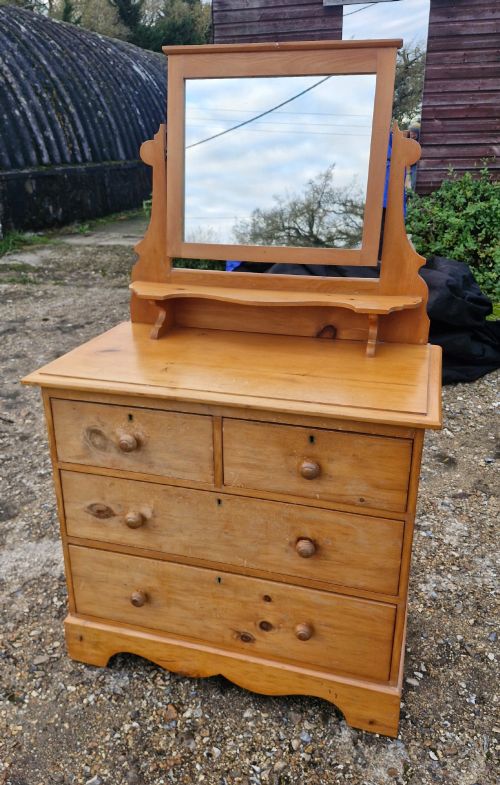
Pine drawers with mirror encompass bedroom furniture designed for daily grooming and storage, appearing across this page in forms such as dressing tables, dressing chests, and large wardrobes with integrated glass. The pieces span periods from the mid-nineteenth century through the Edwardian era and into the 1930s, reflecting domestic needs of the past.
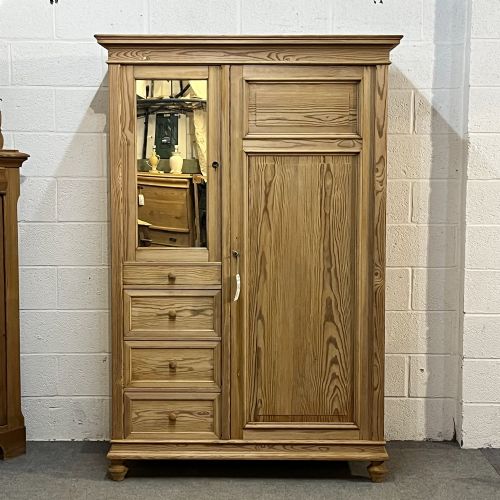
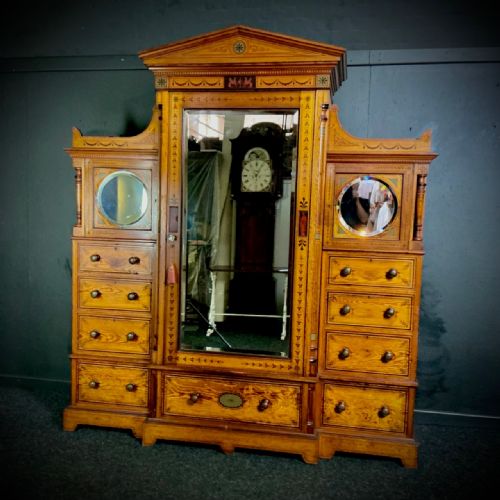
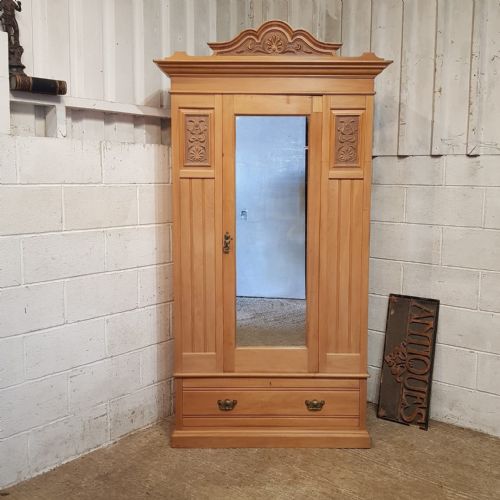
The version most commonly met on this page is the Victorian or Edwardian dressing chest, which pairs a set of lower drawers with an upright tilting mirror. Wardrobes featuring mirrored doors and internal drawers also feature strongly, constructed to house garments while providing a reflective surface.
How they were made
Makers utilised solid pine and pitch pine as the primary carcass materials, sometimes applying scumble glaze or stencilling directly onto the softwood surfaces for decoration. Brass and ceramic elements appear as drawer pulls, while lead light panels feature in select wardrobe doors.
Mirrors were set into timber frames, often designed to tilt on pivots above dressing chests or mounted directly into the doors of larger wardrobes. Assembly methods allowed some substantial bedroom units to dismantle for transport.
Pine Drawers with Mirror Retail Price Guide 2026
Typical asking prices for pine drawers with mirror among the pieces listed under this phrase on Sellingantiques today, from the lower quarter to the upper quarter. They describe what is for sale here now, not the wider market.
Listings span the Victorian, Edwardian, and 1930s periods, using pine, pitch pine, glass, and brass.
What varies in quality
Quality separates pieces through the selection of timber and the complexity of the cabinetry, ranging from simple softwood construction to substantial pitch pine wardrobes fitted with lead light glass. Finer examples display careful surface treatments like stencilling or scumble glazing rather than plain painted finishes.
The integration of the mirror housing affects the overall standard, with superior dressing chests offering sturdy pivoting frames and well-fitted drawer boxes. Maker attribution, such as work associated with established firms, further distinguishes the top of the range from standard domestic workshop output.
Maple & Co.
The Pine Drawers with Mirror Glossary
- Pitch pine
- A dense, durable resinous softwood utilised for heavier bedroom furniture and wardrobes. It offers a distinct grain pattern compared to standard softwood.
- Scumble glazed
- A decorative surface technique where a translucent layer of paint is manipulated over a lighter base colour to simulate richer timber grain. This finish protects the softwood underneath while adding visual depth.
- Lead light panels
- Glazing held together by lead caming, seen in select wardrobe doors to divide the glass into smaller geometric sections. These panels add decorative detail to large furniture fronts.
- Dressing chest
- A lower chest of drawers with an attached upright mirror, used for personal grooming. It combines surface storage with a reflective glass component.
- Compactum
- A large wardrobe combining hanging space, shelves, and internal drawers within a single carcass. This form maximises storage efficiency in period bedrooms.
Pine Drawers with Mirror: Frequently Asked Questions
How do I date a pine dressing chest?
Dating relies on construction methods, timber choice, and hardware styles associated with periods like the Victorian era or Edwardian times. Details such as dovetailing and mirror frame fixings help narrow down the decade of manufacture.
Earlier pieces often utilise solid pitch pine and hand-cut joints, whereas later 1930s items show different manufacturing traits. Comparing the specific type of softwood and finish provides further context.
What is the difference between pitch pine and softwood?
Pitch pine comes from specific conifer species known for a high resin content and greater weight, making it exceptionally durable for heavy furniture. Standard softwood used in these pieces is typically lighter in weight and grain density.
Both materials formed the basis of nineteenth and early twentieth-century bedroom pieces. Pitch pine often takes a darker, richer tone when waxed.
How should I care for scumble glazed pine?
Scumble glazed surfaces require gentle cleaning with a dry or barely damp cloth to preserve the delicate painted top layer. Avoiding harsh chemical cleaners prevents damage to the decorative finish.
Applying a light wax occasionally helps maintain the lustre of the underlying softwood and glaze. Keeping the furniture away from direct sunlight protects the pigments from fading.