




Pietra Dura Table Top
A pietra dura table top brings together polished hardstones and marbles to form intricate geometric or pictorial designs.
Pietra Dura Table Top
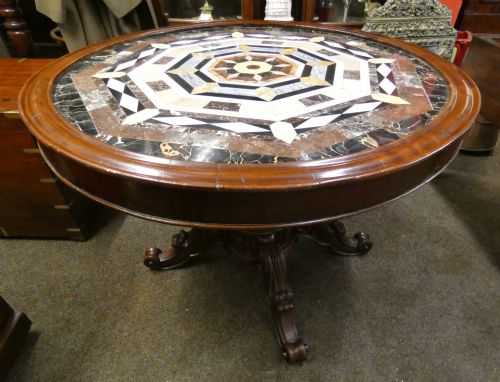
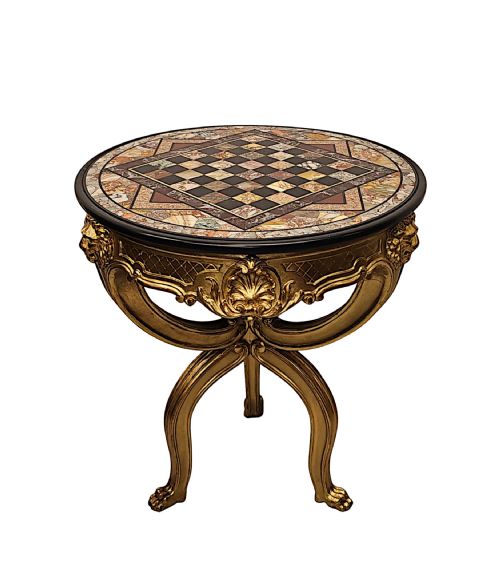
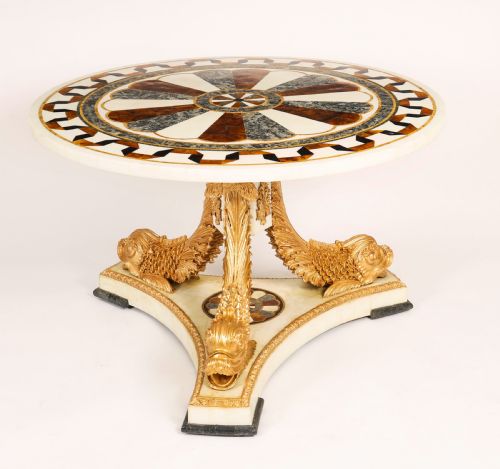
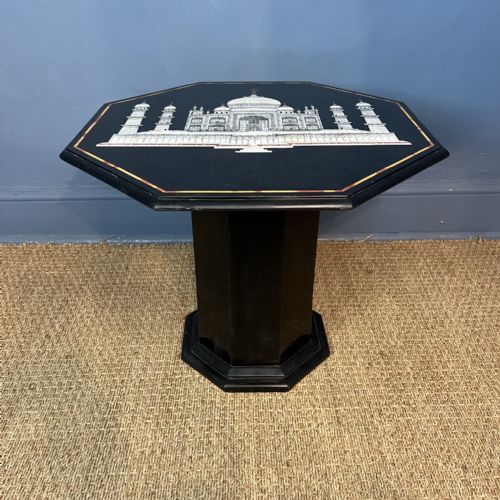
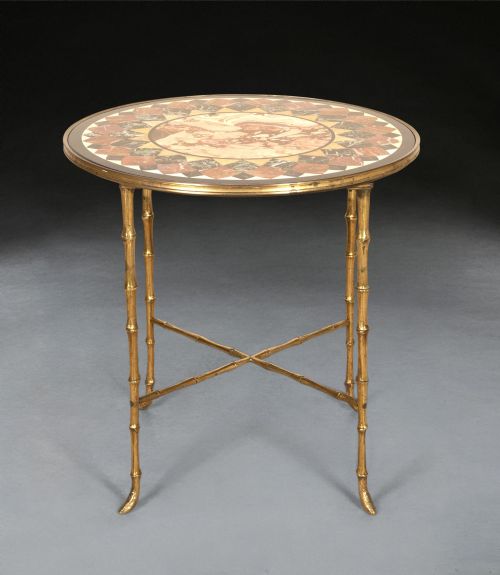
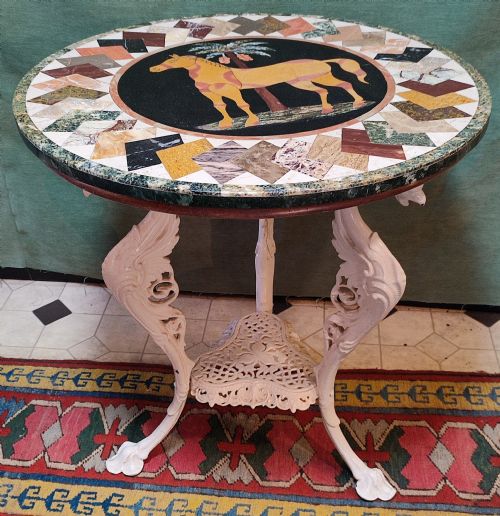
When you search for a pietra dura table top, you are looking at stone mosaic work set into a solid marble or slate ground, often mounted on timber bases ranging from mahogany and walnut to gilded wood and cast iron. These surfaces appear predominantly in centre tables, occasional tables, and specific game or chess boards from the nineteenth century.
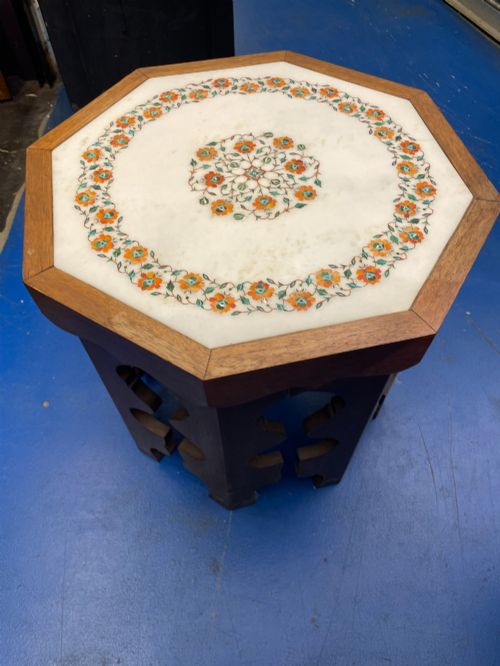
The aesthetic draws heavily from Grand Tour travels, Italian workshops, and English Regency or Victorian revivals, alongside distinct regional traditions like Indian inlaid marble work from Agra or Kashmir. You will most frequently encounter nineteenth-century circular or octagonal specimen tables where geometric bands or pictorial bird motifs take centre stage.
Forms vary from grand pedestal centre tables intended for reception rooms to smaller occasional and coffee tables adapted for modern living. The structural frames utilise period timbers such as rosewood and coromandel, while the tops remain dedicated showcases for lapidary skill.
How they were made
Craftsmen cut thin slices of hardstone, such as malachite, lapis lazuli, jasper, and agate, shaping each piece meticulously to fit flush within hand-cut recesses in a marble slab. The pieces are secured with adhesive and polished flat to create a seamless, glass-like pictorial or geometric surface.
Supporting structures rely on traditional cabinet-making techniques, utilising solid mahogany, walnut, and rosewood, sometimes accented with brass mounts or giltwood carving. Alternative Victorian formats incorporate cast iron bases to support the heavy weight of the stone tops.
Pietra Dura Table Top Retail Price Guide 2026
Typical asking prices for pietra dura table top among the pieces listed under this phrase on Sellingantiques today, from the lower quarter to the upper quarter. They describe what is for sale here now, not the wider market.
Listings feature nineteenth-century specimen marble and pietra dura tables alongside twentieth-century iterations from English, Italian, and Indian workshops.
What varies in quality
The selection of the base timber and the refinement of its carving also dictate overall quality, moving from simple iron supports to elaborately carved giltwood or rosewood frames with detailed lion paw motifs.
Woodley family
The Pietra Dura Table Top Glossary
- Pietra dura
- Italian for hard stone, this technique involves inlaying cut and polished coloured stones into a marble base to create pictorial or geometric designs. It requires exceptional precision to ensure individual stone segments fit together without visible gaps.
- Specimen marble
- A tabletop composed of numerous distinct marble and mineral varieties gathered from different locations, often arranged in geometric patterns. These pieces were popular souvenirs for travellers undertaking the Grand Tour.
- Grand Tour
- A traditional trip through Europe, particularly Italy, undertaken by upper-class young men in the eighteenth and nineteenth centuries to study art and architecture. Travellers often returned home with pietra dura and specimen marble items.
- Scagliola
- A composite substance made from selenite, glue, and pigments, mimicking the appearance of inlaid marble. Artisans apply this mixture to imitate true pietra dura work at a different cost and weight.
Pietra Dura Table Top: Frequently Asked Questions
How do I clean a stone top?
Dust the surface regularly with a soft, dry cloth to prevent abrasive particles from scratching the polished marble or hardstone inlay. Avoid acidic cleaners, vinegar, or harsh detergents, which etch and ruin the delicate surface polish.
For stubborn marks, use a damp cloth with mild soap, drying the stone immediately afterward. Professional maintenance may occasionally be required to restore the high gloss characteristic of nineteenth-century lapidary work.
Are these tables sturdy enough for daily use?
Pietra dura tables are structurally robust, supported by heavy timber or cast-iron bases designed to bear the considerable weight of the stone top. However, the inlaid surface demands care to prevent impact damage to the delicate hardstone tesserae.
Position the table away from high-traffic zones where heavy objects might strike the edge of the stone. Using coasters and protective pads helps preserve the antique finish against daily wear.
How can I tell a nineteenth-century piece from a later copy?
Examine the underside of the tabletop and the construction of the wooden base for tool marks, timber shrinkage, and assembly methods consistent with the period. Nineteenth-century examples typically show hand-cut recesses and older fastening techniques.
The variety of stone used and the sharpness of the hand-polished joints also offer clues to age. Later reproductions often lack the subtle mineral variations and meticulous fitting found in genuine Grand Tour pieces.
What is the difference between pietra dura and scagliola?
Pietra dura consists of actual hardstones and marbles cut and fitted by hand into a solid stone matrix. Each coloured element is a distinct piece of natural mineral.
Scagliola is a composite material made from pigmented plaster and glue, applied into carved channels to imitate stone inlay. It offers a smooth surface but lacks the natural weight and mineral depth of true hardstone work.