




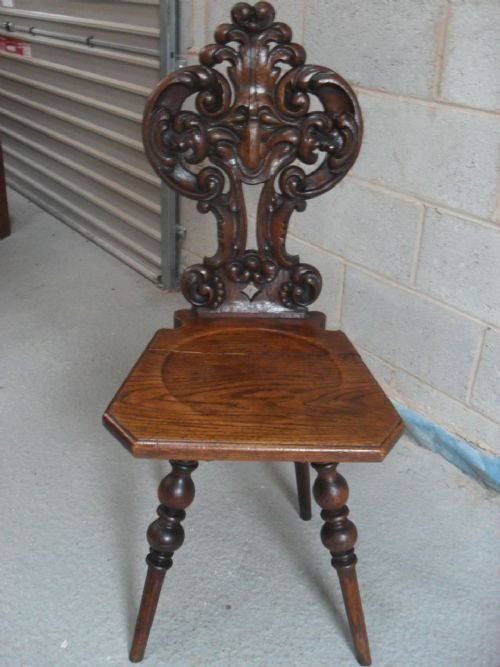


Pierced Oak Hall Chairs
These pierced oak hall chairs combine robust timber with intricate openwork backs to anchor an entryway with traditional British character.
Pierced Oak Hall Chairs
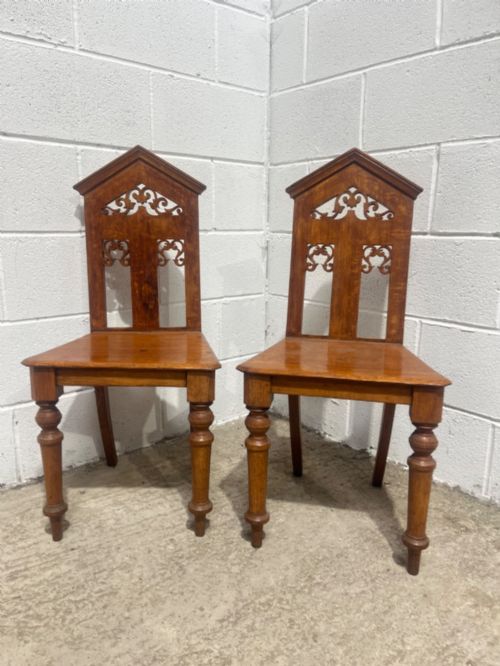
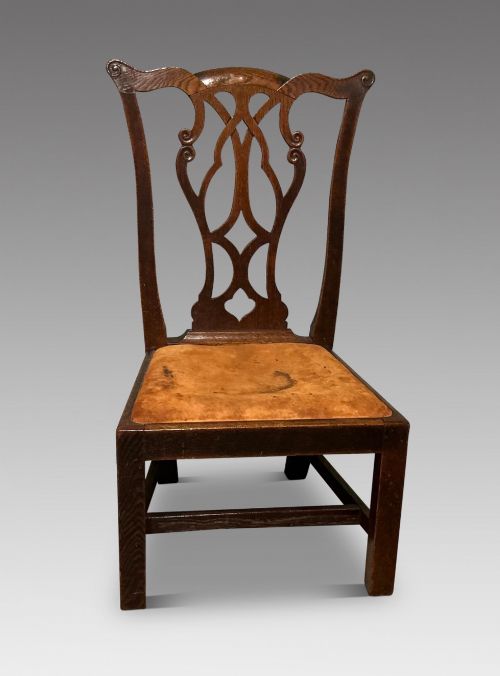
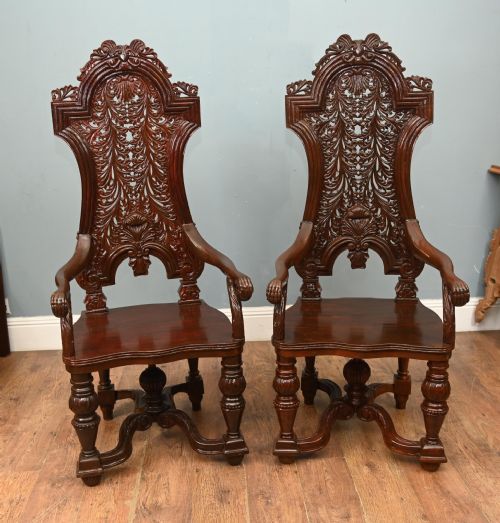
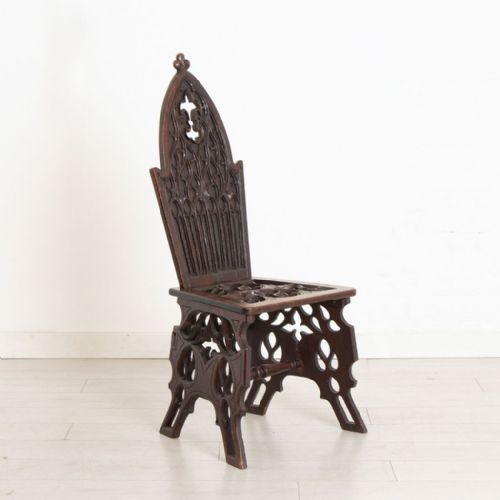
Pierced oak hall chairs are sturdy seating forms designed for hallways and entry spaces, appearing primarily in Victorian, Edwardian, and earlier historical revivals. The selection on this page ranges from seventeenth-century English single side chairs to nineteenth-century Gothic and Chippendale revival pairs.
The defining characteristic of these pieces is the carved or pierced back splat, which often incorporates fretwork, architectural tracery, or heraldic motifs. Alongside dedicated hall chairs, the inventory includes related side chairs, occasional chairs, and gossip seats utilising solid oak construction.
How they were made
Makers utilised solid oak as the primary timber, shaping panels and frames through traditional joinery and hand-carving techniques. Decorative pierced backs were achieved by cutting intricate openings through the wood using hand tools, frequently paired with turned legs and carved details.
Selected examples incorporate upholstery elements such as fabric, suede, leather, and tapestry pads or seat inserts fixed with brass detailing. The combination of dense hardwood and pierced ornamentation required precise woodworking to maintain structural integrity despite the cutaway designs.
Pierced Oak Hall Chairs Retail Price Guide 2026
Typical asking prices for pierced oak hall chairs among the pieces listed under this phrase on Sellingantiques today, from the lower quarter to the upper quarter. They describe what is for sale here now, not the wider market.
Several pieces are designated as gossip chairs, built low and wide for the hurried Victorian whispered conversation.
What varies in quality
The standard of a pierced oak hall chair rests upon the crispness of the hand-carving and the depth of the pierced work in the back splat. Superior examples demonstrate confident execution in the fretwork and joinery, whereas lesser pieces rely on shallow surface moulding or plain timber.
Proportions and timber selection also differentiate the range, with dense, well-figured solid oak framing commanding greater presence than plainer secondary woods. The integration of structural turning and secondary materials like brass fittings further separates utilitarian seating from decorative revival pieces.
The Pierced Oak Hall Chairs Glossary
- Pierced splat
- The central vertical member of a chair back that has been pierced or cut through to create an openwork pattern. This ornamental technique lightens the visual weight of the heavy timber.
- Hall chair
- A rigid wooden seat intended for occasional use in an entrance hall rather than long periods of sitting. These pieces frequently display prominent family crests or decorative carving.
- Chippendale Revival
- A late nineteenth or early twentieth-century style copying the mid-eighteenth-century designs associated with Thomas Chippendale. Pieces in this manner often feature elaborate pierced splats and cabriole legs.
- Gothic Revival
- An architectural and decorative style drawing inspiration from medieval design. In seating, this manifests as pointed arches, quatrefoils, and heavy tracery cut into the oak backs.
- Side chair
- An upright chair without arms designed to stand against a wall or around a dining table. They form a significant portion of the historical seating variants found here.
Pierced Oak Hall Chairs: Frequently Asked Questions
Where should I place a hall chair?
These chairs suit narrow entranceways, landings, or hallways where their shallow profiles and decorative backs can be appreciated without obstructing movement. Because they were built for formal reception areas rather than lounging, they function best as sculptural accents or occasional seats.
Pare down surrounding furniture to let the pierced woodwork and timber grain stand out against plain walls. They also serve effectively in bedrooms or studies as distinctive standalone side chairs.
How do I care for antique oak furniture?
Maintain the timber by keeping pieces away from direct heat sources and sudden humidity changes that can cause solid oak to split. Regular dusting with a soft, dry cloth prevents grime accumulation in the carved recesses.
Apply a traditional beeswax polish sparingly when the wood appears dry, buffing it gently to preserve the natural lustre of the surface. Avoid modern liquid silicones which can build up and dull the historic finish over time.
How do I identify a revival piece?
Revival pieces often combine decorative motifs from earlier centuries, such as seventeenth-century Jacobean turning with nineteenth-century machine-assisted joinery techniques. Examining the underside and interior joints reveals tool marks and construction methods characteristic of Victorian or Edwardian workshops.
Compare the timber colour and wear patterns with documented examples from the stated period to confirm whether a chair dates to the original era or a later stylistic revival.
Are these chairs comfortable for daily use?
Traditional hall chairs were designed for upright posture and brief periods of waiting rather than relaxed lounging. Most examples feature rigid solid timber seats, though some incorporate upholstered pads in fabric, leather, or tapestry.
Consider adding a discrete period-appropriate cushion if you plan to use the seat for extended tasks at a desk or table. Their primary strength lies in visual presence and historical craftsmanship rather than ergonomic cushioning.