



Piecrust Table Lamp
A piecrust table lamp sits on a compact wooden base, combining a raised decorative rim with a fitted lighting fixture to illuminate smaller spaces.
Piecrust Table Lamp
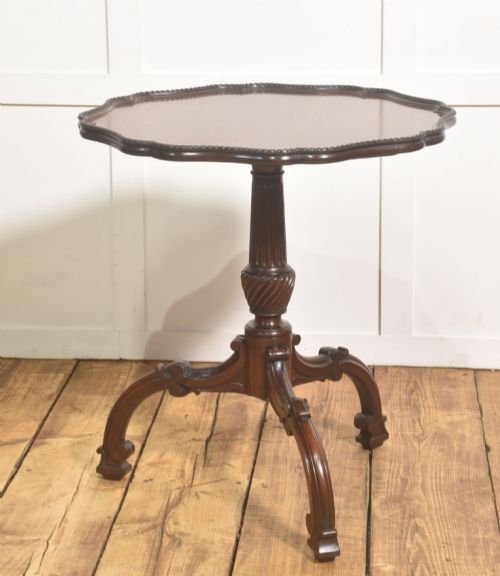
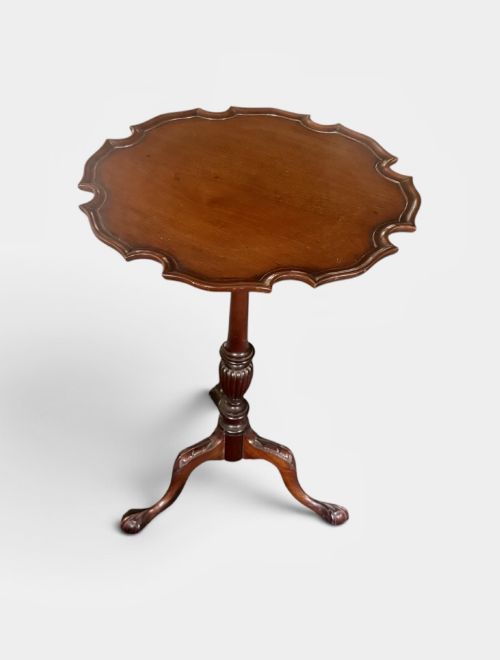
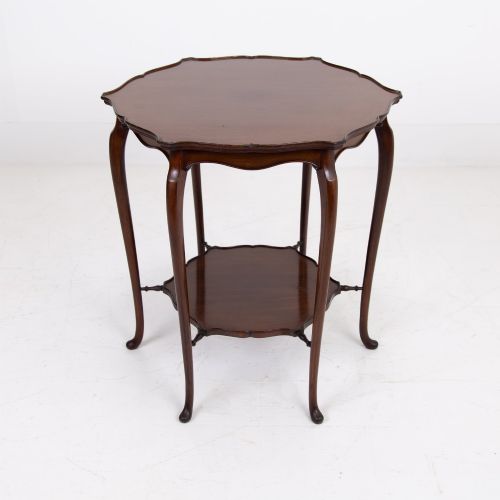
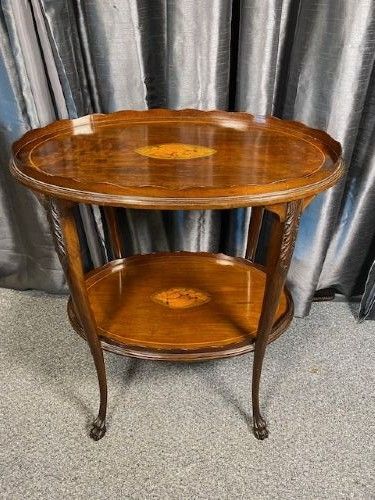
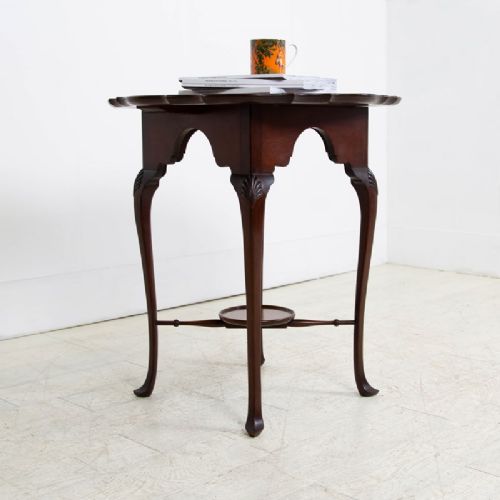
When you search for a piecrust table lamp, you are looking at small occasional, wine, and tripod tables adapted for lighting or built as lamp tables during the nineteenth and early twentieth centuries. These pieces combine compact occasional furniture forms with a raised, scalloped rim derived from eighteenth-century cabinet-making traditions.
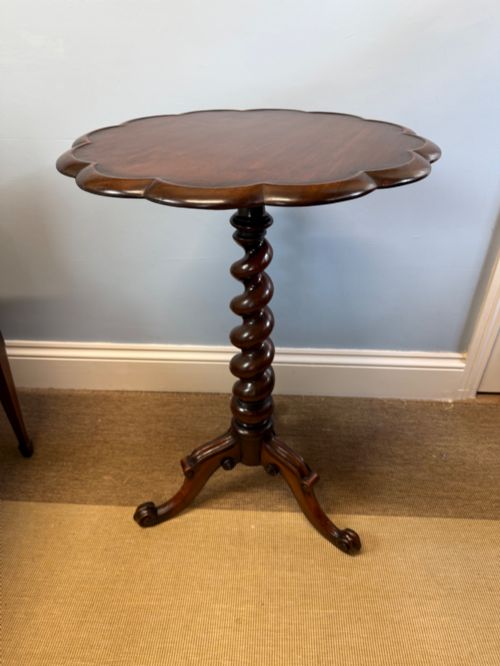
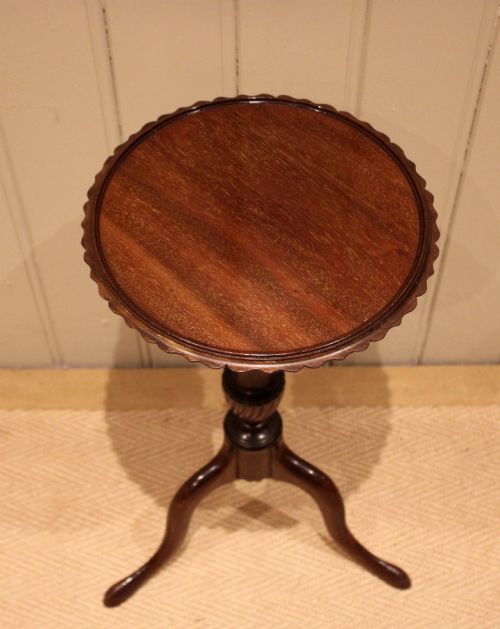
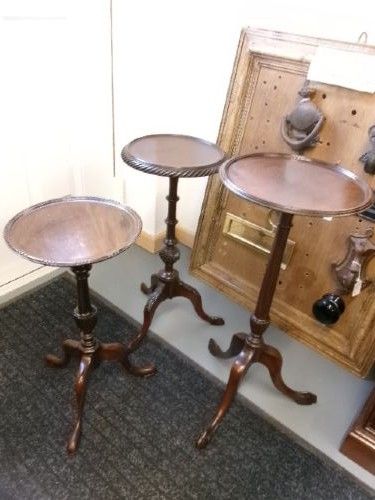
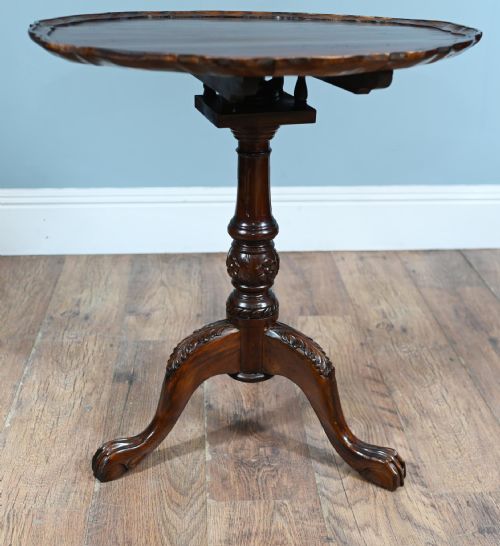
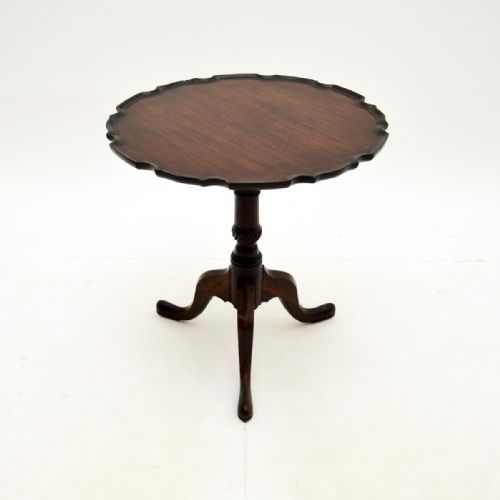
The version you are most likely to meet on this page is a mahogany wine table or occasional lamp table dating from the Edwardian period or the late nineteenth century. These pieces frequently feature circular tops with shaped edges supported on slender tripod bases.
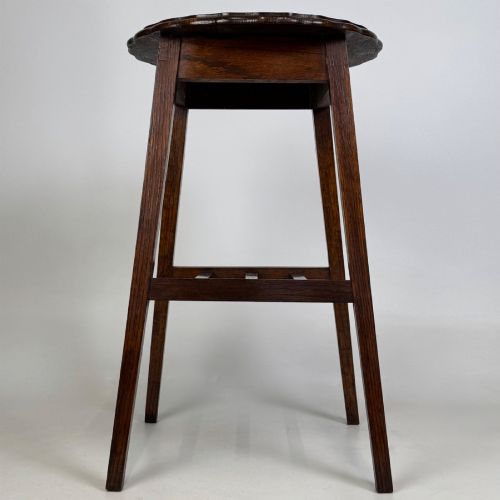
Makers often drew inspiration from Georgian and Chippendale styles, producing revival pieces that served functional roles in period drawing rooms and parlours. Such tables appear alongside oak side tables and occasional tables featuring similar compact proportions.
How they were made
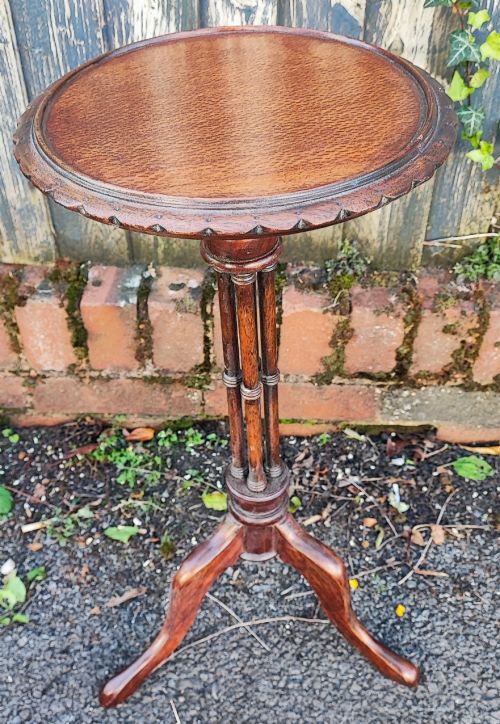
Makers relied primarily on solid mahogany and oak, frequently incorporating decorative veneers such as burr walnut and figured walnut on top surfaces. Timber selection governed the visual weight of the piece, with dense hardwoods chosen for stability on slender tripod legs.
Turning and carving defined the structural components, utilising techniques like bobbin turning, barley twisting, and tripod leg shaping to support the raised rim tops. Joinery remained traditional, securing the column to the base and the top through precise fitting.
Listings span the eighteenth century to the 1930s, featuring mahogany, oak, burr walnut, and brass across occasional, wine, and coffee table forms.
What varies in quality
The refinement of the timber grain and the crispness of the shaped rim separate the superior examples from standard production pieces. Figured walnut and select mahogany display rich natural figuring that elevates the visual presence of a small surface.
Proportion and stability in the tripod base dictate the structural integrity of the table. A well-balanced frame rests evenly on three feet without central wobble, reflecting careful alignment by the maker.
Shapland and Petter·S and H Jewell London
The Piecrust Table Lamp Glossary
- Piecrust rim
- A raised, carved, or moulded edge shaped into continuous curves resembling the crust of a pastry pie. This decorative detail is typically carved directly from the solid timber of the tabletop.
- Tripod base
- A support structure consisting of three diverging legs joined to a central vertical pillar. This design ensures stability on uneven floors.
- Occasional table
- A small, portable table designed for specific, intermittent use in a principal room. These pieces function easily as lamp stands or wine supports.
- Tilt-top table
- A table equipped with a mechanism allowing the top to pivot into a vertical position when not in use. This mechanism saved floor space in period interiors.
- Revival style
- A design movement looking back to historical periods such as the Georgian or Chippendale eras for aesthetic inspiration. Makers reinterpreted these classic forms using contemporary nineteenth and twentieth-century workshop methods.
Piecrust Table Lamp: Frequently Asked Questions
What is a piecrust table lamp?
A piecrust table lamp is a small occasional table featuring a raised, scalloped rim that has been adapted or built to hold a lighting fixture. These pieces function as compact stands for illumination in living spaces.
They combine historical revival styles with practical utility, utilising traditional timber frames such as mahogany and walnut.
How were these tables used originally?
These compact tables served primarily as wine tables, side stands, or occasional furniture in drawing rooms and parlours. Their modest proportions allowed them to sit beside seating areas for drinks or reading materials.
Over time, many of these small surfaces naturally accommodated portable lighting fixtures due to their convenient height and stable tripod bases.
How do I tell Edwardian pieces apart?
Edwardian examples often feature lighter mahogany timbers and subtle revival styling inspired by earlier Georgian or Chippendale designs. The construction tends to be neat and refined, suited to the domestic interiors of the early twentieth century.
Earlier nineteenth-century versions frequently display denser timbers, darker patination, and hand-carved details that reflect a different workshop tradition.
Where should I place a lamp table?
A lamp table suits tight corners, beside armchairs, or alongside sofas where surface space is needed without blocking circulation. Their small footprint makes them versatile additions to various rooms.
Ensure the tripod base rests on an even floor surface to maintain stability when supporting a lamp and shade.