

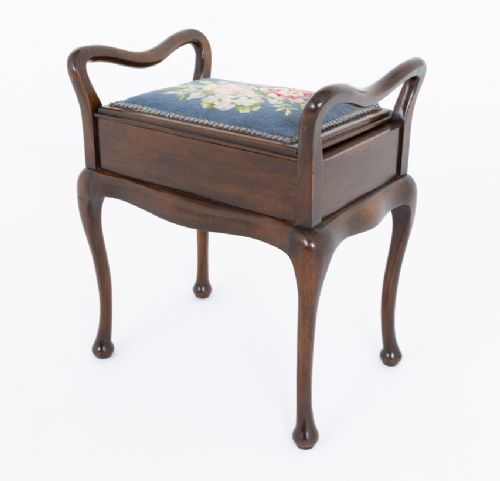


Piano Music Bench
These piano music bench examples combine practical seating with sheet music storage across Victorian, Edwardian, and later periods.
Piano Music Bench
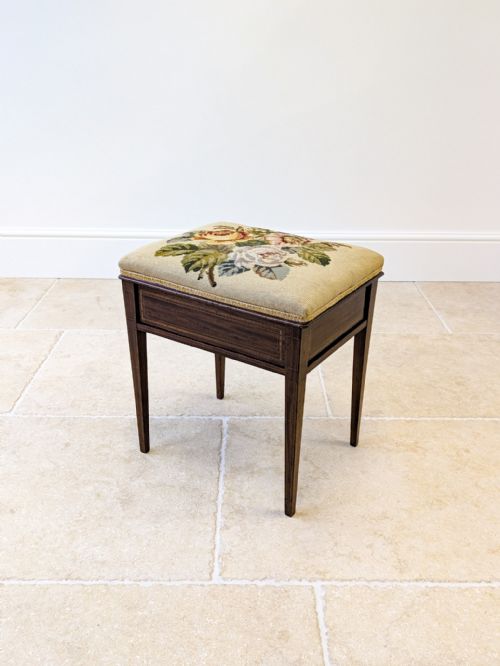
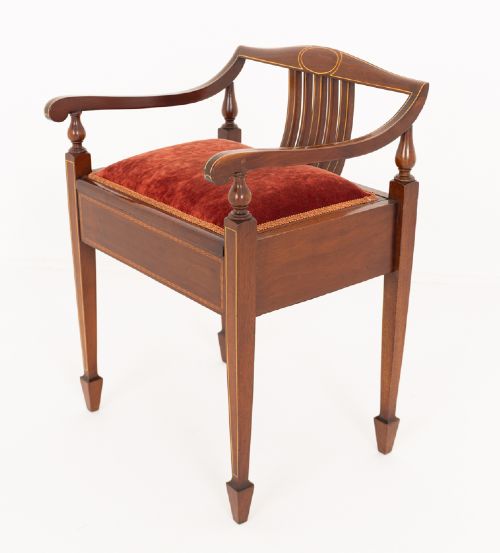
A piano music bench serves the dual purpose of providing a seat at the instrument while concealing scores and folios beneath a hinged or fall-front lid. You will encounter many Edwardian mahogany examples alongside Victorian revolving variants and larger duet formats.
The materials and styles span straightforward oak and walnut pieces to refined satinwood and inlaid Sheraton Revival designs. Makers such as Hampton and Sons and Jas Shoolbred produced pieces that reflect the aesthetic shifts from the nineteenth century into the nineteen-twenties.
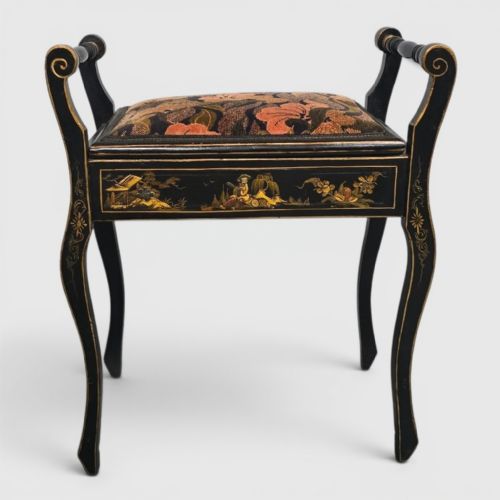
Forms range from single seats to extended duet benches, occasionally utilising an X-frame or featuring adjustable mechanisms. The inventory includes Chinoiserie decoration, Arts and Crafts simplicity, and Art Deco walnut construction.
Materials and construction
Makers relied heavily on solid and veneered mahogany, alongside walnut, oak, and ebonised timber frameworks. Inlays of satinwood added decorative contrast on refined Edwardian and Sheraton Revival pieces.
Upholstery materials include fabric, velvet, tapestry, and tan leather, often paired with internal wooden compartments for sheet music storage. Metal and brass elements appear on hinges, handles, and adjustable revolving screw mechanisms.
Piano Music Bench Retail Price Guide 2026
Typical asking prices for piano music bench among the pieces listed under this phrase on Sellingantiques today, from the lower quarter to the upper quarter. They describe what is for sale here now, not the wider market.
Musicians relied on hidden compartments to hoard folios, ensuring every duet started with adequate paper ammunition.
Assessing quality and execution
The refinement of the timber and the crispness of any satinwood inlay distinguish standard production from finer workshop outputs. Superior pieces display thoughtful cabinetmaking in the joinery of the music compartment and the action of the lid.
The choice of upholstery material and the durability of the mechanical elements, such as revolving screws or fall-front hinges, indicate the original grade of the furniture. Maker attribution through stamps or labels further elevates specific examples.
Hampton & Sons of Pall Mall·Jas Shoolbred
The Piano Music Bench Glossary
- Duet stool
- A wider seat designed to accommodate two players side by side. These often incorporate hinged lift-up seats for additional music storage.
- Revolving piano stool
- A single seat featuring a threaded central screw mechanism that allows the user to adjust the height by spinning the top. This form is common in Victorian examples.
- Fall-front
- A hinged front panel that drops forward to reveal interior shelves or compartments for storing sheet music. This design keeps scores accessible without lifting the main seat.
- Sheraton Revival
- A late nineteenth and early twentieth century style drawing on eighteenth century neoclassical motifs. It frequently utilises mahogany, satinwood inlay, and tapered legs.
- X-framed
- A structural base formed by intersecting diagonal wooden members shaped like the letter X. This configuration provides stability and a distinct decorative silhouette.
Piano Music Bench: Frequently Asked Questions
What is a piano music bench?
A piano music bench is a specialised seat designed for musicians, combining a comfortable playing platform with built-in storage for sheet music and folios. These pieces range from simple single stools to wider duet formats.
They appear in various woods including mahogany, walnut, and oak, often featuring upholstered tops in fabric, leather, or velvet.
How do I use one today?
Beyond their original placement at a piano, these benches function well as seating in hallways, bedrooms, or living spaces. The internal storage compartments remain practical for hiding away small household items or documents.
Duet versions offer generous surface area and fit easily at the foot of a bed or beneath a window.
How do I tell Edwardian from Victorian?
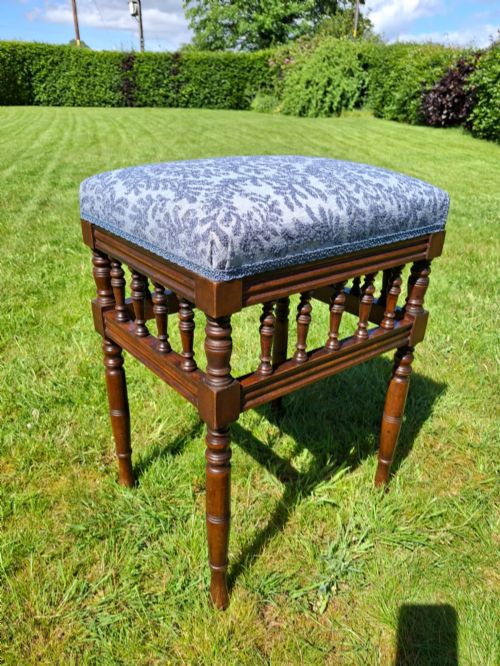
Victorian examples frequently showcase heavier mahogany or walnut construction, often featuring revolving round seats and carved details. Aesthetic movement and early Victorian pieces tend to be darker and more robust in proportion.
Edwardian pieces often display lighter mahogany frames, satinwood inlay, and Sheraton Revival influences with tapered legs and hinged rectangular seats.
What styles are available?
The selection encompasses Victorian, Edwardian, Arts and Crafts, Art Deco, and Chinoiserie aesthetics. Each period brings distinct decorative choices, from inlaid satinwood to ebonised finishes and simple oak frameworks.
Specialist variations include X-framed bases, adjustable revolving mechanisms, and fall-front storage compartments.