




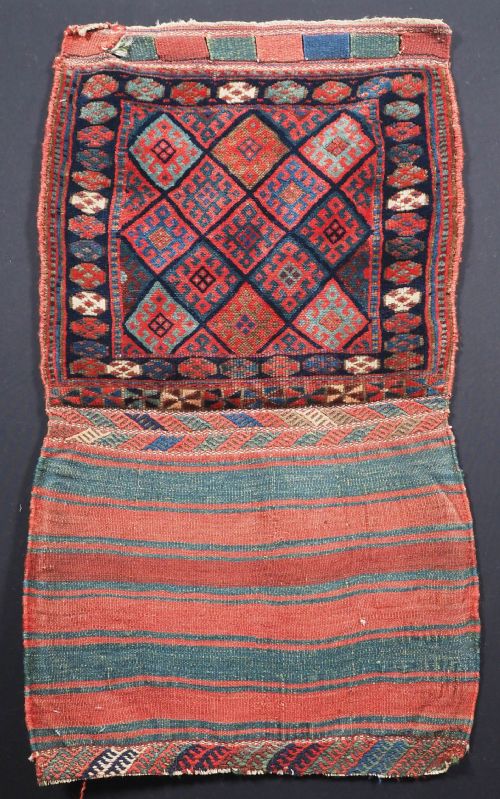

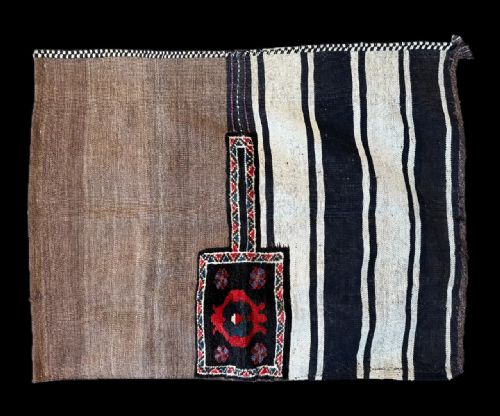


Persian Storage Bag
A persian storage bag is a dense tribal textile created for nomadic utility, offering robust construction and rich patterned wool.
Persian Storage Bag
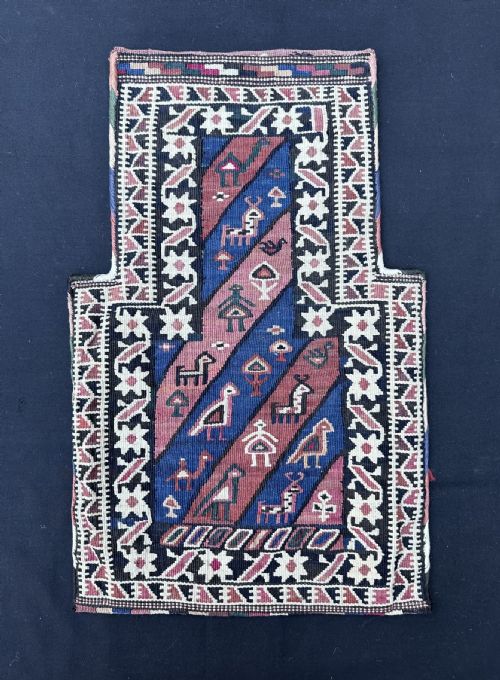
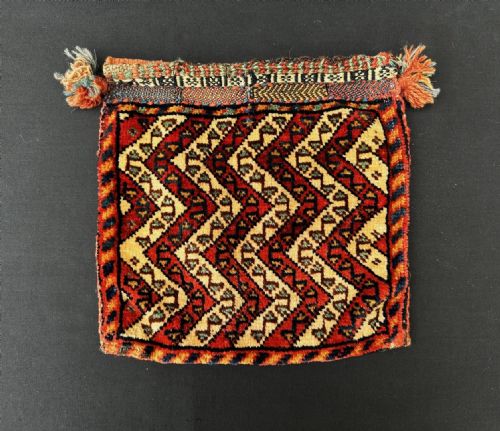
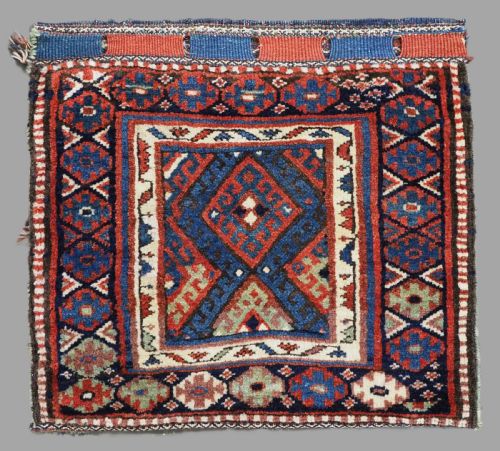
A persian storage bag represents the functional weaving traditions of tribal groups such as the Qashqa'i, Bakhtiari, Kurdish and Baluch nomads. These pieces served practical domestic purposes within encampments, housing grain, salt, wheat or personal items.
The inventory on this page spans the late nineteenth and early twentieth centuries, capturing nomadic textiles from regions including Fars, Khorassan, and the Chahar Mahal. Forms range from salt bags and wheat sacks to saddle bags and vanity bags.
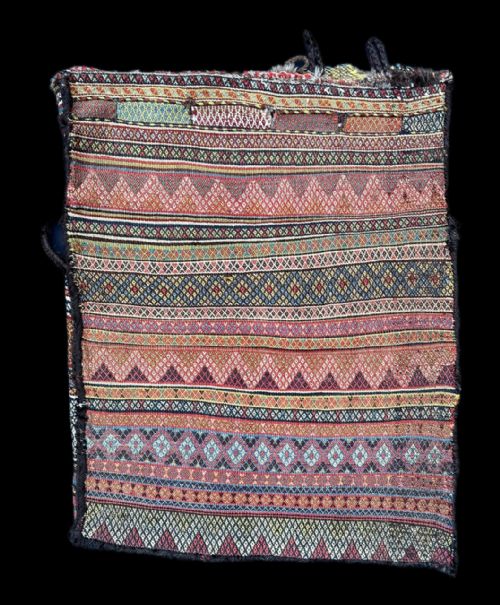
Most examples survive complete with their original plain weave backs, showing the durable construction required for nomadic life. Buyers encounter distinct tribal aesthetics defined by regional dyeing methods and structural techniques.
Assessing quality and character
Quality rests in the fineness of the weave, the clarity of the natural dyes, and the integrity of the tribal motifs. Superior examples maintain crisp geometric execution and balanced proportions.
The presence of the original plain weave back significantly impacts the integrity of the piece. Handling wear tells a story of genuine nomadic use rather than diminishing the textile's visual strength.
Persian Storage Bag Retail Price Guide 2026
Typical asking prices for persian storage bag among the pieces listed under this phrase on Sellingantiques today, from the lower quarter to the upper quarter. They describe what is for sale here now, not the wider market.
Listings span the years from 1880 to 1910, featuring hand-spun wool, cotton, and goat hair across Persian and Afghan tribal regions.
The Persian Storage Bag Glossary
- Tacheh
- A large flatwoven storage sack or wheat-sack utilised by nomadic groups for domestic transport and storage. These substantial textiles often feature striking banded patterns.
- Plain weave
- A simple interlace construction forming the unpatterned back of a storage bag. This technique provides the necessary strength for daily utility.
- Natural dyes
- Colourants derived from plants, roots, and insects before the introduction of synthetic alternatives. They yield rich hues that age with considerable depth.
- Weft work
- The horizontal threads passed through the warp to create the pattern and structure of the textile. Banded variations appear frequently in storage pieces.
- Tribal
- Pertaining to nomadic or semi-nomadic confederacies whose weavers worked from memory and tradition rather than commercial cartoons.
Persian Storage Bag: Frequently Asked Questions
What were persian storage bags used for?
Nomadic families used these bags to transport and store essential household goods, including wheat, salt, and personal possessions. Their robust construction protected contents during seasonal migrations across rugged terrain.
They also functioned as decorative furnishings within tribal tents, demonstrating the weaving skill of the maker through distinctive regional patterns.
How do I date a tribal bag?
Dating relies on assessing the palette of the natural dyes, the spin of the wool, and the structural characteristics of the weave. Late nineteenth and early twentieth-century examples display characteristic regional wool preparation and tribal iconography.
Comparing structural details against documented tribal pieces helps narrow the period of origin.
How should I display a storage bag?
These textiles adapt well to wall hanging using a padded sleeve and a discreet support system that distributes the weight evenly. Proper mounting prevents strain on the original wool and goat hair fibres.
Alternatively, placing them on low-traffic surfaces allows the rich textures and natural dyes to be appreciated up close.
Are original backs important?
The presence of an original plain weave back confirms the complete and unaltered state of the storage bag. It preserves the full utility and historical integrity of the piece as it left the nomad's tent.
While surviving examples vary in condition, an intact back remains a significant attribute for collectors of tribal textiles.