



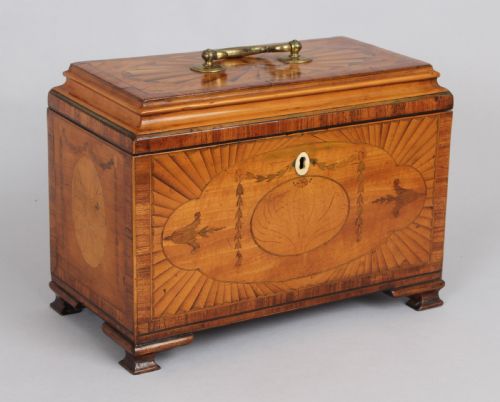
Period Tea Chest
A period tea chest is a fine wooden container made to store valuable leaves safely away from damp air.
Period Tea Chest
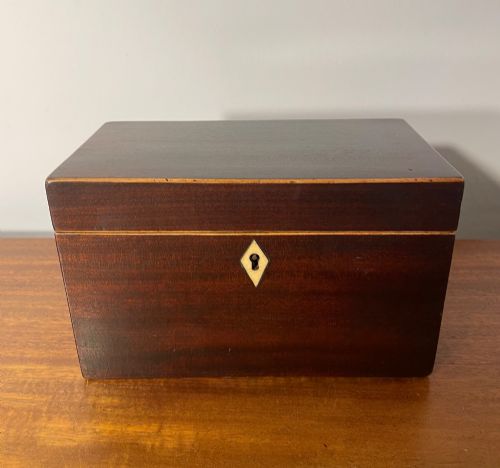
A period tea chest is a practical storage box designed to protect expensive leaves in the eighteenth and nineteenth centuries. When you search for a period tea chest, you encounter sturdy receptacles built to lock away valuable provisions from household servants and damp air.
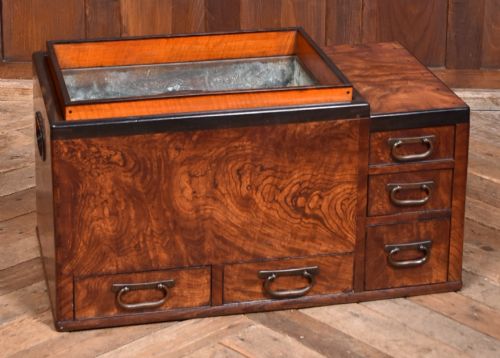
The pieces listed here span the Georgian, Regency, and William IV eras, appearing primarily as tea caddies, tea-poys, and occasional boxes or caskets. Many retain internal compartments or mixing bowls, while others emerge simply as timber shells shaped to fit a formal parlour table.
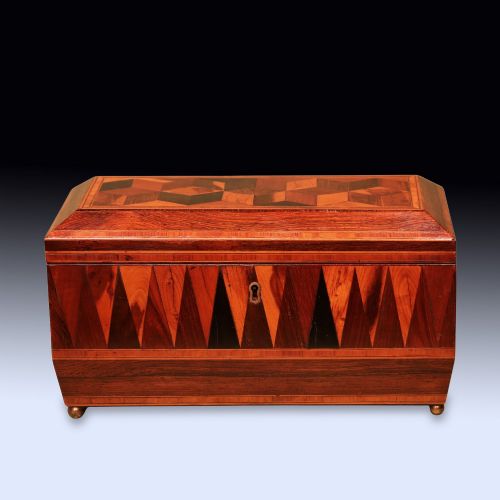
Rosewood, mahogany, satinwood, and tortoiseshell dominate the selection, often enriched with brass inlay, bone details, or mother of pearl. Buyers find everything from compact octagonal caddies to substantial tea-poys standing upon central pillars.
Construction and Materials
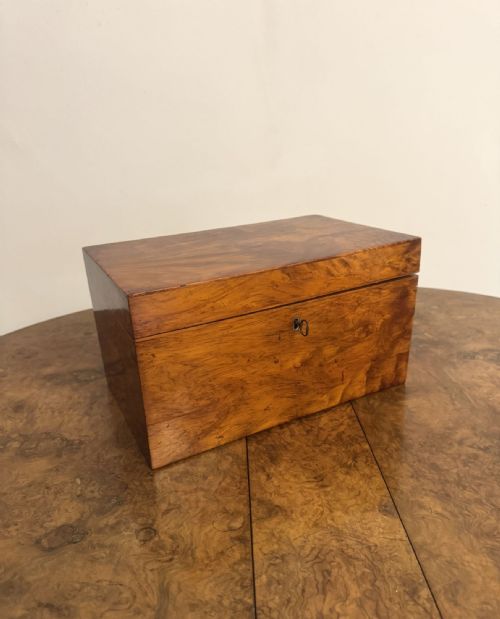
Cabinetmakers constructed these chests from dense tropical hardwoods like mahogany and rosewood, frequently applying decorative veneers of satinwood or burr thorn. Timber was selected for stability and grain figure, ensuring the box endured heavy daily use.
Inlay work relied on thin strips of brass, mother of pearl, and bone set flush into the wooden surface. Penwork and marquetry added further surface pattern, requiring steady hands and sharp tools to achieve clean geometric and floral motifs.
Listings feature periods spanning from 1750 through the Georgian, Regency, and William IV eras into the nineteenth century.
Assessing Quality
The distinction between ordinary storage and superior cabinet-making lies in the precision of the joinery and the selection of veneer. Fine examples display continuous grain patterns across the lid and sides, matched carefully by the maker.
Interior fittings dictate much of the worth, with complete mixing bowls, working locks, and fitted wooden canisters elevating a piece. The crispness of brass inlay and the delicacy of penwork separate standard workshop output from exceptional commissions.
The Period Tea Chest Glossary
- Tea caddy
- A small box or chest designed specifically to hold loose tea leaves securely under lock and key. These containers often featured internal compartments to separate different varieties of tea.
- Tea-poy
- A larger tea container supported on a central pedestal or pillar, emerging during the Regency period. They served a similar purpose to caddies but stood independently on the floor.
- Marquetry
- The art of forming decorative patterns by fitting together thin slices of various woods and other materials onto a structural carcass. This technique created elaborate pictorial or geometric designs.
- Penwork
- A decorative technique using fine ink lines drawn onto a light wood surface to simulate more costly inlay. It produced delicate monochrome patterns popular during the Regency era.
- Tortoiseshell
- The mottled shell of certain sea turtles used as a prized veneer on high-status boxes. Cabinetmakers often backed it with coloured foil to enhance its warm amber translucency.
Period Tea Chest: Frequently Asked Questions
What is a period tea chest?
A period tea chest is a secure wooden box built to preserve and protect dry leaves during the eighteenth and nineteenth centuries.
Because tea was a costly commodity, these containers featured sturdy locks and fitted interiors to ration out daily portions.
How were tea chests used?
Households kept their leaves locked inside these chests in the dining room or drawing room to prevent theft and moisture damage.
The lady of the house typically held the key, dispensing the leaves herself before brewing.
How do I date a tea chest?
Stylistic clues such as brass inlay, wood choice, and box shape help determine the era of manufacture.
Georgian examples tend to rely on mahogany and neat proportions, while Regency pieces frequently feature rosewood, tortoiseshell, and bold brass detailing.
Did all tea chests have mixing bowls?
Not all chests included a bowl, though many featured a central glass or ceramic vessel designed for blending leaves.
Some interiors held only two lidded canisters, leaving the mixing process to happen elsewhere.