

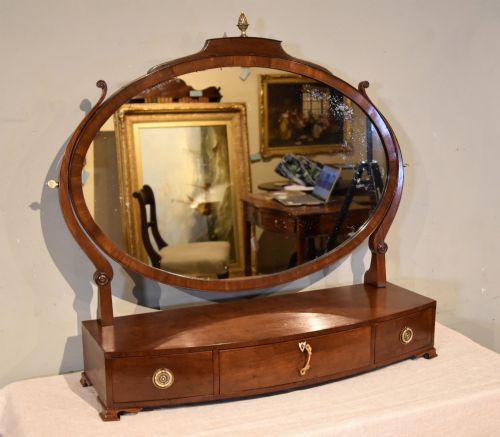
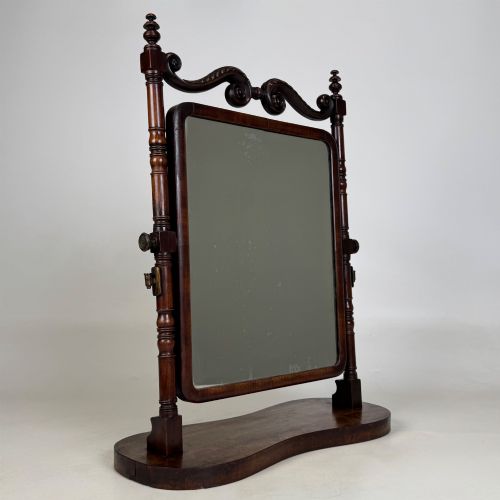
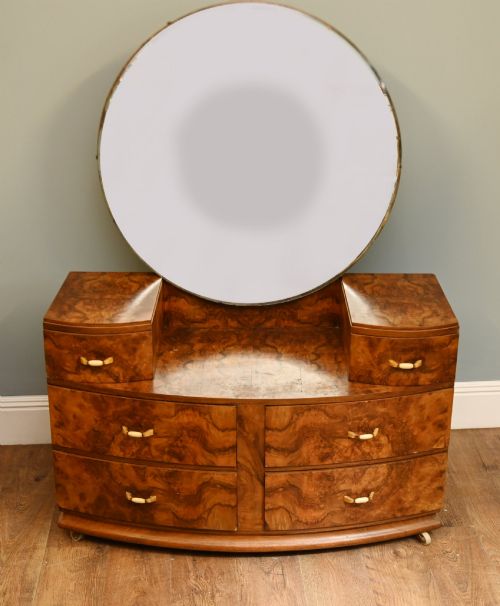
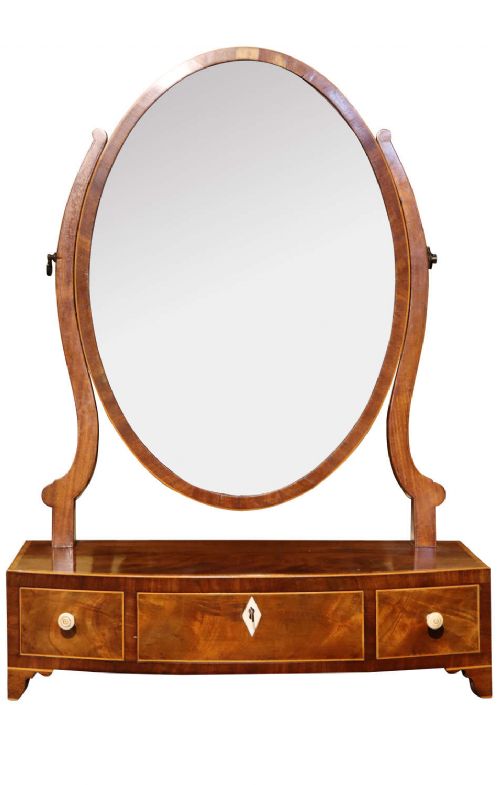


Period Table Mirror
These period table mirror examples offer compact reflective surfaces and refined woodwork, bringing traditional dressing furniture into smaller rooms.
Period Table Mirror
A period table mirror serves as a desktop or dressing surface accessory designed to assist with grooming and personal reflection. Buyers searching for a period table mirror frequently encounter compact toilet mirrors, dressing table mirrors, and vanity mirrors spanning multiple historical eras.
The selection here encompasses pieces originating from the Georgian, Regency, Victorian, Edwardian, and Art Deco periods. Mahogany, walnut, and rosewood forms dominate the earlier centuries, while later decades introduce diverse woods and metals.
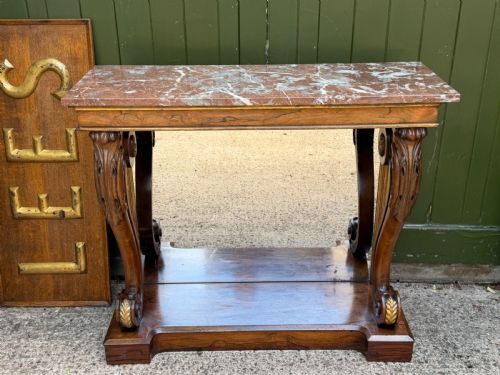
Most entries function as portable tabletop items featuring swivel glass plates mounted on wooden frames or bronze stands. Console tables with associated mirror backs also appear, bridging the gap between standalone furniture and tabletop accessories.
How they were made
Cabinetmakers utilised dense timbers such as mahogany, walnut, and rosewood, frequently applying crossbanding and parcel-gilt details to enhance the visual depth of the wood. Brass fittings, ormolu mounts, and bronze structures provide mechanical support and decorative contrast to the reflective glass.
Mirror plates rely on historical silvering techniques set within adjustable frames that pivot on brass screws or side pins. Structural joinery incorporates traditional dovetailing on box bases and drawers, ensuring stability for the upright glass panels.
Period Table Mirror Retail Price Guide 2026
Typical asking prices for period table mirror among the pieces listed under this phrase on Sellingantiques today, from the lower quarter to the upper quarter. They describe what is for sale here now, not the wider market.
Listings span multiple eras from the eighteenth century through to Art Deco designs in walnut and bronze.
What varies in quality
The refinement of the timber selection and the precision of the carved detailing distinguish standard examples from finer works. Figured veneers, crossbanded borders, and well-executed parcel-gilt elements indicate greater workshop investment during manufacture.
Mechanical integrity of the pivoting mechanism and the survival of original mirror glass plates influence the overall standard. Original brass hardware and sound structural joinery preserve the historical continuity of each piece.
The Period Table Mirror Glossary
- Toilet mirror
- A small mirror designed to sit on a dressing table or chest of drawers. These pieces often incorporate small box bases fitted with tiny drawers.
- Console table
- A wall-mounted or freestanding table frequently paired with a matching mirror. They appear in French Empire and revival styles.
- Crossbanding
- A decorative border technique where thin strips of veneer are laid across the grain. This method frames the primary wood of the mirror base or tabletop.
- Parcel-gilt
- Partial application of gold leaf over wood or bronze surfaces. It highlights specific carved details and mouldings.
- Ormolu
- Cast bronze mounted with a fine gold-mercury amalgam. It provides decorative mounts on French Empire pieces.
Period Table Mirror: Frequently Asked Questions
Where should I place a table mirror?
These mirrors suit dressing tables, sideboards, or chests of drawers where they provide a functional reflective surface.
Ensure the supporting furniture is deep enough to balance the weight of the pivoting frame.
How do I date a wooden mirror?
Examine the timber species, joinery methods in the base drawers, and the style of the mounting brackets.
Georgian and Regency pieces typically utilise mahogany or walnut with hand-cut dovetails, while later items reflect Edwardian or Art Deco design traits.
Are the mirror plates original?
Older pieces may retain their original glass, which often displays minor foxing, dark spots, or slight distortions.
Replacement glass is clean and uniform, whereas period glass shows subtle signs of age within the silvering.
Can these mirrors be adjusted?
Most table mirrors feature side screw pins that allow the glass frame to tilt to different angles.
Lubricating or tightening these brass fixtures helps maintain the desired angle without straining the wood.