



Period Swing Toilet Mirror
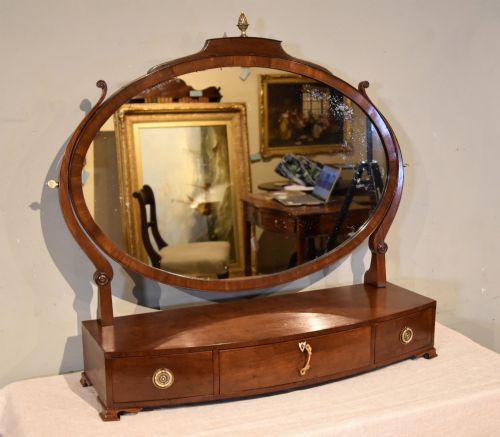
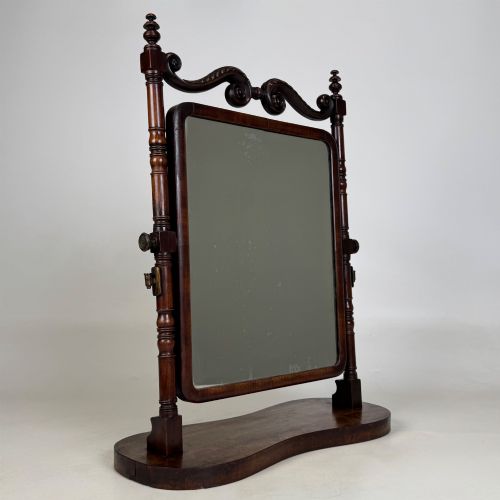
These period swing toilet mirrors sit upon dressing tables and chests, offering adjustable reflections in mahogany, walnut, and bronze.
Period Swing Toilet Mirror
When you search for a period swing toilet mirror, you are looking at tabletop and dressing table glasses designed to pivot within upright frames. These pieces date from the eighteenth and nineteenth centuries, spanning George II, Georgian, Regency, and Victorian eras.
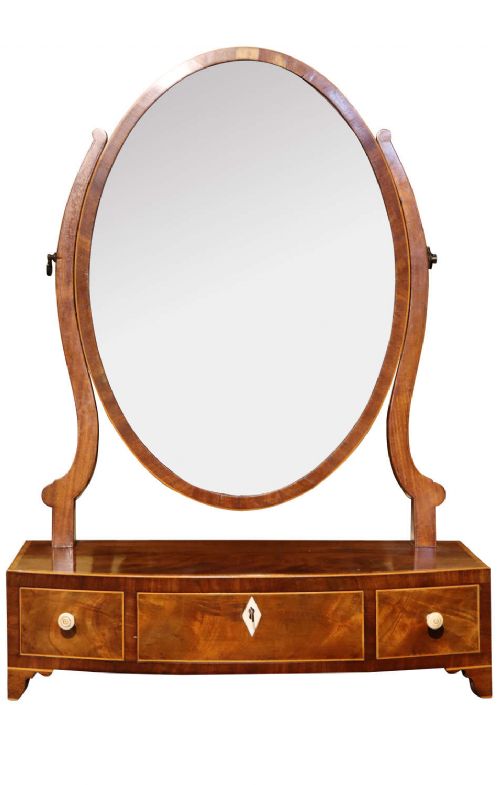
The most common form you will meet on this page is the mahogany dressing mirror, often fitted with small drawer bases. Walnut examples from the mid-eighteenth century and bronze French Empire pedestal mirrors also appear among the selections.
These items served daily grooming needs in bedchambers and dressing rooms. Their pivoting plates allowed users to adjust the angle of reflection while seated.
How they were made
Cabinetmakers constructed the frames and drawer bases using dense timbers like mahogany and walnut, frequently applying crossbanding to accentuate the edges. Glass plates were silvered and held within pivoting wooden or bronze surrounds supported by upright arms.
Brass fittings, including adjustment screws and candle arms, were cast and turned to secure the mirror plates. Bone escutcheons and small knobs added refined detail to the miniature drawer carcases below.
Period Swing Toilet Mirror Retail Price Guide 2026
Typical asking prices for period swing toilet mirror among the pieces listed under this phrase on Sellingantiques today, from the lower quarter to the upper quarter. They describe what is for sale here now, not the wider market.
Skeleton mirrors stripped away the wooden box entirely, trusting the glass to balance on bare bones.
What varies in quality
The sophistication of the timber figure and the crispness of the joinery set the better examples apart. Crossbanding, finely turned upright supports, and original drawer construction indicate higher workshop standards.
The retention of original mirror glass and authentic brass hardware distinguishes pieces that preserve their early character from those altered by later replacements.
The Period Swing Toilet Mirror Glossary
- Crossbanding
- A border technique where thin strips of veneer are laid across the grain of the primary wood. This method creates a contrasting decorative frame around drawer fronts and mirror surrounds.
- Pedestal mirror
- A glass supported by a central column rather than traditional side uprights. This form is typical of French Empire designs.
- Skeleton mirror
- A design featuring an open, minimalist frame with minimal woodwork around the glass plate. This skeletal construction reduces visual weight on the dressing table.
Period Swing Toilet Mirror: Frequently Asked Questions
Where did people place these mirrors?
These mirrors sat upon dressing tables, chest of drawers, or dedicated washstands in bedchambers.
Their tabletop design allowed users to bring the glass closer to natural window light for morning grooming.
How do I date a swing mirror?
Dating relies upon timber choice, construction methods of the base drawers, and the profile of the upright supports.
Walnut points towards the earlier eighteenth century, while mahogany and specific brass mounts align with Georgian and Regency periods.
Are the mirror plates original?
Many mirrors retain their original silvered glass, which often exhibits gentle foxing and age spots.
Replacement glass is common due to the fragile nature of early plates during centuries of use.
How do I maintain the swing action?
The pivoting mechanism relies on side screws or threaded brass nuts set into the upright supports.
Gentle adjustment of these brass fittings maintains tension so the mirror stays at the desired angle.