



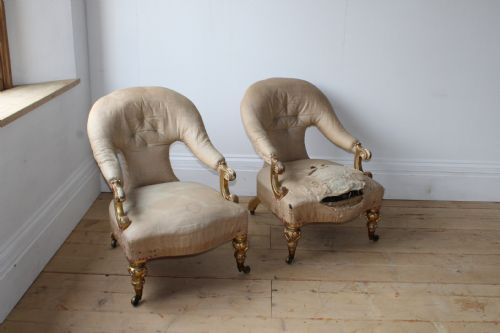


Period Slipper Chair
These period slipper chairs are low-slung seating from the Georgian, Regency, and Victorian eras, designed for comfortable dressing and bedroom use.
Period Slipper Chair
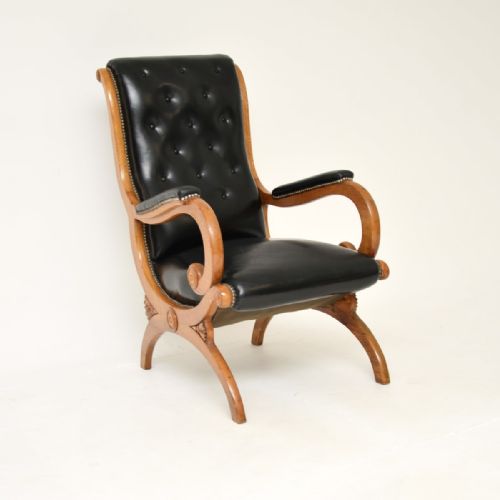
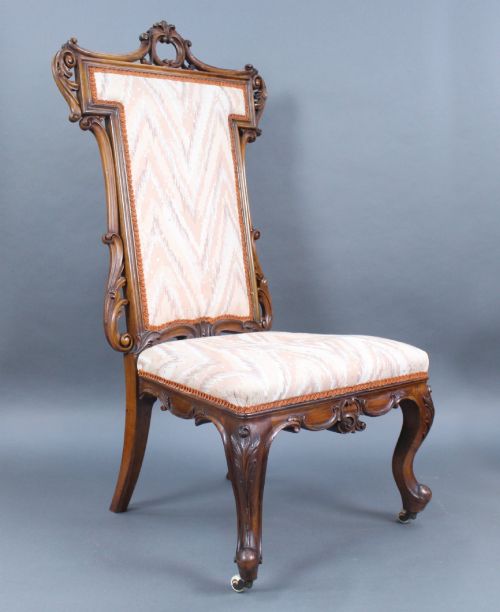
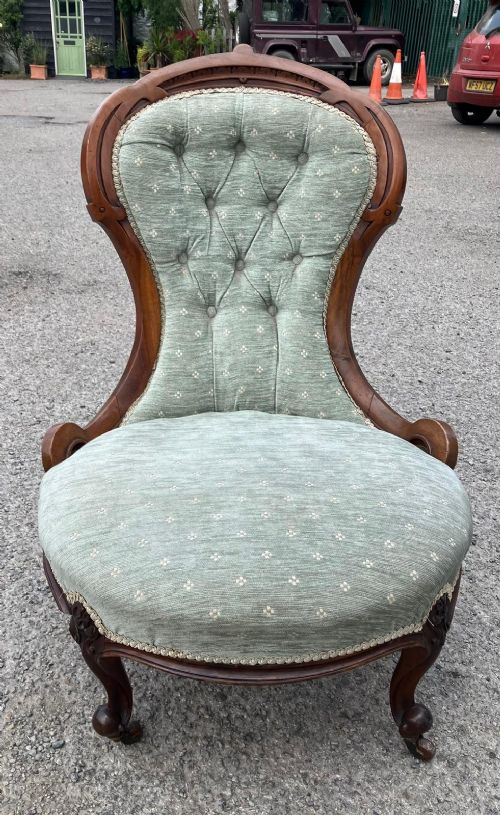
A period slipper chair is a low-seated chair historically designed for bedrooms and dressing rooms to allow comfortable shoe or slipper fitting. The form appears across the Georgian, Regency, and Victorian periods, including specific examples from around eighteen-sixty and the late Victorian era. Buyers searching for a period slipper chair will most frequently encounter Victorian walnut and nursing chair variants on this page.
The evidence shows these low seats overlap with related forms such as nursing chairs, side chairs, occasional chairs, and fireside chairs. Some listings include pairs, child chairs, and suites comprising carver and slipper chairs from approximately eighteen hundred. Their low profiles and upholstered bodies set them apart from standard dining or parlour seating.
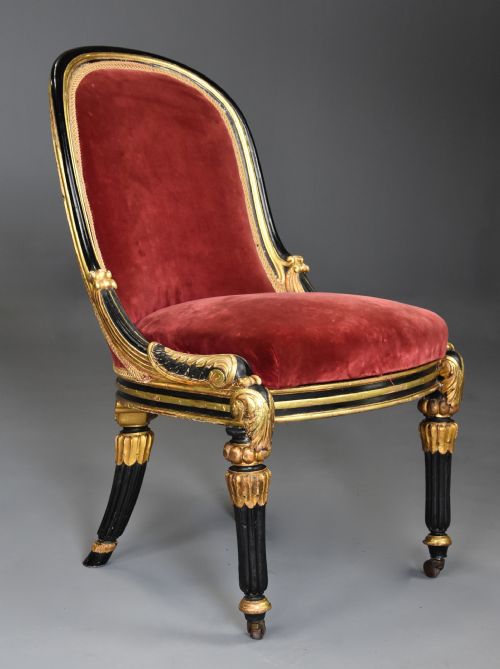
Origins span English workshops of the nineteenth century alongside French Chateau influences seen in the styling. Materials range from ebonised and gilt wood to carved walnut. They function today as decorative bedroom or fireside seating retaining their historical low stature.
How they were made
Construction relies primarily on hardwoods such as mahogany and walnut, alongside ebonised wood frames finished with gilt detailing or carved elements. Cabinetmakers shaped these timbers into supportive side and occasional frames before applying upholstery. Brass components frequently appear on the legs, particularly in the form of castors.
Textiles dictate the finished appearance, with velvet and general fabric or textile upholstery encasing the sprung or padded structures. Newly upholstered examples utilise modern fabrics while retaining the antique framework beneath. Ceramic elements also feature within the structural or decorative components.
Period Slipper Chair Retail Price Guide 2026
Typical asking prices for period slipper chair among the pieces listed under this phrase on Sellingantiques today, from the lower quarter to the upper quarter. They describe what is for sale here now, not the wider market.
Listings feature woods including mahogany and walnut, alongside ebonised finishes and brass fittings.
What varies in quality
The refinement of the woodwork dictates much of the distinction between pieces, ranging from plain ebonised surfaces to deeply carved walnut frames. Detail work such as gilding and the presence of original brass castors elevate the finish of Regency and Victorian examples. Carved ornament on the crest rails and legs indicates higher workshop input.
Upholstery execution and the integrity of the underlying frame define the overall standard of survival. Pieces retaining their original structural timber without excessive replacement parts represent better preservation. The coherence of suites, such as matched pairs or dining suites containing slipper chairs, adds distinction.
The Period Slipper Chair Glossary
- Slipper chair
- A low-seated upholstered chair traditionally used in bedrooms for dressing. This form lacks arms and sits close to the floor.
- Nursing chair
- A low upholstered chair designed for feeding infants, closely related to the slipper chair in height and proportion.
- Ebonised wood
- Timber treated with a dark stain or finish to imitate ebony. This technique was popular in Regency and Aesthetic Period furniture.
- Castor
- A small wheel attached to the base of furniture legs to ease movement. Brass castors frequently appear on nineteenth-century bedroom chairs.
- Carver chair
- An armchair typically designed for the head of a dining table. These occasionally appear alongside slipper chairs in dining suites.
Period Slipper Chair: Frequently Asked Questions
What is a period slipper chair?
A period slipper chair is a low-to-the-ground seat originating from eras like the Georgian and Victorian periods. They were built for bedrooms and dressing rooms to make putting on footwear easier.
Today, these chairs serve as compact occasional seating in living rooms or bedrooms. Their low profile distinguishes them from standard parlour or dining chairs.
Where were slipper chairs used?
These chairs were traditionally kept in bedrooms, dressing rooms, and boudoirs. Their low height suited personal grooming and fireside relaxation.
Modern interiors use them in similar intimate spaces where full-sized armchairs would overwhelm the room. They function well as decorative accents in hallways or guest rooms.
Are nursing chairs the same?
Nursing chairs share the low seat height of slipper chairs but were historically intended for holding and feeding infants. Both types lack arms to accommodate voluminous period dresses.
On this page, the two terms often overlap in Victorian listings. Buyers looking for one frequently consider the other due to their similar dimensions.