




Period Silver Jewellery
Period silver jewellery encompasses pieces from the Georgian, Victorian, Edwardian and Art Deco eras, prized for their craftsmanship and enduring design.
Period Silver Jewellery
Period silver jewellery covers wearable items fashioned from sterling silver or silver alloys across the Georgian, Victorian, Edwardian, and Art Deco eras. Buyers searching for period silver jewellery will find ornaments ranging from early nineteenth-century rings to 1920s brooches.
Earrings, rings, lockets, and brooches dominate the selection, often enriched with stones such as diamonds, sapphires, emeralds, pastes, and marcasite. Pieces span distinct aesthetic movements, from Victorian aesthetic designs to Anglo-Indian motifs and Art Deco geometry.
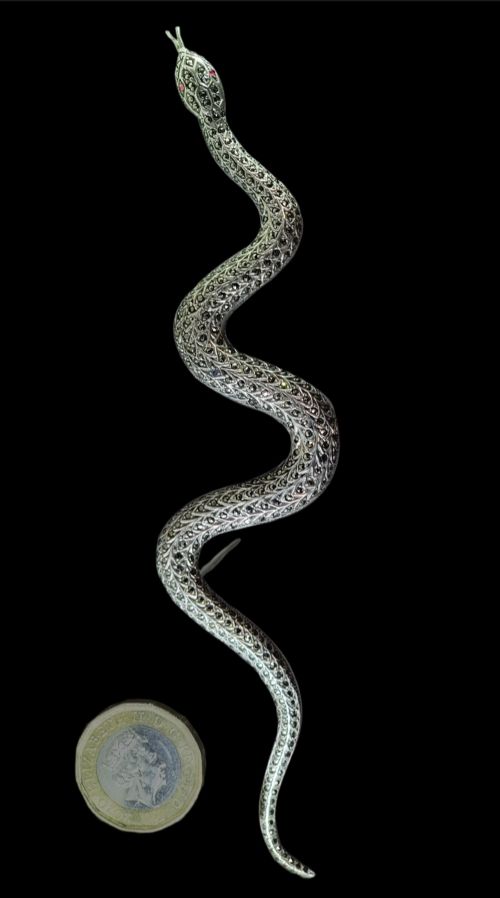
The most common items met on this page are Victorian sterling silver aesthetic pieces and Georgian rings or shoe buckles. These encompass varied forms such as sunburst earrings, swallow lockets, and snake brooches.
How they were made
Metals such as sterling silver, gold, and platinum form the structural basis of these items, frequently paired with foil and glass paste to enhance luminosity. Gemstones like diamonds, emeralds, and moonstones are set alongside marcasite within the metalwork.
Techniques range from filigree wirework in French shoe buckles to detailed piercing in Edwardian platinum drop earrings. Artisans utilised stone setting, casting, and hand engraving to shape lockets, jars, and bracelets.
Period Silver Jewellery Retail Price Guide 2026
Typical asking prices for period silver jewellery among the pieces listed under this phrase on Sellingantiques today, from the lower quarter to the upper quarter. They describe what is for sale here now, not the wider market.
Swallow lockets and glittering snake brooches ensure that nineteenth-century fauna remains securely fastened to your lapel.
What varies in quality
The sophistication of the metalwork and the precision of stone setting distinguish finer examples from standard production. Artisans executing intricate filigree or mounting complex clusters of diamonds, sapphires, and paste demonstrate higher levels of skill.
Integrity of design and materials also marks the hierarchy of these items, where platinum settings or solid sterling silver mountings denote greater substance. The harmony between the silver framework and secondary materials like gold, foil, and marcasite dictates the overall refinement.
The Period Silver Jewellery Glossary
- Sterling silver
- An alloy comprising ninety-two point five percent silver and seven point five percent other metals, typically copper. This standard provides the durability and lustre seen in nineteenth and twentieth-century jewellery.
- Marcasite
- Pyrite cut and polished into small facets, then set into silver mounts to resemble sparkling diamonds. It was widely used during the Art Deco period.
- Glass paste
- Hand-cut and polished glass designed to imitate precious gemstones like diamonds or sapphires. Georgian jewellers utilised paste to achieve brilliant colour and sparkle.
- Filigree
- Delicate openwork jewellery formed from fine twisted threads of gold or silver soldered together. This technique is characteristic of eighteenth and nineteenth-century decorative metalwork.
- Aesthetic movement
- A nineteenth-century design style emphasising visual beauty over narrative content, often incorporating natural motifs. Pieces from this era frequently feature stylised birds and sunbursts.
Period Silver Jewellery: Frequently Asked Questions
What periods are included in period silver jewellery?
The pieces span the Georgian, Victorian, Edwardian, and Art Deco eras, stretching from the eighteenth century into the early twentieth century.
Design characteristics shift across these periods, moving from early stone-set rings and filigree buckles to later aesthetic swallow lockets and platinum drop earrings.
How do I care for antique silver jewellery?
Silver jewellery requires gentle handling to preserve the metal and any delicate stones or foil backs. Avoid harsh chemical dips, especially on items containing paste, foil, or soft gems.
Store pieces individually in soft pouches to prevent scratching between items. Regular cleaning should involve only a soft, dry cloth designed for silver.
What stones are found in these pieces?
Common stones include diamonds, emeralds, sapphires, and moonstones, often set alongside sparkling glass paste or marcasite. Gold and platinum are frequently introduced as secondary metals for settings.
Some items utilise foil backing beneath stones to enhance colour and reflectivity, a technique typical of Georgian work.
How can I identify an aesthetic movement piece?
Victorian aesthetic items often feature distinct motifs such as sunbursts, swallows, and stylised flora. These designs reflect a late nineteenth-century shift toward artistic expression in decorative objects.
The metalwork on these pieces typically highlights solid sterling silver craftsmanship without excessive ornamental clutter.