





Period Poster Bed
A period poster bed anchors a large room with stately vertical posts and an overhead tester, bringing unmistakable architectural presence to a bedroom.
Period Poster Bed
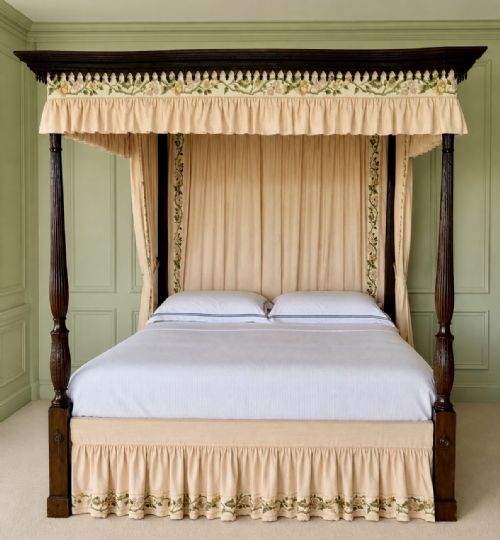
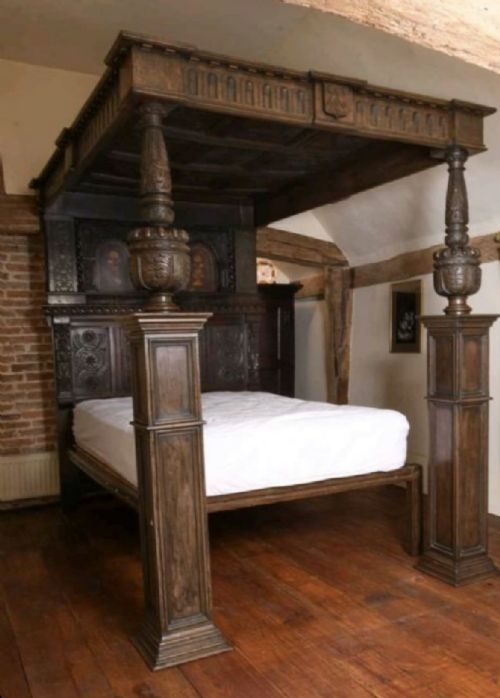
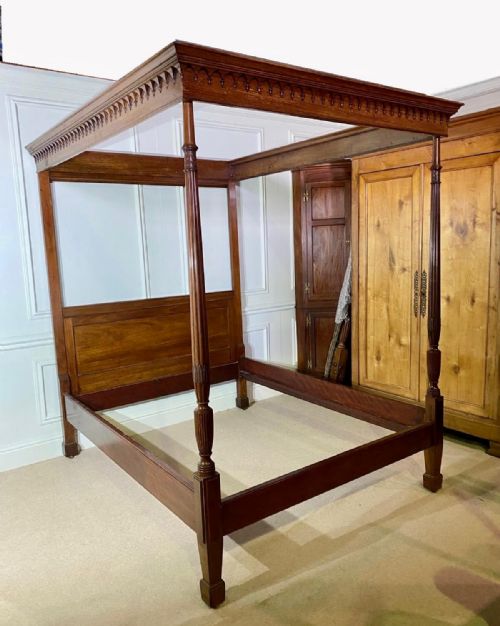
A period poster bed brings architectural presence to a room through upright posts supporting an overhead tester, encompassing forms from early oak framing to later mahogany constructions. When you search for a period poster bed, you encounter substantial frames designed to dominate the sleeping chamber with traditional craftsmanship.
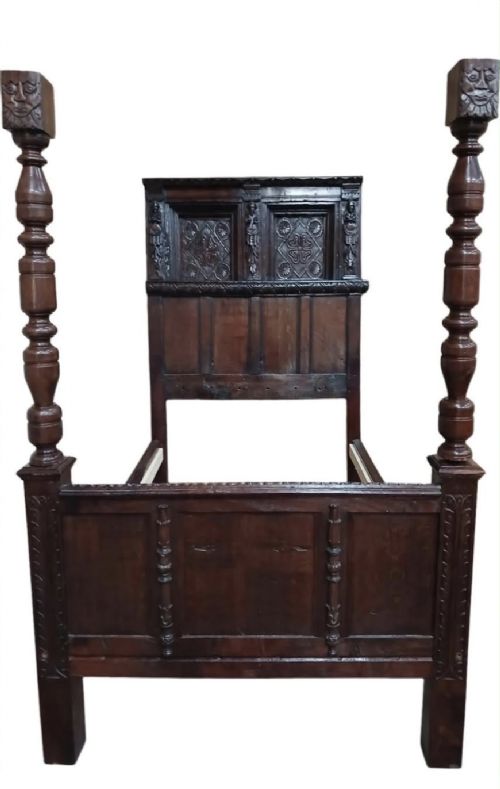
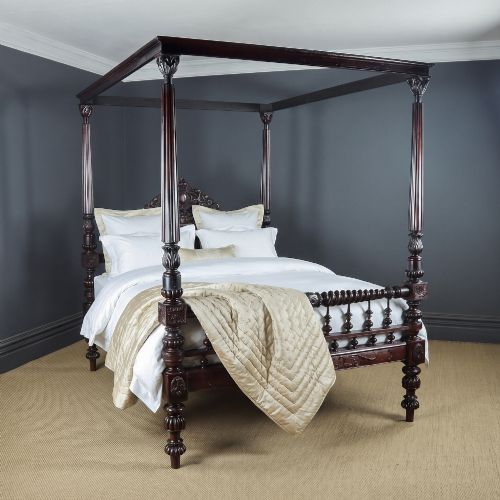
The selection ranges from robust seventeenth-century oak examples to refined eighteenth-century Georgian and Regency mahogany pieces, alongside Victorian interpretations. The version most commonly met on this page balances timber structure with the characteristic vertical posts that define the style.
Proportions vary from standard doubles to super king sizes, with occasional Anglo-Indian colonial variants and painted finishes appearing among the listings. Each piece reflects the aesthetic priorities of its respective century, moving from heavy panelled oak to lighter, figured mahogany veneers.
Distinctions in craftsmanship and condition
Quality separates pieces by the crispness of hand-carved details on the posts and cornices, where deep, sharp relief indicates superior artisan skill. The choice of timber also dictates the tier, with figured flame mahogany veneer and well-selected quarter-sawn oak representing the upper end of cabinetmaking standards.
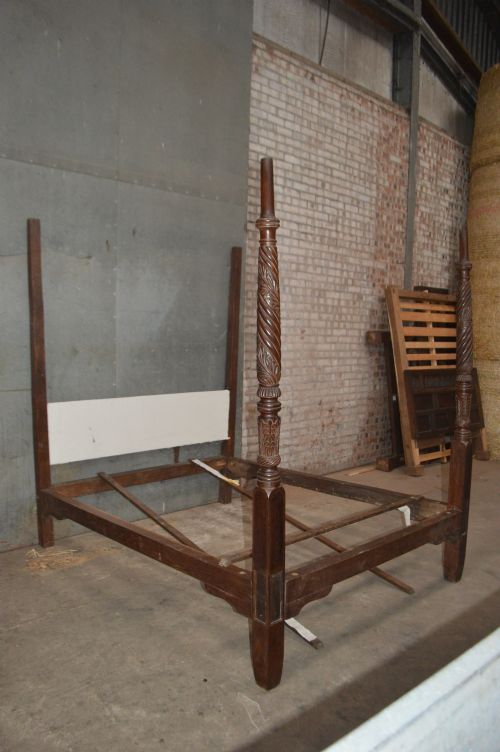
Structural alterations impact evaluation, as many historic frames have been adapted to accommodate modern mattress dimensions over centuries of use. Original posts, authentic tester frames, and integrated joinery preserve the integrity of a piece far better than later modifications or replacement components.
Period Poster Bed Retail Price Guide 2026
Typical asking prices for period poster bed among the pieces listed under this phrase on Sellingantiques today, from the lower quarter to the upper quarter. They describe what is for sale here now, not the wider market.
Listings feature periods spanning from the seventeenth century through the Victorian era, utilising oak, mahogany, and painted timber.
The Period Poster Bed Glossary
- Tester
- The flat wooden canopy or ceiling suspended above a four poster bed, sometimes lined with fabric or carved with decorative mouldings.
- Flame mahogany veneer
- A thin slice of wood cut from mahogany showing a distinctive flickering flame pattern, utilised by cabinetmakers to decorate prominent surfaces.
- Mortise and tenon
- An ancient joint method where a projecting tenon fits snugly into a corresponding hole, forming the structural backbone of early timber beds.
- Quarter-sawn oak
- Timber cut radially from the growth rings, producing a durable board with characteristic medullary ray flecks common in seventeenth-century furniture.
Period Poster Bed: Frequently Asked Questions
Will a period poster bed fit a modern mattress?
Many historic bedframes were constructed for smaller historical mattress sizes, meaning dimensions often require careful checking before purchase. Some examples accommodate standard modern king or super king mattresses, while others need bespoke sizing.
Sourcing a suitable mattress often involves working with specialist makers who can build to non-standard dimensions. Adjustments to frame interiors are sometimes undertaken by conservators to ensure a secure fit for modern bases.
How do I care for antique timber frames?
Maintaining wooden bedframes involves regular dusting with a soft, dry cloth and avoiding placement near direct heat sources or strong sunlight. These precautions prevent the timber and veneers from drying out or splitting.
Applying a traditional beeswax polish periodically helps nourish the wood and maintain its surface sheen without building up heavy residues. Checking structural joints annually ensures that historical connections remain stable under daily use.
Can I dismantle a four poster bed easily?
Historic frames generally utilise knock-down construction methods with iron bolts or wooden pins designed to allow disassembly for transport. Taking down a large tester bed requires at least two people to support the heavy overhead canopy and long vertical posts safely.
Reassembly should follow the original alignment marked by makers to prevent stress on aged joints and timber. Professional installation is frequently recommended for seventeenth-century oak or large mahogany frames to protect delicate carvings.
How do I distinguish oak periods from mahogany ones?
Seventeenth-century oak pieces display a heavy, dark grain with visible medullary rays and often feature hand-carved panels or straightforward geometric mouldings. These frames prioritise structural solidity and joinery over sleek decorative surfaces.
Later Georgian and Regency mahogany versions introduce reddish-brown tones, polished finishes, and classical architectural elements like fluted columns. The shift reflects changing interior tastes toward refined classical proportions and figured wood veneers.