




Period Partners Desk
A period partners desk is a substantial double-sided workspace designed for two users, offering deep drawers and fine timber surfaces that anchor a grand study.
Period Partners Desk
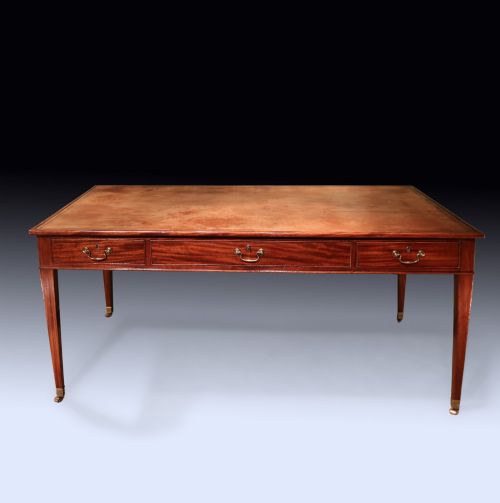
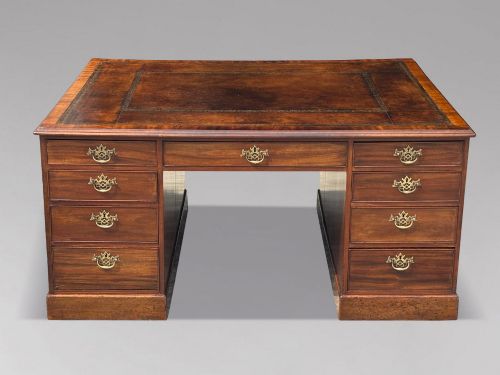
A period partners desk represents the pinnacle of large-scale antique workspace furniture, designed with drawers and cupboards accessible from both sides so two individuals can work opposite each other. These substantial pieces emerge from the 18th century, Georgian, and Regency eras, with examples spanning George II, George III, and George IV reigns, alongside the 19th century and the Aesthetic Movement of 1880.
The primary forms seen on this page include pedestal desks, writing desks, and library tables, constructed in rich timbers such as mahogany, rosewood, burr oak, walnut, and satinwood. Alongside classic pedestal variants, buyers encounter library tables and ladies morning room desks, showing that workspace furniture of these periods varied considerably in scale from sprawling boardroom tables to more intimate writing furniture.
How they were made
Cabinet makers of the 18th and 19th centuries utilised dense, highly figured hardwoods like mahogany, rosewood, and burr oak, often selecting cabinet timbers with rich grain patterns for the primary surfaces. These timbers were paired with inset leather writing surfaces and secured with brass hardware such as drop handles and drawer pulls.
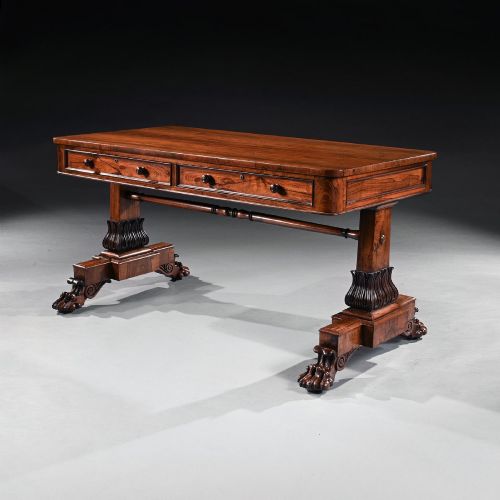
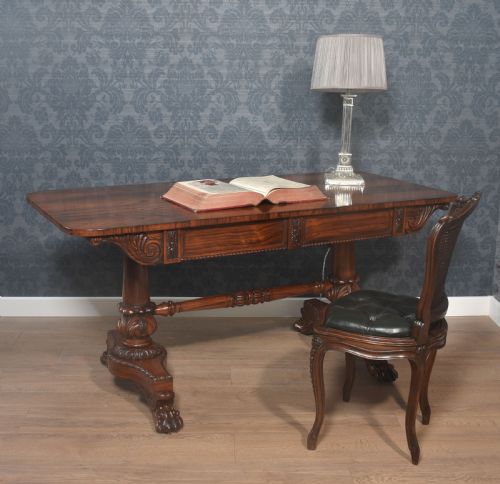
Construction techniques of the period focused on stability and decorative detail, incorporating hand-carved elements like the carved lions paw feet seen on Regency library tables. Drawers were constructed with traditional hand-cut joints to withstand daily use, while ebonised wood details provided contrast on specific stylistic pieces.
Period Partners Desk Retail Price Guide 2026
Typical asking prices for period partners desk among the pieces listed under this phrase on Sellingantiques today, from the lower quarter to the upper quarter. They describe what is for sale here now, not the wider market.
Some Regency tables feature carved lions paw feet, allowing your paperwork to rest safely above the gaze of imaginary beasts.
What varies in quality
Quality in a period partners desk is dictated by the choice of timber and the ambition of the carving, ranging from plain utility pieces to important desks featuring burr oak or finely figured mahogany. The sophistication of secondary details, such as carved lions paw feet or crisply executed mouldings, separates standard workspace tables from exceptional cabinet work.
The integrity of the double-sided configuration also defines the tier of a piece, with superior examples maintaining symmetrical drawer arrangements and finished panelling on both faces. The presence of period brass hardware and well-preserved leather skivers further distinguishes desks originating from prominent cabinet workshops of the Georgian and Regency periods.
The Period Partners Desk Glossary
- Partners desk
- A large double-sided desk featuring drawers and cupboards on both front and back elevations, allowing two people to sit and work opposite one another.
- Pedestal desk
- A form of heavy desk comprising a top surface supported by two separate pedestals or banks of drawers.
- Library table
- A large freestanding table used primarily for reading and writing, often finished on all sides with frieze drawers.
- Skiver
- The inset panel of leather or morocco hide fitted to the top surface of a writing desk to provide a smooth writing texture.
- Ebonised wood
- Timber treated with a dark stain or finish to imitate the appearance of ebony, frequently utilised for decorative contrast in 19th-century furniture.
Period Partners Desk: Frequently Asked Questions
What is a partners desk?
A partners desk is a large, freestanding piece of antique office furniture designed with drawers and cupboards on both the front and reverse sides. This symmetrical layout allowed two professional colleagues or partners to sit opposite each other and share the same workspace.
Originating primarily in the Georgian and Regency periods, these desks served government officials, bankers, and wealthy estate owners. Their grand scale and finished rear elevations meant they traditionally sat in the centre of a room rather than against a wall.
How do I identify a Georgian desk?
Georgian desks are identified by their use of dense, dark timbers such as mahogany and walnut, combined with classical proportions and restrained decorative carving. They frequently utilise traditional bracket feet or plinth bases and display hand-cut dovetail joinery within the drawer construction.
These pieces date from the 18th century through the early 19th century, encompassing the reigns of Georges II, III, and IV. Details such as original brass swan-neck handles and cockbeaded drawer edges help confirm this period of origin.
Where should I place a library table?
Library tables are designed to be viewed from all angles, making them ideal for the centre of a study, library, or large drawing room. Because they lack the closed pedestal banks of a standard desk, they offer open knee room on both long sides.
When positioning one in a modern home, ensure adequate clearance around all four sides to appreciate the frieze drawers and carved legs. They function well as central display surfaces as well as active writing tables.
What wood was used for Regency desks?
Regency period desks and library tables frequently feature exotic and highly figured timbers including rosewood, burr oak, and satinwood alongside traditional mahogany. Cabinet makers used these woods to create striking grain patterns across large flat surfaces.
Makers also incorporated contrasting details such as ebonised wood mouldings and decorative brass inlays. These materials reflect the Regency taste for rich colour and dramatic visual contrast in domestic interiors.