



Period Newspaper Stand
A period newspaper stand brings orderly charm to a room, holding daily papers and journals within neat timber divisions.
Period Newspaper Stand
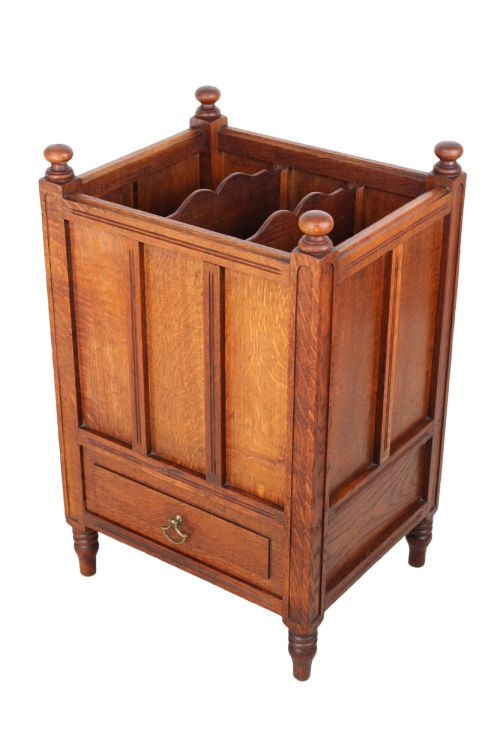
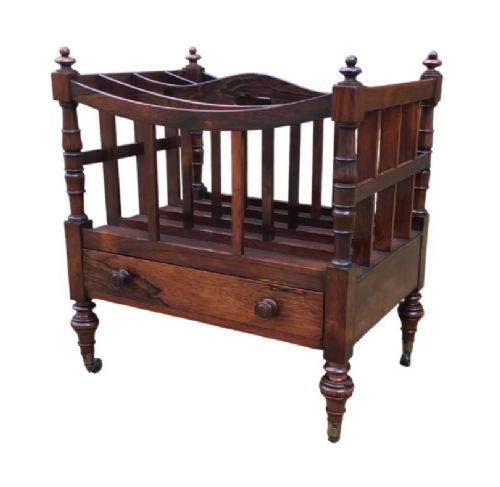
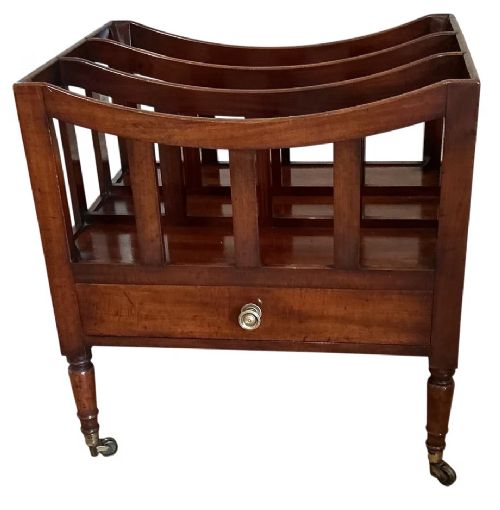
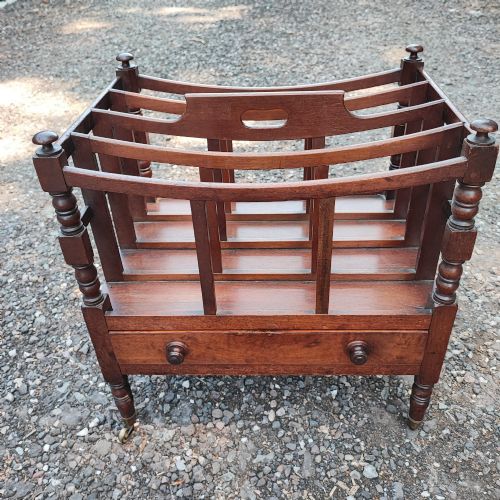
A period newspaper stand, often designated as a Canterbury or magazine rack, serves to corral daily papers and periodicals in domestic spaces. These pieces emerge in forms spanning the late Georgian and Regency eras through the Victorian, Edwardian, and early twentieth-century periods.
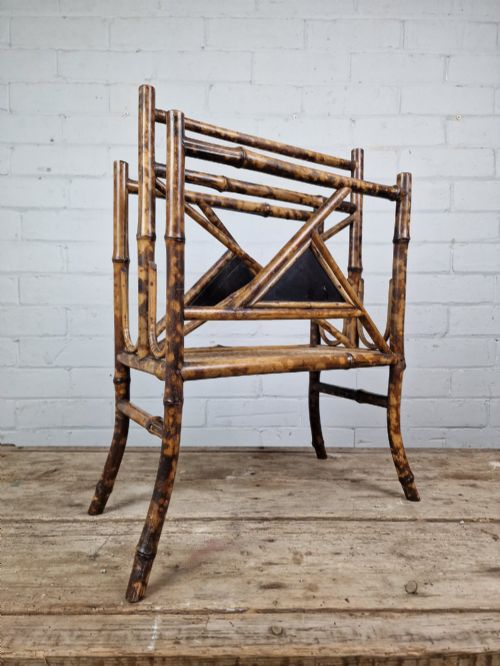
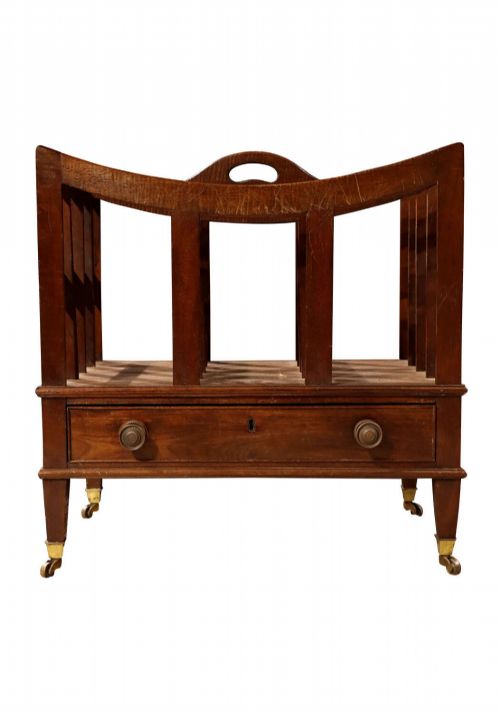
Buyers encountering this selection will most frequently meet mahogany and rosewood examples from the Regency and Victorian eras, alongside lighter Edwardian designs in oak or bamboo. The primary forms include tiered racks, boat-shaped partitions, and stands combined with sheet music cabinets or drawers.
How they were made
Cabinetmakers constructed these stands using solid timbers and veneers such as mahogany, rosewood, and oak, often shaping the partitions with slatted dividers for journals and newspapers. Metal examples utilise cast and polished brass, while lighter Victorian and Aesthetic period pieces employ bamboo and lacquer.
Joinery techniques ranged from traditional mortise and tenon frames in Georgian and Regency workshops to lighter assembly methods in Edwardian factories. Turning, spindlework, and occasional lower drawers completed the construction, balancing structural stability with portability.
Period Newspaper Stand Retail Price Guide 2026
Typical asking prices for period newspaper stand among the pieces listed under this phrase on Sellingantiques today, from the lower quarter to the upper quarter. They describe what is for sale here now, not the wider market.
Some nineteenth-century makers mounted these racks on tiny brass wheels so they could roll quietly across the carpet to fetch the morning paper.
What varies in quality
Quality in a Canterbury rests on the choice of timber figure, the crispness of turned supports, and the integrity of the internal partitions. Pieces featuring dense rosewood or finely grained mahogany with well-defined joinery sit at the higher end of the range.
Simpler constructed items in oak or bamboo, while sturdy, display less intricate detailing and more utilitarian assembly methods. The presence of integrated drawers, brass castors, and refined proportions further distinguishes finer workshops from standard production.
Gillows
The Period Newspaper Stand Glossary
- Canterbury
- A low stand with divisions for holding sheet music, newspapers, and periodicals, often fitted with castors for easy movement around a room. This form dates back to the late eighteenth century and remained popular across successive design periods.
- Regency
- A style period spanning the early nineteenth century characterised by classical restraint, architectural lines, and dark imported timbers such as rosewood and mahogany. Pieces from this era frequently display refined turnings and brass details.
- Aesthetic Movement
- A late nineteenth-century design approach that emphasised artistic expression, featuring exotic materials like bamboo and lacquered surfaces. Stands from this period reflect an interest in Japanese design motifs.
- Rosewood
- A dense, heavily figured tropical hardwood prized for its rich dark colour and contrasting grain patterns. Cabinetmakers utilised it extensively for high-status Regency and Victorian furnishings.
Period Newspaper Stand: Frequently Asked Questions
What is a Canterbury stand?
A Canterbury is a low compartmentalised stand originally designed to hold sheet music, books, and loose papers. They typically feature vertical slatted divisions that keep periodicals upright and accessible.
Over time, these pieces evolved to serve domestic spaces as dedicated newspaper and magazine racks while retaining their traditional timber frame structure.
How do I date a newspaper stand?
Dating relies on observing the primary wood species, construction methods, and stylistic details present in the frame. Regency and George III pieces often use solid mahogany or rosewood with delicate turned spindles, whereas Edwardian examples favour lighter oak or inlaid motifs.
Examining the fixings, underside construction, and overall proportions provides further clues to whether a piece originates from the nineteenth or early twentieth century.
Were these stands used for newspapers?
Yes, these stands were specifically built to hold daily broadsheets, journals, and unbound periodicals within domestic sitting rooms and libraries. The vertical partitions allowed readers to sort and select their daily reading material easily.
Many examples also accommodated sheet music alongside newspapers, reflecting the dual domestic pursuits of reading and musical performance in period homes.
Where should I place a Canterbury?
A Canterbury sits well beside a reading chair, sofa, or desk where current journals and newspapers are frequently handled. Their compact footprint and low profile allow them to occupy tight spaces without overwhelming a room.
Because many examples feature original castors, they can be moved across the floor to wherever reading materials are needed.