





Period Needlework Table
These period needlework tables are clever nineteenth-century furnishings designed for domestic craft, combining fitted storage with elegant entertaining surfaces.
Period Needlework Table
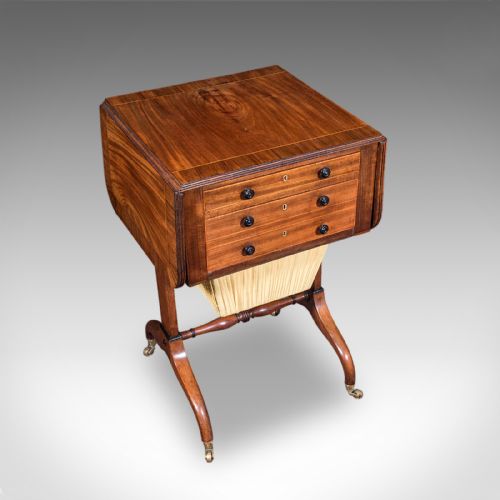
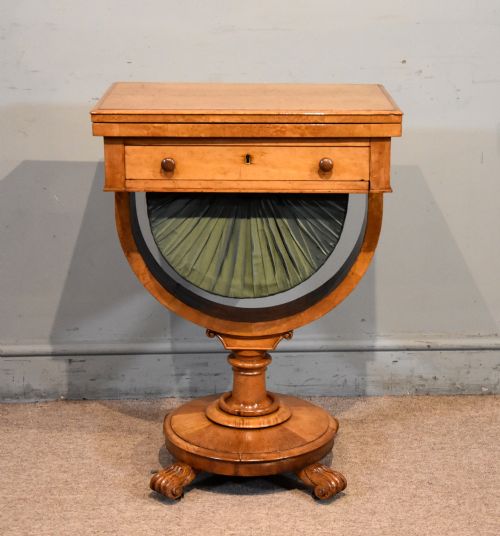
A period needlework table is fundamentally a specialised piece of domestic furniture intended for sewing, embroidery, and light writing tasks. Most examples encountered here hail from the Regency and Georgian eras, spanning the early nineteenth century.
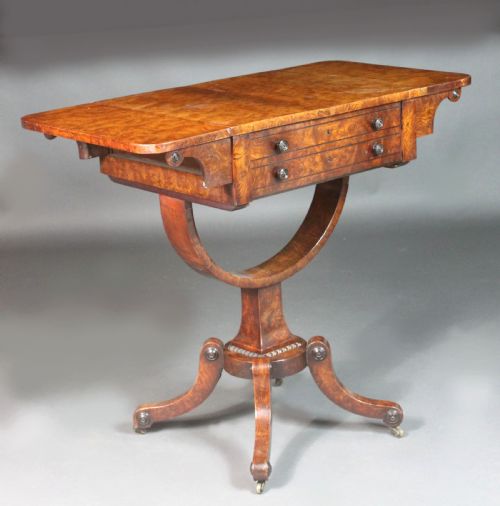
These items typically manifest as work tables, sewing tables, or occasional drop-leaf side tables equipped with integrated fabric bags or drawers. The forms reflect an age when handiwork occupied a central place in polite daily life.
Materials and construction
Cabinetmakers utilised dense tropical hardwoods such as rosewood and mahogany for the primary carcases, frequently embellishing surfaces with lighter contrasting veneers like boxwood or pollard oak. These timbers provided both structural stability and a rich canvas for decorative inlay.
Metalwork details in brass appear alongside delicate fabric components, including silk and felt textile panels used for embroidery work. Craftspeople employed specialised penwork and meticulous timber joinery to achieve the refined finishes seen across these pieces.
Period Needlework Table Retail Price Guide 2026
Typical asking prices for period needlework table among the pieces listed under this phrase on Sellingantiques today, from the lower quarter to the upper quarter. They describe what is for sale here now, not the wider market.
The listings span from Georgian and Regency eras into early 1900 examples, featuring rosewood, mahogany, and brass.
Variations in quality
Distinction across the range rests largely on the ambition of the timber selection and the precision of decorative inlays. Elaborate brass stringing and figured veneers such as burr ash mark out superior pieces from simpler utilitarian versions.
The sophistication of the internal compartments and the integration of drop-leaf mechanisms also dictate the standing of an individual table. Finer examples display meticulous attention to secondary timbers and the quality of their turned or reeded supports.
The Period Needlework Table Glossary
- Work table
- A small movable table designed specifically to hold sewing implements, threads, and unfinished textile projects. It usually incorporates a suspended fabric bag or deep wooden drawer beneath the top.
- Drop leaf
- A hinged flap at the side of a table that can be raised to extend the surface area or lowered when space is constrained.
- Penwork
- A decorative technique using Indian ink on a light wood background to simulate elaborate inlay or engraving. It creates fine linear patterns reminiscent of classical designs.
- Inlay
- The practice of inserting pieces of contrasting material into a recessed wooden surface to form a pattern or picture. Common materials include brass, boxwood, and various specimen woods.
Period Needlework Table: Frequently Asked Questions
What was a sewing table used for?
These tables served as mobile workstations for gentlewomen engaged in needlepoint, embroidery, and lacemaking. The fitted drawers and hanging fabric bags kept threads, needles, and cloth tidy within the main living rooms.
Beyond craft, the tops provided convenient surfaces for writing letters or holding lamps during evening hours.
How do I spot a Regency work table?
Regency pieces often display architectural influences, featuring pillar supports, brass inlay, and dark exotic woods like rosewood or mahogany. Look for clean classical lines combined with functional additions like drop flaps and compartmented drawers.
The hardware and proportion of the turned legs typically point towards the early nineteenth century.
Are these tables sturdy enough for daily use?
These items were built by skilled cabinetmakers using robust timbers, making them well-suited for gentle modern use as side tables or lamp stands. The hinged leaves and internal drawers require normal care to maintain their original joints.
Placing them away from direct heat sources helps protect the historic veneers and delicate wood movements.
What woods were used in these tables?
Cabinetmakers relied heavily on rich dark timbers including mahogany and rosewood for the main bodies. They accented these surfaces with lighter decorative elements such as boxwood, pollard oak, and burr ash veneers.
Brass additions and ebonised wood details also appear frequently on pieces from this era.