





Period Marble Carving
These period marble carving pieces span centuries of sculptural craft and stone-topped furniture, offering solid focal points for refined interiors.
Period Marble Carving
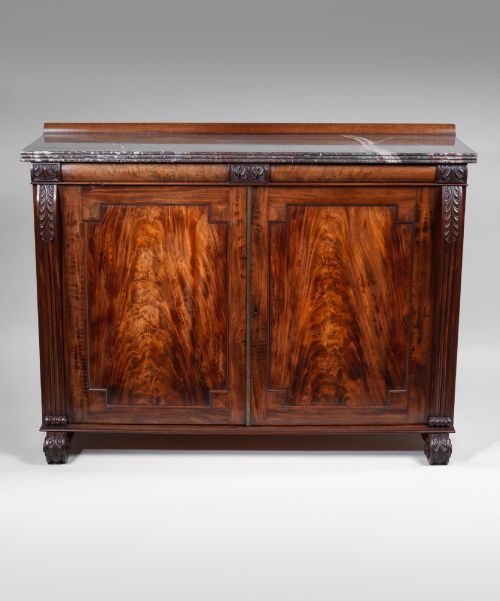
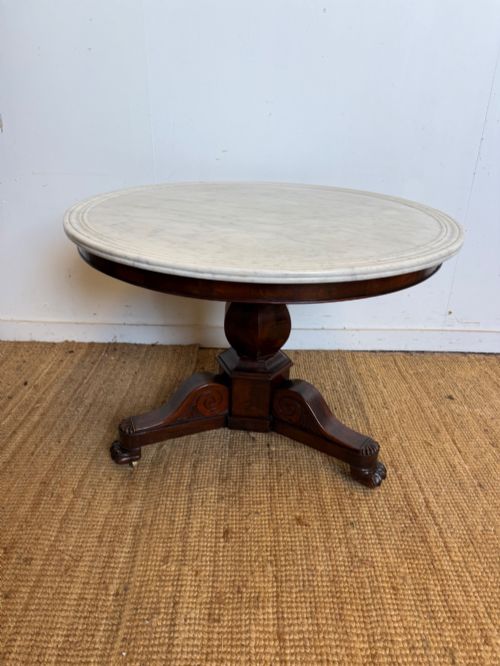
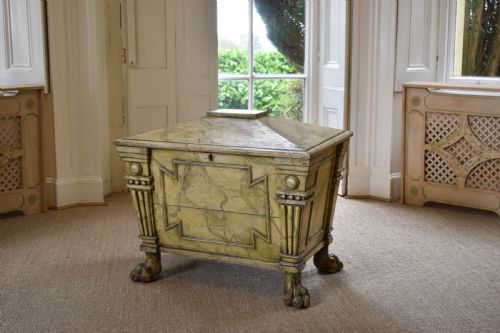
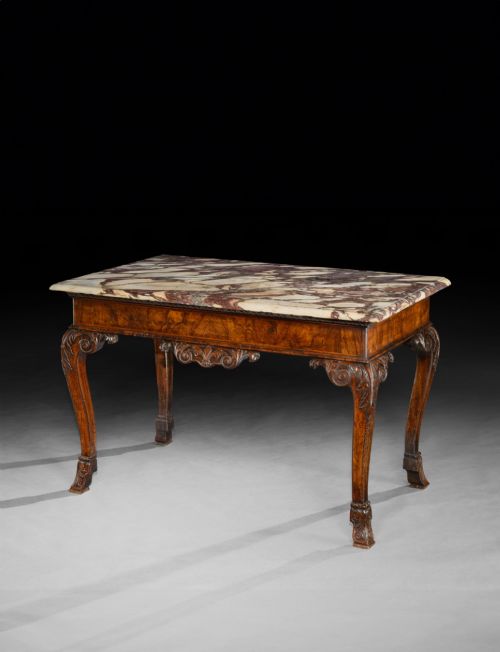
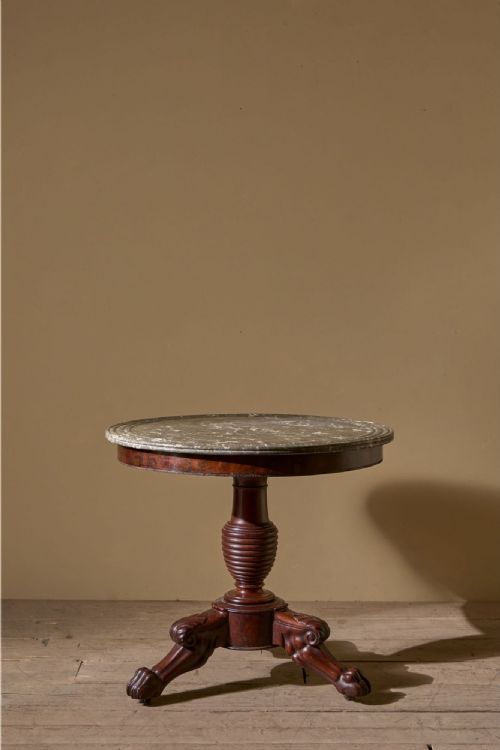
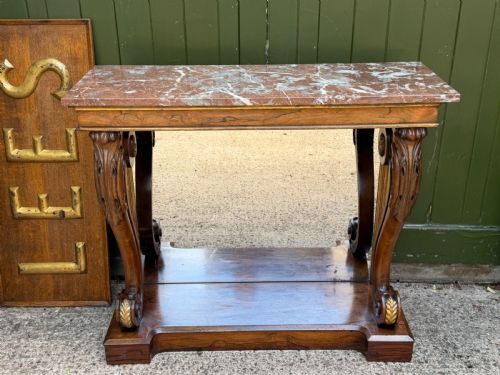
A period marble carving brings together substantial architectural furniture and sculptural stone pieces originating mainly across the eighteenth and nineteenth centuries. Buyers seeking this phrase typically encounter console tables, centre tables, and sideboards featuring fitted stone surfaces alongside statues and stands.
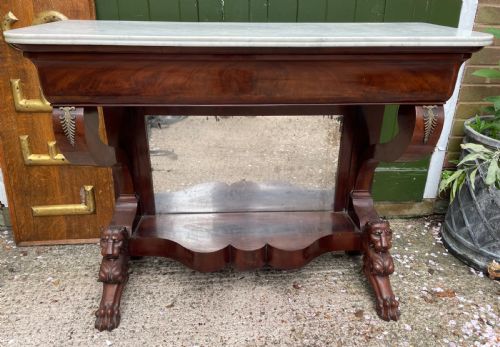
The selection ranges from George II walnut furniture to French Empire and Charles X mahogany consoles, as well as distinct regional works such as Burmese temple statues and Meiji stands. These forms reflect diverse domestic and ritual functions across European and Asian traditions.
Most items combine timber structures in mahogany, rosewood, walnut, or giltwood with inset slabs of grey, carrara, or specimen marble. The stone forms an integral functional or decorative element of the piece rather than a mere addition.
Materials and Construction
Workshops utilised dense tropical hardwoods like mahogany and rosewood alongside walnut and giltwood to build sturdy table frames, cabinets, and stands. These timbers were often selected for rich grain patterns and durability.
Stone masons shaped and polished marble tops and sculptural elements to exact dimensions, integrating grey or white carrara slabs into wooden rebates. Parcel-gilding, carving, and mirror-backing were applied to enhance the visual depth of the furniture frames.
Period Marble Carving Retail Price Guide 2026
Typical asking prices for period marble carving among the pieces listed under this phrase on Sellingantiques today, from the lower quarter to the upper quarter. They describe what is for sale here now, not the wider market.
Several tables arrive with heavy stone slabs that have quietly outlived empires.
Evaluating Quality
Quality depends upon the precision of the timber carving and the grade of the marble used for the top or sculpture. Finer examples display crisp hand-carved details on mahogany, walnut, or giltwood frames that retain their original architectural integrity.
The integration between the stone slab and the wooden base indicates the standard of manufacture. Superior pieces feature custom-fitted marble with consistent veining, while lesser examples show poorer alignment or mismatched materials.
The Period Marble Carving Glossary
- Gueridon
- A small circular table supported by a central pillar or figures, commonly topped with marble during the nineteenth century.
- Console table
- A table designed to stand flat against a wall, frequently secured with brackets and finished with a stone top.
- Specimen marble
- A decorative surface composed of various coloured marbles arranged in geometric or pictorial patterns.
- Parcel-gilt
- Partially gilded with gold leaf or powder, highlighting specific carved details on a wooden surface.
Period Marble Carving: Frequently Asked Questions
How are marble top tables cleaned?
Clean polished marble surfaces using a soft cloth dampened with warm water and a neutral soap, avoiding acidic cleaners that etch stone.
Dry the surface thoroughly after washing to prevent water marks and preserve the natural finish of the stone.
Where should a console table be placed?
Console tables fit well in hallways, living rooms, or dining spaces against flat walls, often positioned beneath mirrors or paintings.
Ensure the floor is level so the heavy combination of timber and stone remains stable and secure.
What defines the Regency style?
Regency design draws on classical Greco-Roman motifs, featuring clean architectural lines, dark timbers, and gilt metal mounts.
Furniture from this era often incorporates contrasting rosewood or mahogany with light-reflecting glass and marble.
How to identify a Burmese temple statue?
Burmese temple statues typically depict religious figures, such as reclining Buddhas, carved from white marble with traditional iconography.
These pieces reflect specific regional religious practices and sculptural traditions from Southeast Asia.