




Period Mahogany Server
A period mahogany server brings genuine utility and timeless dining room elegance, spanning Georgian grace to Regency boldness.
Period Mahogany Server
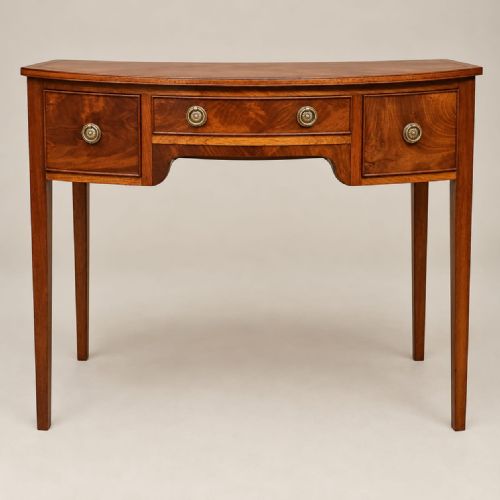
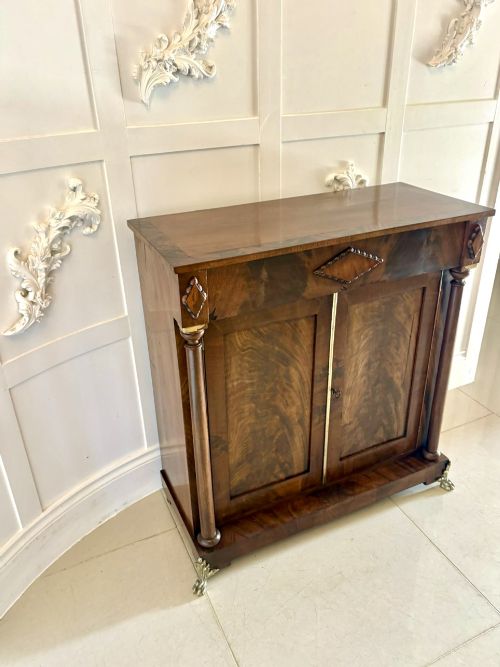
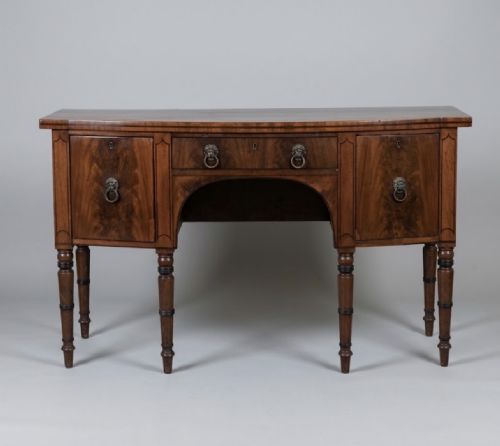
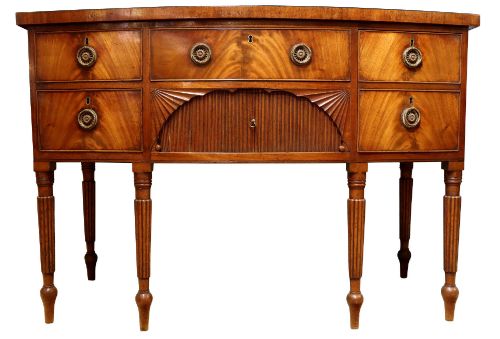
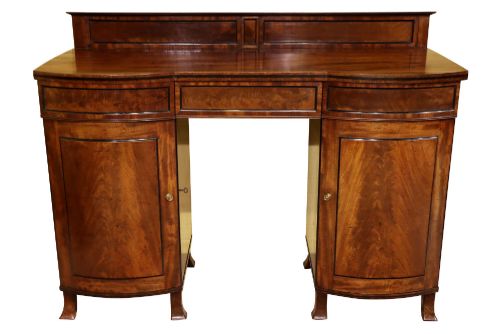
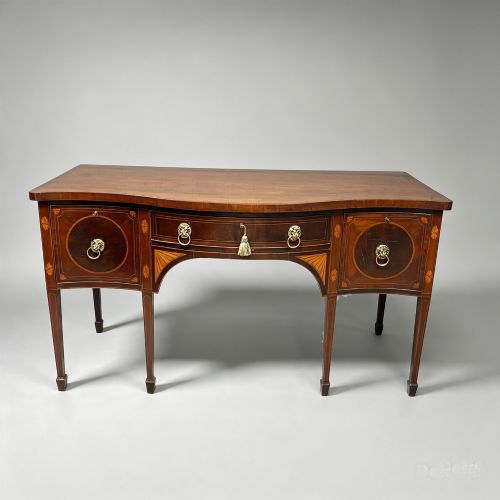
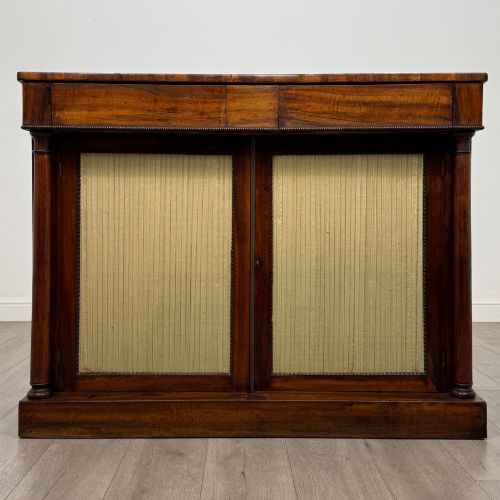
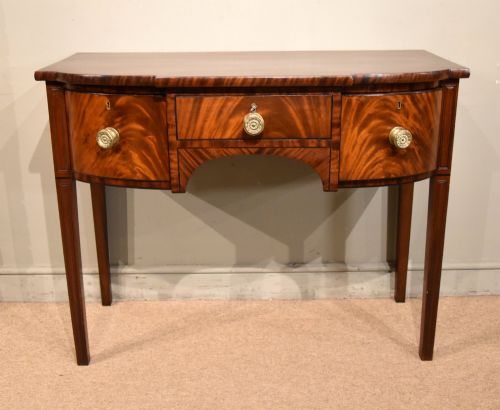
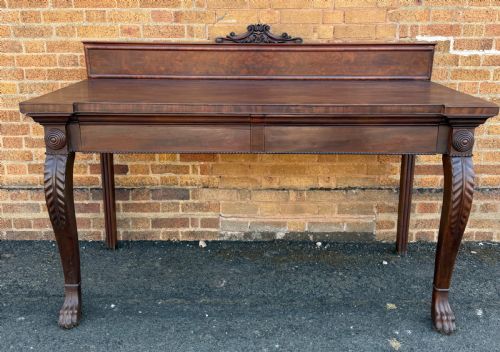
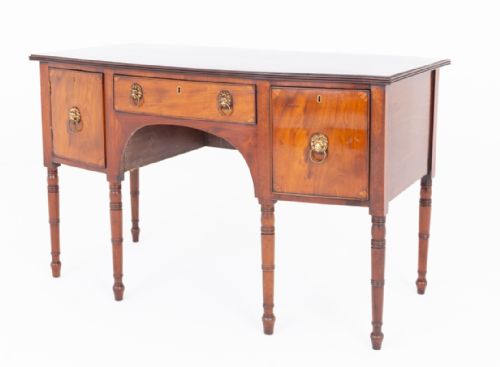
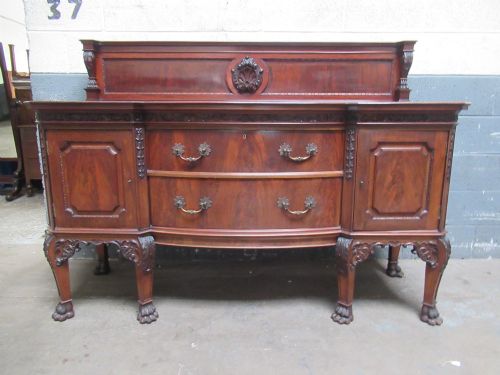
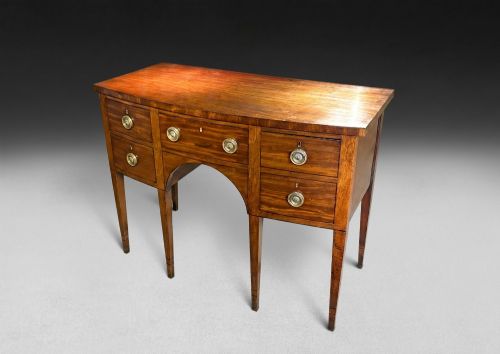
A period mahogany server encompasses a range of dining room furniture designed for organising and presenting food, including sideboards, serving tables, and consoles. When searching for a period mahogany server, buyers most frequently encounter pieces from the Georgian and Regency eras.
The form evolved from simple serving tables into sophisticated sideboards featuring drawers, cupboards, and pedestals. Makers utilised rich timbers to create functional surfaces that anchored formal dining spaces.
Examples on this page span the eighteenth, nineteenth, and early twentieth centuries, reflecting changing domestic requirements. From serpentine fronts to bowfront designs, these servers provide both storage and surface area.
Markers of Quality
Quality rests in the selection of timber, particularly the choice of figured mahogany and flame veneer matched symmetrically across the front. Finer pieces demonstrate precise inlay work and well-executed curved or serpentine forms.
Construction details distinguish workshop standards, seen in hand-cut dovetails, original brass hardware, and the integrity of internal carcases. The fluidity of design and proportions elevate certain servers above standard utility pieces.
Period Mahogany Server Retail Price Guide 2026
Typical asking prices for period mahogany server among the pieces listed under this phrase on Sellingantiques today, from the lower quarter to the upper quarter. They describe what is for sale here now, not the wider market.
Some dumb waiters feature three graduating tiers, ready to hold endless courses or perhaps a very ambitious tea party.
Gillows·Mack Williams And Gibton
The Period Mahogany Server Glossary
- Bowfront
- A convex curved cabinet front popular during the Georgian and Regency periods. This shape softens the room's geometry.
- Serpentine
- A front design featuring a convex centre flanked by concave curves. It requires exceptional skill from the cabinetmaker.
- Flame mahogany
- Timber sliced from the fork of the mahogany tree to create a distinctive flame-like grain figure. It commands attention on principal surfaces.
- Pedestal sideboard
- A form consisting of two separate pedestals linked by a central serving board. These often date from the Regency era.
- Stringing
- Thin lines of contrasting wood inlaid into the primary timber for border decoration. Boxwood and satinwood were common choices.
Period Mahogany Server: Frequently Asked Questions
How do I date a mahogany server?
Dating relies on examining the timber, construction methods, hardware, and stylistic traits like bracket feet or saber legs.
Georgian and Regency pieces exhibit distinct proportions and inlay techniques typical of their respective decades.
Where were these servers used?
They stood in formal dining rooms and halls of large houses to assist with the service of grand meals.
Servants placed platters and utensils upon them before bringing dishes to the main dining table.
How do I care for mahogany?
Maintain mahogany furniture by keeping it away from direct sunlight and sudden temperature changes to protect the polish and wood.
Apply a gentle wax polish periodically to preserve the depth of the grain and the timber's natural lustre.