
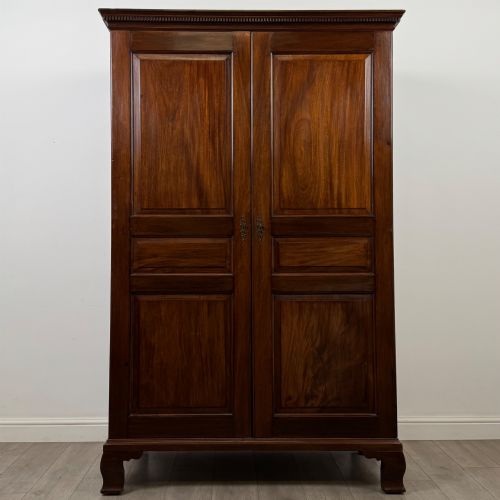
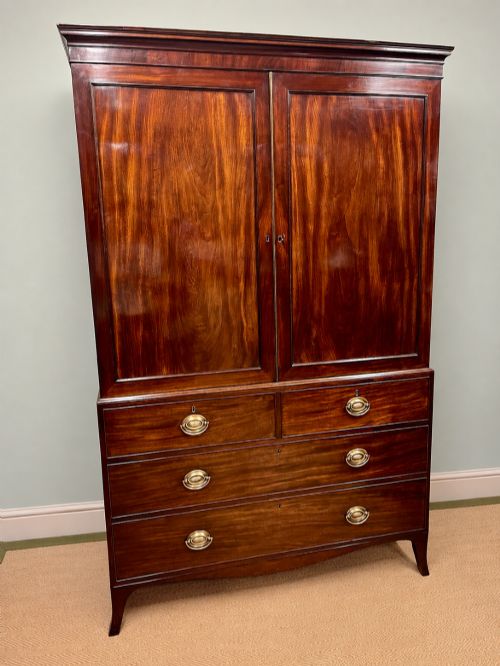
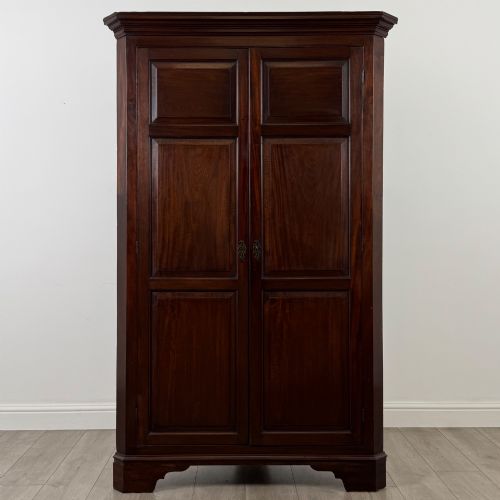


Period Mahogany Armoire
These period mahogany armoire examples are grand storage pieces offering rich timber figures and traditional craftsmanship for discerning interiors.
Period Mahogany Armoire
When you search for a period mahogany armoire, you are looking at substantial case furniture designed for hanging garments or storing linens. These pieces span Georgian, Regency, William IV, and nineteenth-century periods, showcasing the enduring appeal of dense, dark timber in domestic settings.
The most common forms you will meet on this page are linen presses and wardrobes. These items combine architectural cornices, panelled doors, and interior linen slides or hanging space beneath upper cupboards.
Originating primarily from British and Irish workshops, these large storage units demonstrate the evolution of cabinet-making from the late eighteenth century into the nineteenth century. They anchor a room with architectural presence and historical depth.
How they were made
Cabinet-makers relied upon solid mahogany and Cuban mahogany timbers, often enhanced with flame mahogany veneer to create striking figured surfaces on primary panels. Oak frequently served as a secondary wood for internal drawer linings and structural framing.
Constructive details included pegged joinery, hand-cut dovetails for internal drawers, and applied mouldings such as swan-neck pediments. Metalwork comprised cast brass hardware like escutcheons and handles.
Glazing appeared in specific configurations for specialised display or corner cabinets, while large wardrobe doors utilised heavy timber frames designed to prevent warping over decades of use.
Listings feature mahogany, Cuban mahogany, and oak timbers alongside brass and glass hardware across Georgian, Regency, and William IV periods.
What varies in quality
The choice of timber creates the primary distinction in visual richness, moving from plain mahogany boards to highly figured Cuban or flame mahogany veneers with dramatic grain movement. Select examples incorporate contrasting satinwood inlay that lifts the visual weight of the facade.
Proportion and architectural detailing set finer pieces apart, visible in the elegance of swan-neck pediments, well-balanced door panels, and crisp mouldings. The integration of original brass hardware and well-preserved internal linen slides rather than modern alterations preserves the integrity of the piece.
The Period Mahogany Armoire Glossary
- Cuban mahogany
- A dense, dark timber prized for its deep colour and fine grain, frequently used in high-status furniture of the eighteenth and nineteenth centuries. It is heavier and harder than many substitute woods.
- Flame mahogany veneer
- A thin slice of wood cut from where a branch joins the main trunk, producing a distinctive fire-like pattern. Master cabinet-makers applied this to prominent door panels for decorative impact.
- Linen press
- A large storage cabinet featuring upper sliding trays for folded textiles and lower drawers for bulkier garments. These units evolved into general wardrobes during the nineteenth century.
- Swan-neck pediment
- A broken scroll pediment topping a cabinet, often terminating in a carved patera or rosette centre. This classical architectural feature draws the eye upward to the cornice.
- Regency
- A British design period spanning the early nineteenth century, characterised by classical restraint, architectural severity, and refined proportion. Furniture from this era often incorporates subtle brass inlay or bold mahogany surfaces.
Period Mahogany Armoire: Frequently Asked Questions
What is a linen press?
A linen press is a tall case furniture piece featuring upper sliding trays designed for flat textiles and lower drawers for garments. They served as the primary storage units in bedrooms before modern fitted wardrobes.
Over time, many of these presses were converted into hanging wardrobes by removing the internal sliding trays to accommodate longer clothing.
How do I date a mahogany wardrobe?
Dating relies on observing architectural styles, construction methods, and timber choices. Georgian pieces often display classical proportions and simpler cornices, while Regency examples lean towards bold mahogany figures and refined brass mounts.
Internal secondary woods, such as oak drawer linings and hand-cut dovetails, offer further clues to the period of manufacture.
Where should I place an armoire?
These grand storage pieces require a wall with sufficient width and ceiling height to accommodate their architectural bulk without overwhelming the room. Bedrooms and spacious hallways provide the traditional context for their display.
Keep them away from direct sunlight and strong heat sources to protect the polished mahogany surface and prevent timber movement.
What is flame mahogany?
Flame mahogany is a decorative veneer harvested from the junction where a branch meets the tree trunk. The grain swirls in a pattern resembling flickering flames, creating a striking visual effect on cabinet doors.
Cabinet-makers used this timber selectively on primary display surfaces to catch the light and demonstrate the skill of the workshop.