

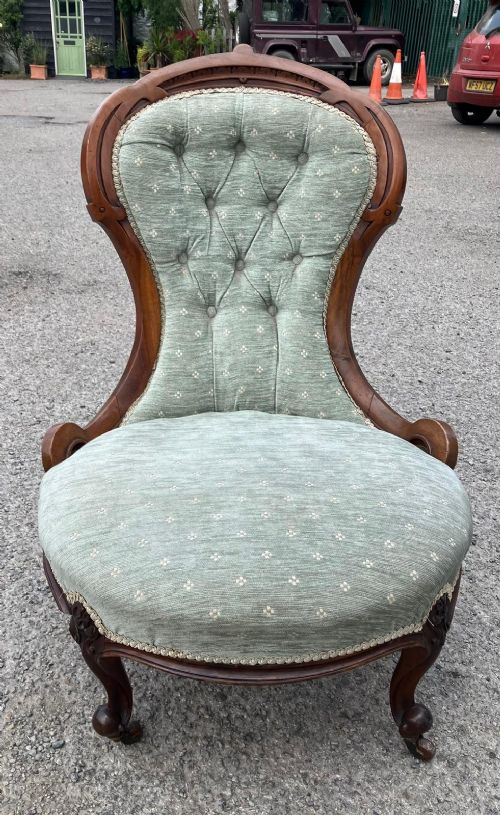


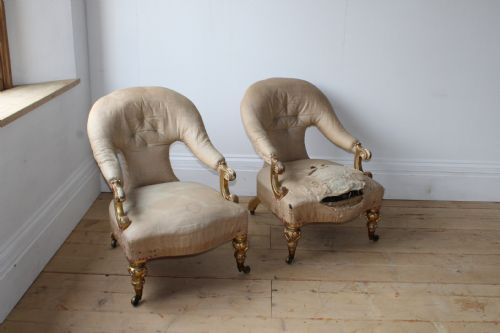


Period Low Chair
A period low chair brings intimate scale and low-slung comfort to a room, offering the perfect seat for firesides, bedrooms, and quiet corners.
Period Low Chair
A period low chair encompasses a diverse group of compact seating forms designed for specific domestic comfort, spanning from the Regency era through to the Art Deco period. When you search for a period low chair, you encounter everything from nursing and slipper chairs to low-back Windsor armchairs and bedroom fireside seats.
The Victorian examples dominate the selection, frequently taking the form of nursing chairs upholstered in textile and velvet, or ebonised child chairs. Alongside these, nineteenth century ash and elm Windsor low back armchairs and Regency slipper chairs provide sturdy timber alternatives to the more heavily padded boudoir seating.
Makers such as J. Mills are represented among the open armchairs, while larger sets include garden chairs from the Calcutta Polo Club and sets of twelve ash and elm chairs. The styles range from English and Victorian country vernacular to Aesthetic Movement and French Chateau influences.
Materials and construction
These chairs rely heavily on solid timbers such as mahogany, walnut, ash, and elm for their frames, often paired with brass castors or fittings. Turnings and carved details define the wooden components, particularly on Victorian walnut bedroom fireside chairs and nineteenth century Windsor frames.
Upholstered versions layer fabric, textile, and velvet over internal padding to achieve a low, comfortable seat suited for nurseries and bedrooms. The combination of turned wood, polished timber, and soft coverings dictates the physical presence of each piece.
Period Low Chair Retail Price Guide 2026
Typical asking prices for period low chair among the pieces listed under this phrase on Sellingantiques today, from the lower quarter to the upper quarter. They describe what is for sale here now, not the wider market.
Included among the seating are garden chairs once stationed at the Calcutta Polo Club, far from their usual English lawn origins.
Judging quality in low seating
Quality rests on the integrity of the timber frame and the proportion of the low seat relative to the backrest and arms. Finer walnut and mahogany frames display crisp carving and robust joinery, whereas lesser examples show simpler turning and heavier proportions.
The harmony between the original woodwork and the current textile upholstery determines the overall character of the piece. Well-balanced proportions in nursing chairs and slipper chairs separate standard domestic furniture from finer workshop production.
J. Mills
The Period Low Chair Glossary
- Nursing chair
- A low-seated upholstered chair originally designed in the nineteenth century to allow a woman to nurse an infant comfortably. These pieces typically feature sprung seats and low profiles suited to bedroom use.
- Slipper chair
- An upholstered bedroom chair with a very low seat, originally used by women while putting on shoes or slippers. The absence of arms allows bulky garments to drape freely over the sides.
- Windsor low back
- A wooden chair construction featuring a solid saddle-shaped seat into which the legs and back spindles are wedged directly. Low back versions offer a compact profile compared to their tall-backed counterparts.
- Ebonised
- Wood finished with a dark stain or black lacquer to imitate ebony. This technique appears frequently on Victorian fancy furniture and child chairs.
- Aesthetic Movement
- A late nineteenth century design style emphasising visual beauty and artistic reform over heavy historicism. Pieces from this period often display slender lines and ebonised finishes.
Period Low Chair: Frequently Asked Questions
What is a period low chair used for today?
These pieces serve primarily as accent seating in living rooms, bedrooms, and dressing areas where standard chair heights feel too imposing. Their compact scale allows them to fit comfortably into restricted spaces or beside low mantelpieces.
Historically designed for specific domestic tasks such as nursing or dressing, they now function well as occasional chairs that add character and low-slung lines to contemporary interiors.
How do I distinguish a nursing chair from a slipper chair?
A nursing chair is traditionally fully upholstered with a low seat and a supportive backrest designed for sitting comfortably while holding an infant. They often feature castors on the front legs to aid movement across carpets.
A slipper chair usually lacks arms entirely and sits even closer to the floor, having been designed originally for dressing and shoe fitting in the bedroom.
Which woods were commonly used for these chairs?
Cabinet makers utilised dense hardwoods such as mahogany and walnut for finer Victorian and Regency upholstered models, imparting a rich grain and deep colour to the exposed frame. Walnut frames often feature decorative carving on the crest rail.
Country pieces and Windsor armchairs rely instead on tough indigenous timbers like ash and elm, which bend well and withstand heavy domestic use without splitting.
How do I date a low chair?
Dating relies on observing the combination of timber, upholstery style, and turning details characteristic of specific nineteenth and twentieth century periods. Regency pieces show simpler classical lines, while Victorian examples often incorporate elaborate walnut carvings or ebonised surfaces.
Art Deco and later 1930s armchairs introduce geometric forms and streamlined shapes that depart entirely from Victorian ornamentation.