




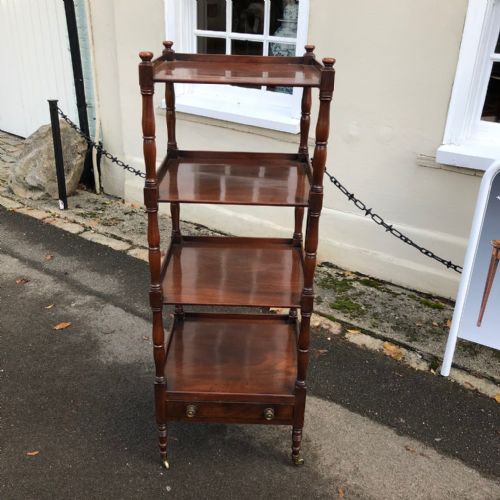


Period Furniture Display Unit
A period furniture display unit houses precious things in mahogany, oak, and rosewood, bringing structural elegance and practical shelving into a room.
Period Furniture Display Unit
A period furniture display unit takes many forms across the evidence, appearing most frequently as the tiered whatnot, etagere, corner cupboard, and hanging shelf. These pieces originate from the eighteenth and nineteenth centuries, spanning Georgian, Regency, and later periods with distinct regional expressions from French Provincial to Japanese Meiji workshops.
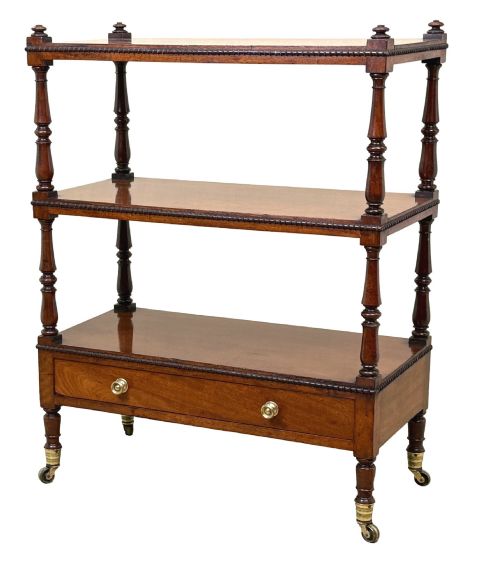
The quintessential whatnot emerges in mahogany and rosewood during the Regency and Georgian eras, offering multiple open tiers supported by slender uprights. Standing and hanging corner cabinets complete the core offerings, utilising awkward room angles to display ceramics and glassware behind panelled or glazed doors.
Materials and construction
Makers rely heavily on dense hardwoods like mahogany, rosewood, and oak, often selecting timber for rich grain patterns and deep natural colour. Brass details appear on supports and mountings, while glass provides transparency for display cabinets and mother of pearl offers delicate decorative contrast.
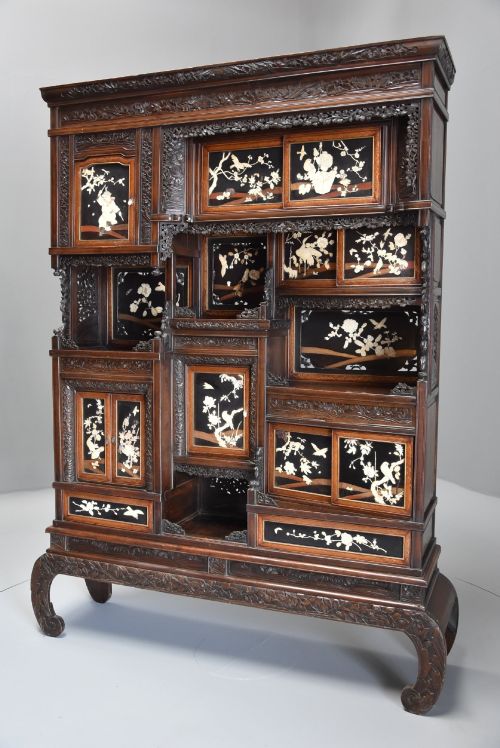
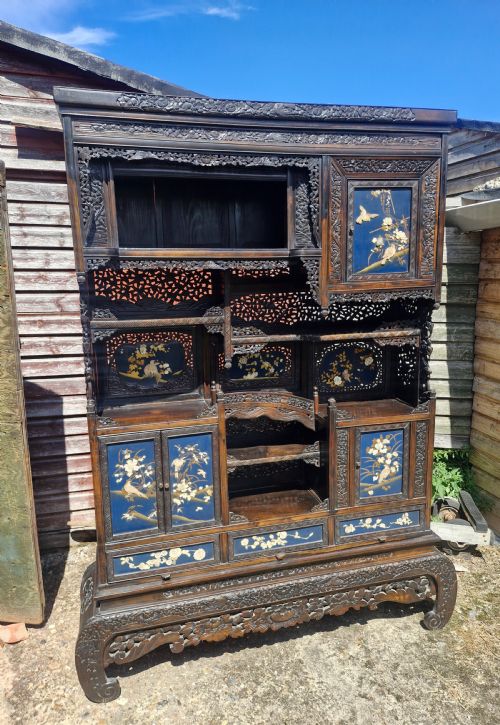
Joinery techniques reflect traditional cabinet making, utilising pegged joints for eighteenth century oak cupboards and precise turning for tiered etagere uprights. Lacquer and carving define the Japanese Shodana cabinets, showing meticulous surface preparation and applied decorative elements.
Period Furniture Display Unit Retail Price Guide 2026
Typical asking prices for period furniture display unit among the pieces listed under this phrase on Sellingantiques today, from the lower quarter to the upper quarter. They describe what is for sale here now, not the wider market.
Some nineteenth century whatnots feature tiny brass caster wheels, allowing servants to trundle your knick-knacks smoothly across the drawing-room carpet.
Evaluating quality and proportion
Quality rests upon the crispness of turned supports, the tightness of joints, and the selection of figured timber veneers. Superior examples maintain balanced proportions across multiple tiers, whereas lesser pieces display heavy framing that obscures the items placed upon them.
Finer items exhibit careful attention to secondary timbers and understated brass details that integrate smoothly into the overall design. Condition of the polished finish and the structural integrity of stacked tiers dictate the standing of individual pieces.
Liberty & Co.·Gillows
The Period Furniture Display Unit Glossary
- Whatnot
- A piece of furniture with multiple open shelves designed for displaying ornaments or books. These typically date from the Regency and Victorian periods.
- Etagere
- A set of open shelves for displaying small objects, sharing similarities with the whatnot. French in origin, these units often possess slender upright supports.
- Shodana
- A traditional Japanese display cabinet featuring asymmetrical shelving and sliding doors. These pieces arrive from the Meiji period and utilise intricate carved wood.
- Corner cupboard
- A cabinet built or shaped to fit into the corner of a room, saving floor space. Versions appear in solid oak and mahogany across the eighteenth century.
- Hanging shelves
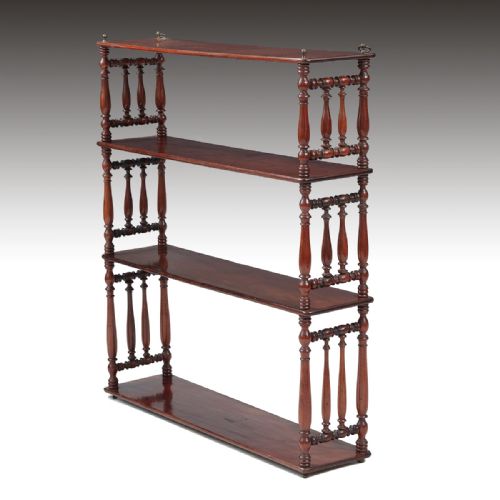
- Open shelving units designed to be mounted directly onto a wall rather than standing on the floor. These frequently emerge in mahogany during the Regency era.
Period Furniture Display Unit: Frequently Asked Questions
What is a whatnot?
A whatnot is an open shelving unit with three or more tiers, designed specifically to hold ornaments, books, and collections. The form became particularly popular during the Regency and Georgian periods.
Craftsmen built these pieces in mahogany and rosewood, using slender turned columns to separate each level. They sit easily in sitting rooms as both practical storage and display furniture.
How do I identify a Regency display piece?
Regency display items typically feature dark dense timbers like mahogany and rosewood, often complemented by brass details and slender turned uprights. The proportions remain balanced and clean, reflecting classical design influences of the early nineteenth century.
Many pieces from this era take the form of tiered whatnots or hanging wall shelves. Inspecting the timber grain and the turning of the supports helps confirm the period.
Where should I place a corner cabinet?
Corner cabinets fit directly into intersecting walls, utilising space that standard rectangular furniture cannot occupy. Eighteenth century oak and mahogany versions work effectively in dining rooms or hallways.
Standing models rest firmly on floor plinths while hanging versions mount directly to wall studs. Both variants provide secure storage for ceramics and glassware.
What is an etagere?
An etagere is a standing piece of furniture composed of several tiers of shelves for displaying decorative objects. The name derives from French, reflecting its lightweight open structure.
Unlike enclosed bookcases, etageres offer all-round visibility for collections. They appear frequently alongside whatnots in nineteenth century listings.
How do Japanese Shodana cabinets differ?
Japanese Shodana cabinets originate from the Meiji period, featuring asymmetrical shelving arrangements and intricate carved wood details. They bring a distinct aesthetic to interiors compared to British mahogany furniture.
These cabinets often sit on stands and showcase specialised lacquer or woodwork techniques. They serve as focal points for specialised collections.