

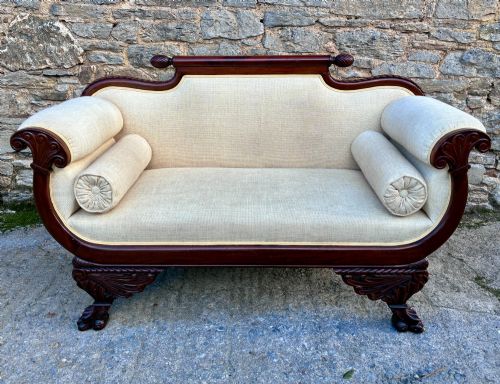
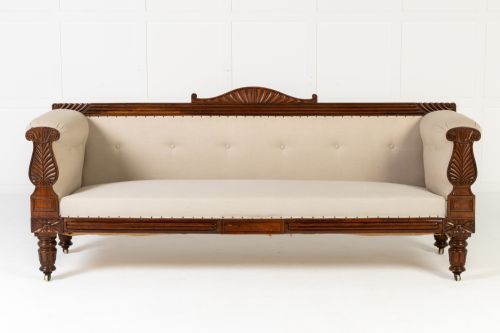


Period English Settee
A period English settee brings centuries of seating history into a room, offering generous proportions and craftsmanship that modern furniture simply cannot match.
Period English Settee
A period English settee encompasses a range of seating forms designed for multiple occupants, stretching from early walnut frames through to later Victorian examples. When exploring this selection, buyers frequently encounter sophisticated Regency sofas alongside grand drawing room settees and compact love seats.
Traditional forms include the iconic Knole sofa upholstered in rich gold damask, as well as expansive rosewood frames and carved timber constructions. Each piece reflects the dominant aesthetic of its respective century, from 18th-century craftsmanship to late 19th-century upholstery.
How they were made
Cabinet makers utilised dense hardwoods such as walnut and rosewood to construct the structural frames of these settees. These timbers provided the necessary strength for carved elements, such as the herms and figurative statues seen on Regency examples.
Upholstery techniques involved traditional stuffing materials finished with decorative textiles like damask and fabric. Brass hardware and detailed wood carving further enhanced the appearance of the frames, whilst wrought iron was employed for exterior garden benches.
Period English Settee Retail Price Guide 2026
Typical asking prices for period english settee among the pieces listed under this phrase on Sellingantiques today, from the lower quarter to the upper quarter. They describe what is for sale here now, not the wider market.
The listings on this site span multiple centuries, incorporating walnut, rosewood, brass, and wrought iron across distinct periods from Queen Anne to Edwardian.
What varies in quality
Material selection also dictates overall quality, with figured walnut and rich rosewood commanding greater visual presence than standard timber. The integrity of the original show frame and the sympathetic execution of historical upholstery materials determine the lasting appeal of any given settee.
The Period English Settee Glossary
- Show frame
- A wooden structural framework left visible around the upholstered portions of a settee. This exposed timber typically displays fine carving or polished grain.
- Knole sofa
- A historic seating form featuring high, adjustable or hinged arms traditionally held in place by integrated cords and decorative tie-backs. This design originated in the 17th century at Knole House.
- Damask
- A reversible, jacquard-woven fabric featuring patterns formed by contrasting warp and weft threads. It is frequently utilised in traditional upholstery to provide a textured surface.
- Love seat
- A compact two-seater settee designed for intimate conversation. These smaller examples offer the presence of a full sofa scaled for more modest interior spaces.
Period English Settee: Frequently Asked Questions
What is a period English settee?
A period English settee is a traditional multi-seat furniture form produced in England across various historical eras, encompassing styles from Queen Anne to Edwardian.
These pieces serve as both practical seating and decorative focal points, reflecting the changing tastes in interior design and cabinet making over hundreds of years.
How do I identify a Regency sofa?
Regency sofas are characterised by design influences from the early 19th century, often incorporating classical motifs, dark timbers like rosewood, and elaborate carved details.
They frequently feature architectural lines and sculptural elements such as carved herms or decorative brass mounts that distinguish them from earlier or later seating styles.
Where were settees placed historically?
Historically, these settees occupied principal reception rooms, drawing rooms, and formal parlours within English country houses and town residences.
Larger models provided ample seating for social gatherings, whilst smaller love seats and drawing room settees offered comfortable spots near fireplaces or conversational groupings.
How do I care for antique upholstery?
Caring for antique upholstery involves protecting delicate textiles like damask and fabric from direct sunlight to prevent fading and fibre degradation.
Regular gentle dusting and professional textile cleaning help maintain the condition of the historic materials without disrupting the underlying structure of the frame.