



Period Document Storage
Period document storage covers heavy oak bible boxes and compact leather trunks designed to keep important papers safe.
Period Document Storage
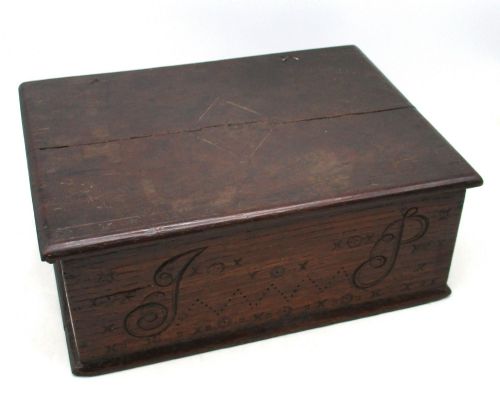
Period document storage encompasses functional wooden boxes and compact office cabinets built to hold correspondence, deeds, and valuable papers. When searching for period document storage, buyers generally encounter sturdy oak bible boxes, slant-front desk boxes, and multi-drawer desktop collectors' cases originating from past centuries.
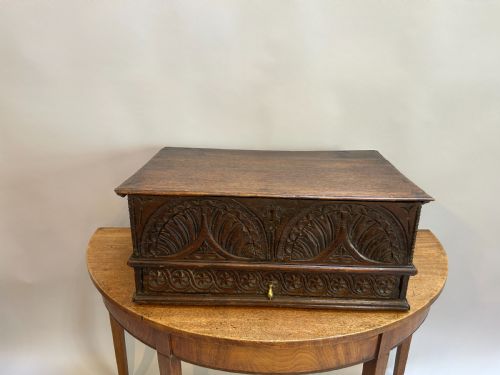
The pieces on offer span several distinct eras, stretching from heavily carved seventeenth-century oak items to refined Regency satinwood cases and utilitarian twentieth-century office cabinets. Early examples often double as bible boxes or lace boxes, while later Georgian and Regency iterations take the form of specialised desk chests and leather trunks.
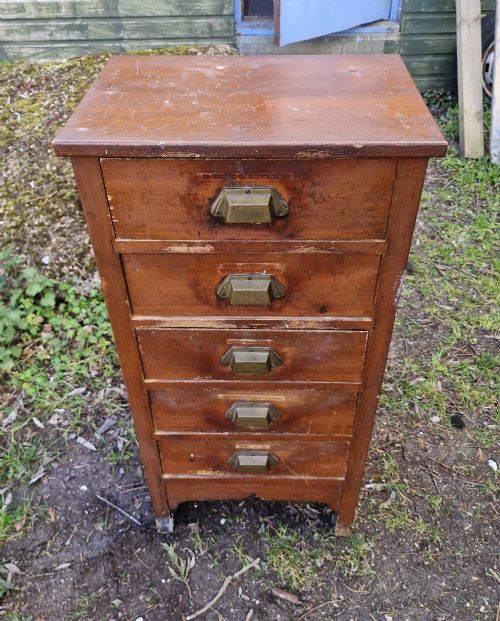
Forms vary from simple boarded oak chests to multi-drawer desktop cabinets equipped with original brass handles and gilded lettering. Buyers frequently select these items to bring tangible history and practical compartmentalization into a modern study or library.
Materials and construction
Makers relied heavily on solid oak for seventeenth-century and eighteenth-century pieces, often shaping the timber with hand-carved panels, holly inlay, and bog oak details. Carpenters constructed these early boxes with robust joinery to withstand daily household use and protect fragile manuscripts from moisture.
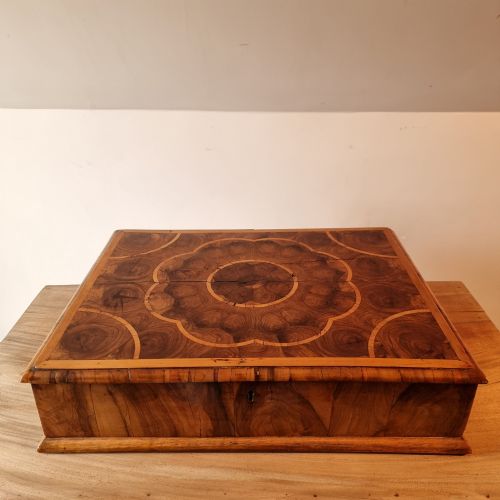
Later Regency and Georgian workshops utilised finer hardwoods such as mahogany and walnut, frequently applying oyster veneer and sycamore inlay to decorative surfaces. Iron hinges, brass handles, and leather coverings provided both functional reinforcement and visual contrast on trunks and desktop cabinets.
Period Document Storage Retail Price Guide 2026
Typical asking prices for period document storage among the pieces listed under this phrase on Sellingantiques today, from the lower quarter to the upper quarter. They describe what is for sale here now, not the wider market.
Judging quality
Quality in these storage pieces rests upon the integrity of the timber, the retention of original surface finishes, and the presence of period hardware such as brass handles and working locks. Superior examples display crisp hand-carving and careful matching of veneers like oyster walnut or satinwood.
Pieces that retain their original gilded lettering, interior partitions, and structural stability command greater appreciation from collectors. Inferior examples often suffer from mismatched replacement hardware or extensive timber replacement that obscures the original hand of the maker.
The Period Document Storage Glossary
- Bible box
- A small wooden chest with a sloping or flat lid, originally built to hold a family Bible and important household documents. These pieces date predominantly from the seventeenth and eighteenth centuries.
- Slant-front box
- A desktop container featuring an angled lid that provides a convenient writing surface while concealing interior compartments for papers and ink.
- Oyster veneer
- Thin slices of branch wood laid down in patterns resembling oyster shells, commonly found on late seventeenth-century and William and Mary furniture.
- Collector case
- A specialised cabinet or box fitted with multiple small drawers for organising stamps, coins, cigars, or small specimens.
- Desktop cabinet
- A small multi-drawer case designed to sit upon a desk or table for the storage of correspondence and office supplies.
Period Document Storage: Frequently Asked Questions
What is a bible box used for?
A bible box served as a secure, portable container for a family Bible, legal deeds, and personal letters during the seventeenth and eighteenth centuries. The sloping lid allowed the top to function as a makeshift writing desk when placed on a table.
These pieces protected fragile paper documents from damp conditions and theft in homes that lacked built-in closets. Today, they function well as decorative desktop storage for modern correspondence.
How do I date an oak document box?
Dating relies on observing construction methods, timber selection, and decorative motifs such as seventeenth-century carving styles or William and Mary veneers. Early pieces typically employ joined oak boards with hand-wrought iron hinges and minimal internal fittings.
Later eighteenth-century and Regency examples introduce mahogany, satinwood inlay, and more sophisticated multi-drawer interiors. Comparing hardware styles and dovetail joints helps narrow down the period of manufacture.
Are antique document boxes strong enough for daily use?
Solid oak and mahogany document boxes were built for rugged utility and easily accommodate everyday items like stationery, pens, and modern documents. Their robust joinery ensures they remain structurally sound after centuries of handling.
Care should be taken with delicate veneers, leather surfaces, and antique locking mechanisms to preserve their historical condition. Most pieces function reliably as practical desktop organizers.