




Period Dining Room Cabinet
A period dining room cabinet serves as a substantial centrepiece for formal meals, offering practical storage for silver and linen.
Period Dining Room Cabinet
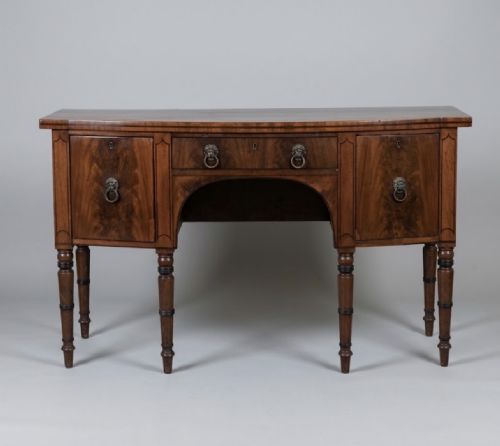
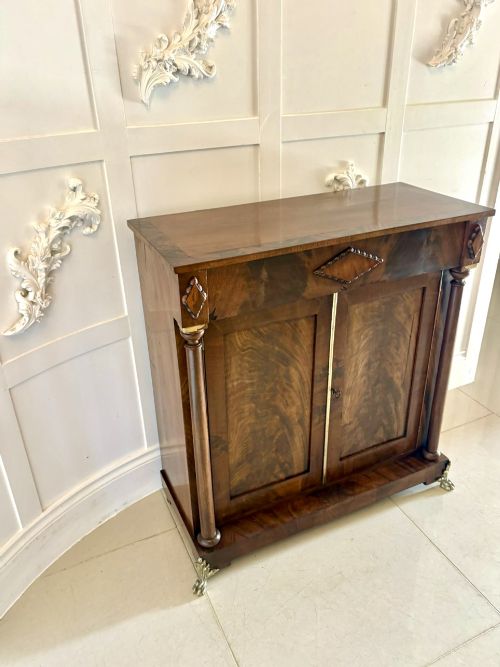
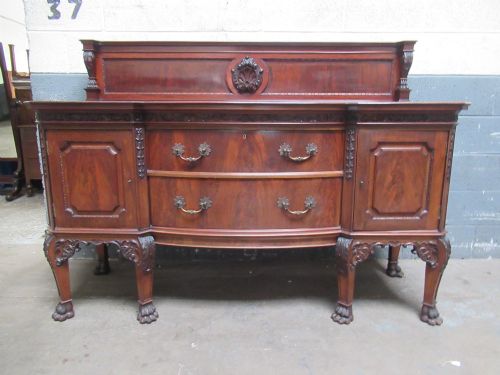
A period dining room cabinet encompasses large serving pieces, sideboards, chiffoniers, and pedestal cupboards designed to organise dining spaces. These items span the Georgian, Regency, Victorian, and Edwardian eras, reflecting the evolving domestic habits of British households.
The most common forms found here are Regency sideboards and chiffoniers alongside Edwardian variations. Buyers encounter pieces configured with drawers, cupboards, and drop wells, intended for domestic service and display.
How They Were Made
Cabinet makers utilised solid timber alongside figured veneers to construct these dining pieces. Mahogany forms the primary structure in many examples, occasionally enhanced with flame mahogany veneer or rosewood.
Detailing involves contrasting stringing, satinwood inlay, and brass work. Glazing and fabric insertions appear on specific cabinet doors and chiffonier backs.
Period Dining Room Cabinet Retail Price Guide 2026
Typical asking prices for period dining room cabinet among the pieces listed under this phrase on Sellingantiques today, from the lower quarter to the upper quarter. They describe what is for sale here now, not the wider market.
Some cabinets hide deep cellarette drawers once lined to chill wine bottles directly on ice beside the dining table.
What Varies in Quality
Construction standards depend on the selection of timber figures and the precision of the joinery. Superior examples display carefully matched flame veneers and subtle inlay work that require advanced carpentry skill.
Hardware and secondary timbers reveal the underlying workshop standards. Original brass fittings and well-figured secondary woods distinguish finer iterations from simpler production.
The Period Dining Room Cabinet Glossary
- Chiffonier
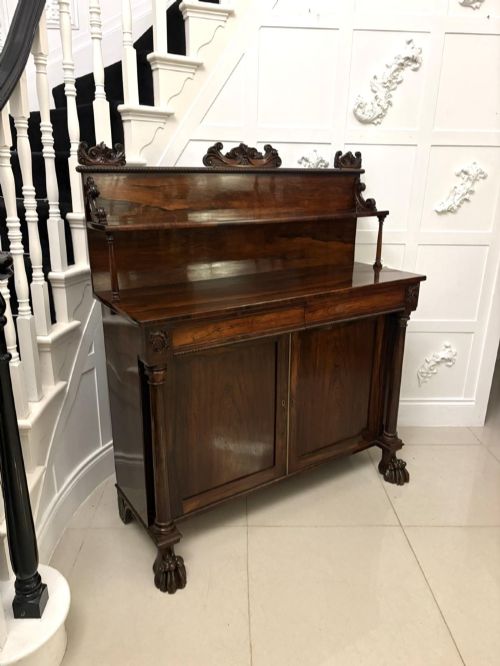
- A low cabinet, typically featuring enclosed shelving below and sometimes a raised tier above. These pieces function as supplementary serving surfaces in dining and reception rooms.
- Bowfront
- A curved convex front profile common on sideboards and cabinets from the Georgian and Regency periods. This shape softens the room's geometry while increasing interior depth.
- Pedestal sideboard
- A form comprising two separate pedestals linked by a central serving table or board. This layout originated in the late eighteenth century for large dining spaces.
- Rosewood
- A dense, heavily figured timber with dark grain patterns utilised in Regency and nineteenth-century cabinet making. Its rich natural colour makes it prominent on high-status items.
- Stringing
- Thin lines of contrasting wood inlay used to outline drawers, doors, and tabletops. This technique defines the architectural lines of the furniture.
Period Dining Room Cabinet: Frequently Asked Questions
What is a chiffonier?
A chiffonier is a low cabinet designed for dining room storage, often featuring shelves or cupboards enclosed by doors.
These items gained popularity during the Regency period and offer a compact alternative to full-length sideboards.
How do I identify a Regency sideboard?
Regency sideboards typically display classical proportions, brass inlay, and figured mahogany or rosewood surfaces.
They often incorporate pedestals, brass gallery rails, or bowfront designs characteristic of the early nineteenth century.
Where were these cabinets used?
These cabinets were placed in formal dining rooms to hold cutlery, glassware, and serving dishes.
Servants used the flat upper surfaces to prepare courses before bringing them to the main dining table.
What woods were used?
Makers primarily used mahogany, flame mahogany veneer, and rosewood for external surfaces.
Satinwood and brass frequently provided decorative contrast through inlay and stringing details.