




Period Corner Storage
Period corner storage delivers ingenious space-saving utility through centuries-old joinery, offering architectural presence to unused room angles.
Period Corner Storage
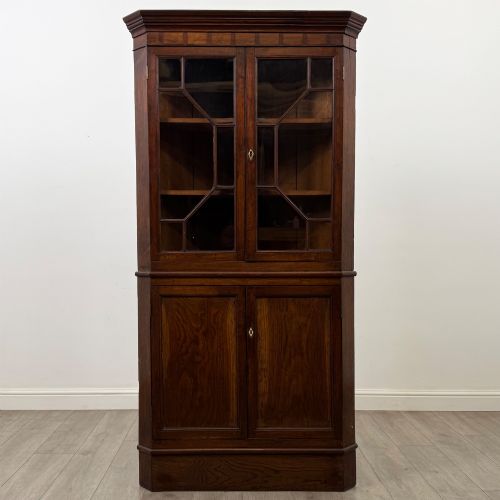
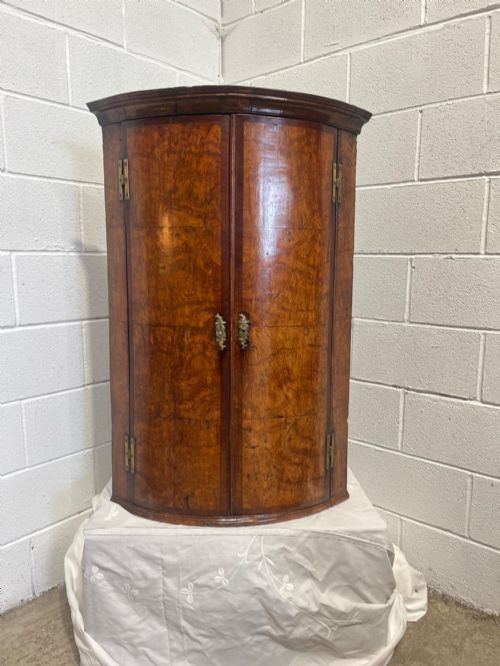
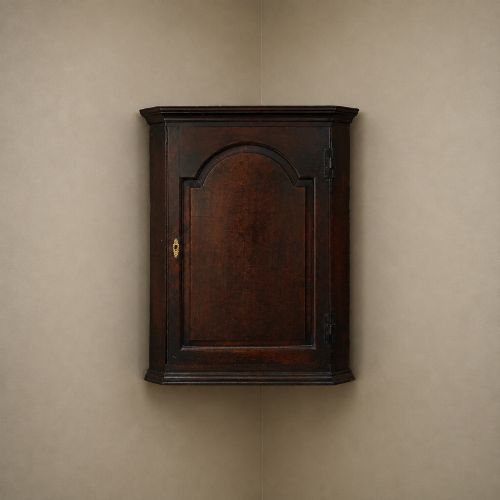
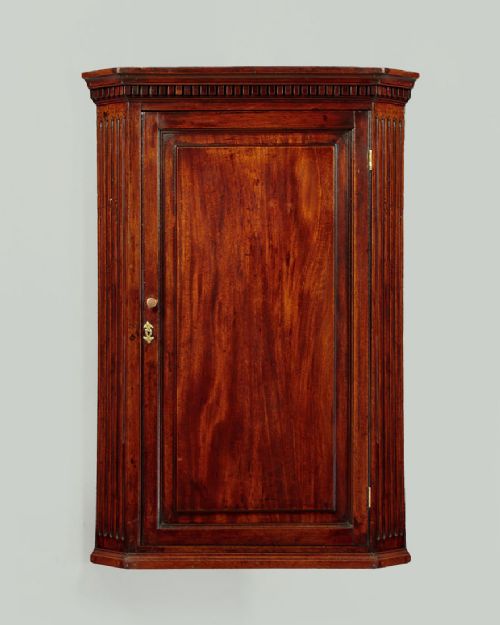
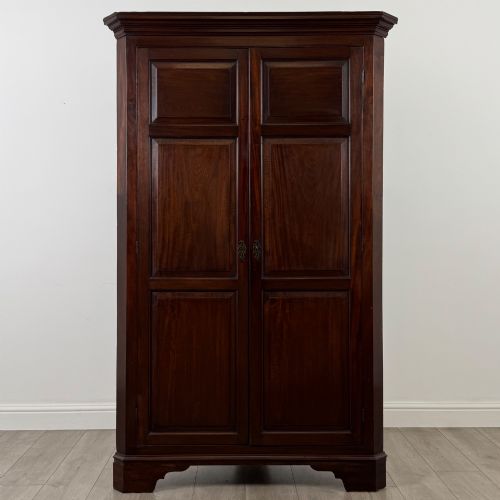
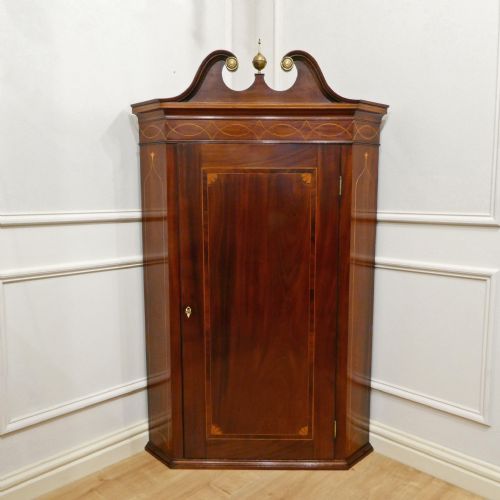
Period corner storage comprises wooden cabinetry specifically designed to fit domestic room angles, taking the form of hanging wall cupboards, floor-standing units, and two-part cupboards. These pieces emerge predominantly from the Georgian and eighteenth-century eras, reflecting the period focus on domestic organisation.
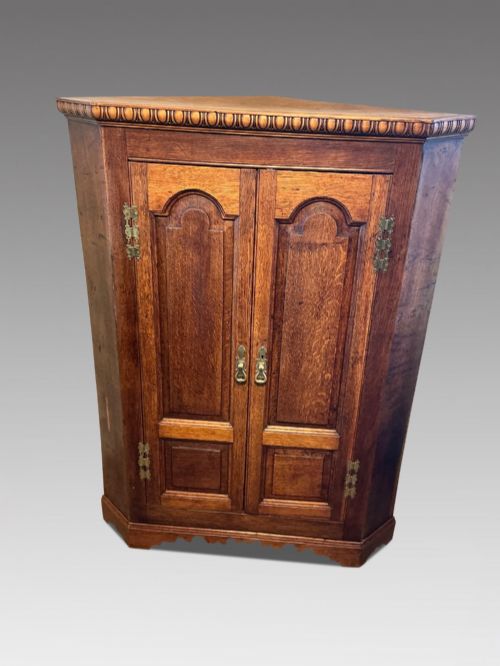
The most common versions met on this page are oak and mahogany corner cupboards, appearing in both wall-hanging and standing formats. Cabinetmakers constructed these pieces to utilise awkward spatial voids while displaying prized household possessions behind panelled or glazed doors.
Construction and Materials
Cabinetmakers relied on solid hardwoods such as oak, mahogany, and walnut, frequently incorporating burr oak or satinwood veneers for decorative contrast. Timber selection dictated the structural integrity required for wall-hanging and heavy floor-standing corner units.
Joinery methods included raised panel construction, dovetailing for drawers, and specialised framing to ensure stability across diagonal angles. Brass hardware, including H-hinges and escutcheons, secured doors and added functional detail to the timber framework.
Period Corner Storage Retail Price Guide 2026
Typical asking prices for period corner storage among the pieces listed under this phrase on Sellingantiques today, from the lower quarter to the upper quarter. They describe what is for sale here now, not the wider market.
Some corner cupboards include hidden interior drawers designed to keep secret letters away from prying eyes.
Judging Quality
Timber selection and figure determine the visual impact of a piece, with well-figured mahogany, burr oak, and satinwood inlay marking higher tiers of craftsmanship. The grain consistency and natural depth within the wood reflect the maker's initial material choice.
The Period Corner Storage Glossary
- George III
- The period spanning from 1760 to 1820, characterised by refined cabinetmaking and classical proportions. Furniture from this era often utilises mahogany or oak with subtle decorative inlay.
- Raised panel
- A wooden panel with bevelled edges designed to fit snugly within a grooved frame, allowing the wood to expand and contract safely. This technique adds depth and structural strength to cupboard doors.
- Serpentine
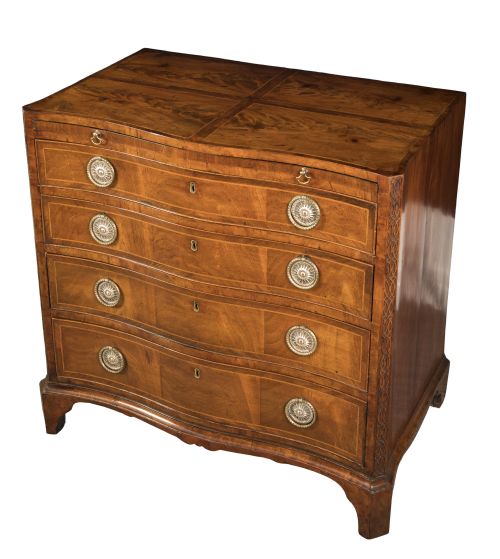
- A curved shape featuring a convex centre flanked by concave sides, creating an undulating front profile. This sophisticated contour appears on higher-end drawer fronts and cabinet bases.
- Satinwood inlay
- A decorative technique using contrasting light-coloured exotic timber inserted into a darker primary wood surface. Cabinetmakers employed this method to create geometric borders and floral motifs on late eighteenth-century furniture.
- Wall hanging
- A cabinet configuration built without floor support, designed to be secured directly to wall studs through internal fixing points. These units maximise floor space in smaller rooms.
Period Corner Storage: Frequently Asked Questions
How do I hang a heavy antique corner cupboard?
Wall-hanging corner cupboards require secure anchoring into solid masonry or substantial timber wall studs using appropriate weight-bearing brackets. Professional installation is recommended to support the substantial mass of old hardwood.
Internal mounting points positioned inside the carcase bear the primary load. Ensuring level placement prevents distortion of the door frame over time.
What is the difference between hanging and standing cupboards?
Hanging corner cupboards attach directly to walls to save floor space, whereas standing models rest firmly on the ground as full-height or waist-high furniture. Standing versions frequently feature two-part construction for easier transport.
Both formats utilise the corner footprint efficiently, but standing variants often incorporate additional drawers or lower display shelves.
How do I identify a George III corner cupboard?
George III pieces typically exhibit classical proportions, refined mahogany or oak surfaces, and understated decorative elements such as satinwood stringing or dentil mouldings. Construction details like hand-cut dovetails and brass H-hinges help confirm the era.
The presence of characteristic period timbers and regional British joinery styles further verifies eighteenth-century origin.
Are these cupboards suitable for modern homes?
These pieces integrate naturally into contemporary interiors by providing functional storage that transforms neglected room angles into display focal points. Their classic timber tones complement both traditional and modern decor.
Cupboard interiors accommodate modern shelving requirements while maintaining period exterior aesthetics.
Why do some corner cupboards have two parts?
Two-part corner cupboards divide into upper and lower sections to simplify transportation and installation of tall, heavy furniture. This modular design was practical for navigating narrow eighteenth-century staircases and domestic architecture.
The horizontal split typically occurs at counter height, occasionally forming a transition between a cupboard and a base cabinet.