





Period Centre Table
A period centre table stands free in a room, offering a functional surface with finished timber on every side.
Period Centre Table
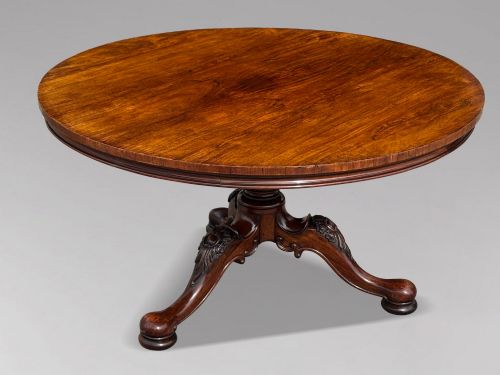
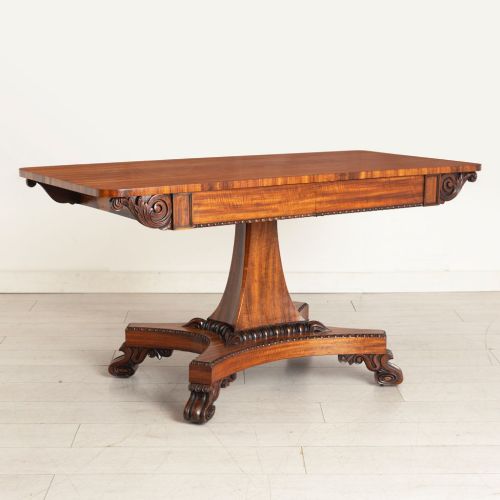
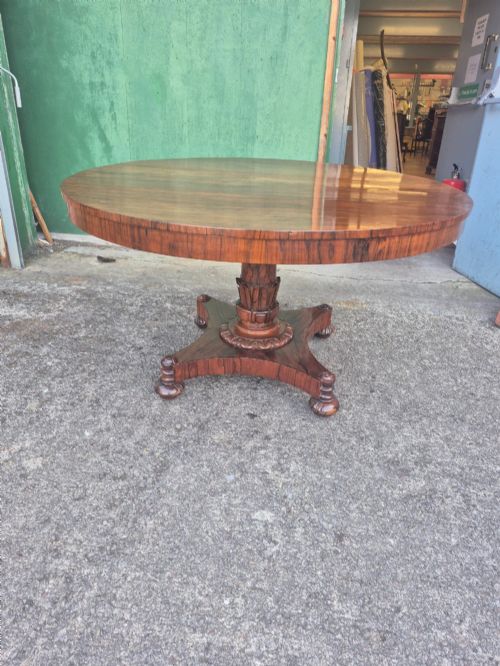
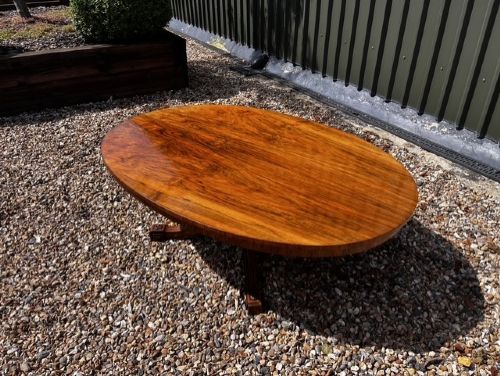
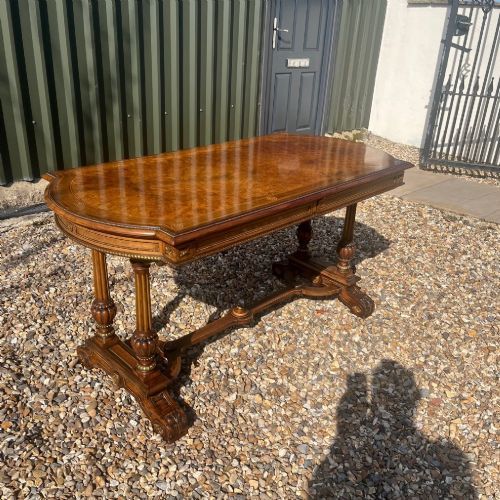
A period centre table stands independently in a room rather than against a wall, meaning every elevation receives finished attention from the maker. These pieces emerge primarily from the Regency, Victorian, and Georgian eras, taking forms such as library tables, breakfast tables, and drum tables. The selections available span robust oak examples from the seventeenth century through to refined mahogany and rosewood creations of the nineteenth century.
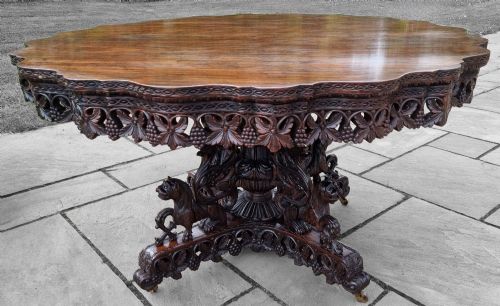
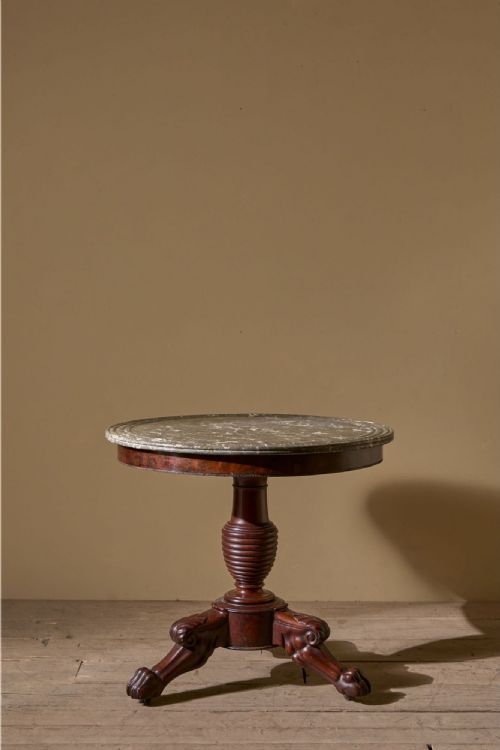
Buyers frequently encounter circular tilt-top breakfast tables alongside rectangular library and occasional forms designed to anchor a principal reception room. The timbers utilised range from native mahogany and oak to exotic imports including gonçalo alves, coromandel, and padauk. Regional variations also appear, encompassing Scottish and Anglo-Indian interpretations alongside French Empire guéridons.
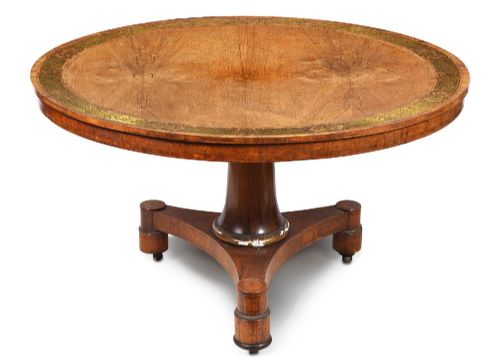
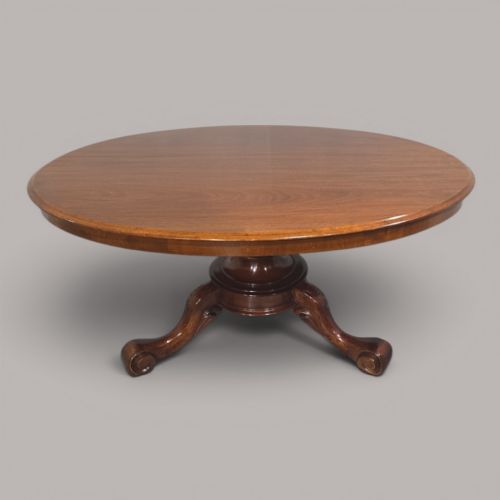
The domestic function of these tables dictated their substantial construction, often featuring a central pillar supported by a tripartite or quadruple platform base with paw feet. Many include tilt mechanisms or rotating tops intended to save space when not in active service. Their presence defines a room by drawing the eye to the middle of the floor space.
Materials and construction
Cabinet makers relied heavily on dense tropical hardwoods such as rosewood and mahogany, frequently applying veneers of burr walnut, amboyna, or satinwood to visible surfaces. These timbers were selected for their pronounced grain patterns and stability when worked into large circular or rectangular tabletops. Solid oak and padauk appear in specific regional or earlier pieces, providing considerable weight and durability.
Decoration involved intricate brass inlay, ormolu mounts, and parcel gilding that accentuated the architectural lines of the pedestal and frieze. Tabletops occasionally incorporate specimen marble or painted sycamore panels, demonstrating specialised surface craftsmanship. Joinery techniques included robust central pillars secured to heavy sub-frames to support the downward pressure of daily use.
Period Centre Table Retail Price Guide 2026
Typical asking prices for period centre table among the pieces listed under this phrase on Sellingantiques today, from the lower quarter to the upper quarter. They describe what is for sale here now, not the wider market.
Listings feature mahogany, rosewood, walnut, and oak across periods ranging from the seventeenth century through to Victorian times.
Markers of distinction
The superiority of a piece rests upon the selection of timber figures and the precision of decorative inlays such as brass stringing or marquetry. Tables featuring continuous single-piece timber tops or flawless exotic veneer matching demonstrate superior workshop standards. Finer examples integrate fire-gilded ormolu mounts and heavy cast brass paw feet that retain crisp casting detail.
Structural integrity and the retention of original mechanisms, such as working tilt catches and stable pillar junctions, separate standard furniture from exceptional pieces. The incorporation of signature hardware or maker attribution adds historical weight to the physical execution of the cabinet work.
Holland and Sons·Gillows of Lancaster
The Period Centre Table Glossary
- Guéridon
- A small French round table on a central pillar, frequently topped with marble or fine veneers. These forms became popular during the Empire and Restauration periods.
- Drum table
- A circular library table with a deep frieze fitted with alternating drawers and dummy drawers, resting on a central column. They allow for generous storage beneath a large writing surface.
- Tilt-top
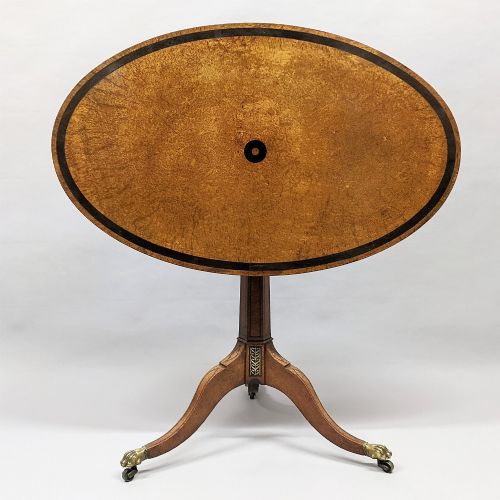
- A tabletop hinged to the upper shaft of the pedestal, enabling the surface to pivot vertically into a locked position. This mechanism facilitated storage against walls when the room was cleared.
- Ormolu
- Gilt bronze ornamentation applied to furniture, cast and chased to achieve sharp decorative detail. It provides a metallic contrast to dark woods like rosewood and mahogany.
- Gonçalo alves
- A dense South American tropical hardwood showing distinctive contrasting dark brown and light golden streaks. Cabinet makers utilised this timber for Regency library and centre tables.
Period Centre Table: Frequently Asked Questions
Where should a period centre table go?
These tables are designed to occupy the middle of a room, allowing unhindered access around all four sides. They serve as a natural focal point beneath a central ceiling rose or chandelier.
Positioning the table away from walls lets the finished backboards, pedestals, and carved feet be fully appreciated. They often hold lamps, books, or decorative objects in a drawing room or library.
What is the difference between a breakfast table and a library table?
Breakfast tables typically feature circular tops supported by a central pillar and platform base, originally intended for morning meals or light tasks. Many include the tilt-top function for convenient storage.
Library tables are generally larger and rectangular, equipped with frieze drawers for stationery and writing materials. They prioritize a stable, expansive writing surface over pivoting mechanisms.
How do I care for antique mahogany and rosewood?
Maintain stable indoor humidity levels and keep the wood away from direct sunlight and heat sources to prevent timber shrinkage and veneer splitting. Periodic dusting with a soft, dry cloth preserves the finish.
Avoid silicone-based sprays, opting instead for traditional beeswax applied sparingly to nourish the grain. This maintains the natural lustre developed over centuries.