

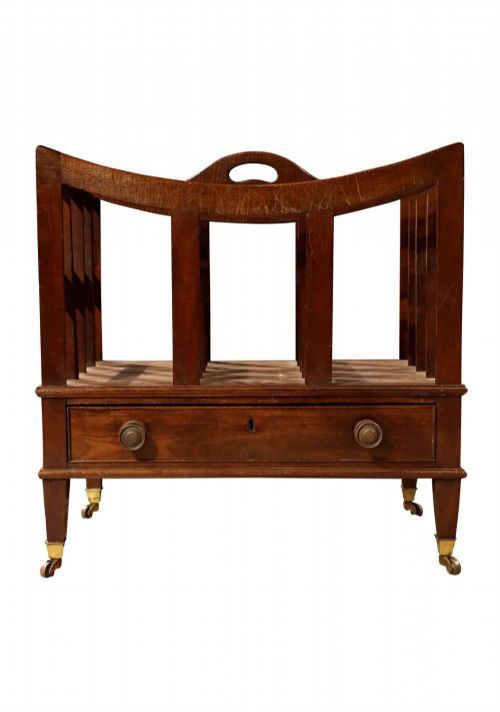
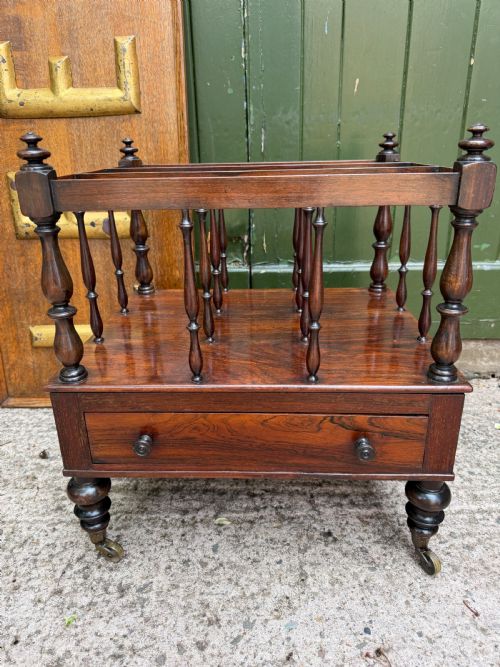


Period Canterbury Stand
A period canterbury stand holds scores, journals and papers in slated or partitioned compartments, uniting tidy utility with fine cabinet-making.
Period Canterbury Stand
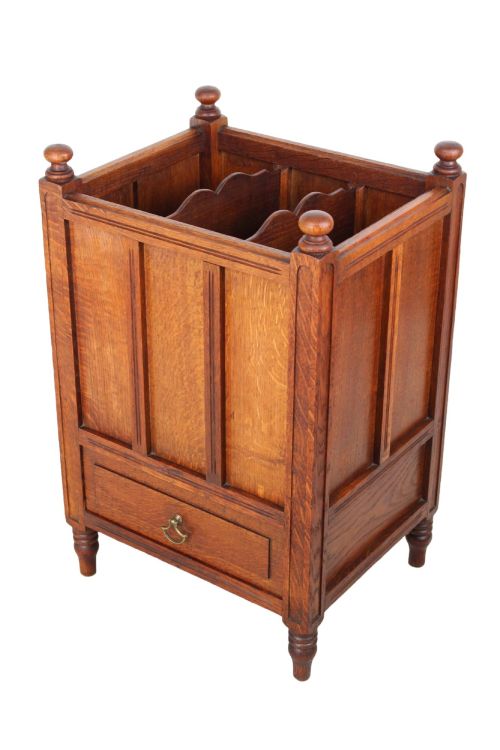
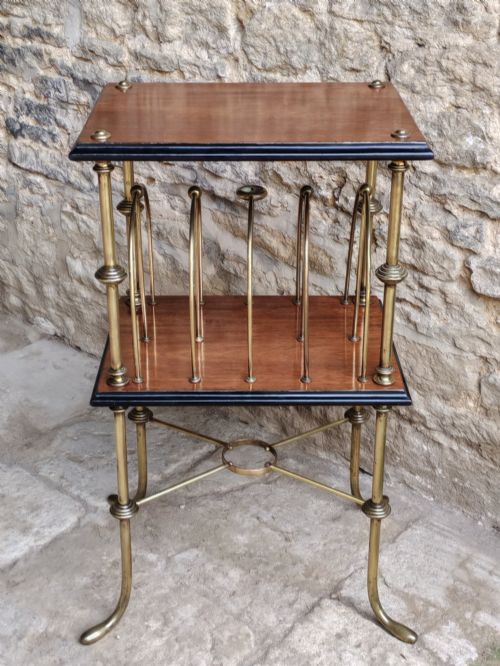
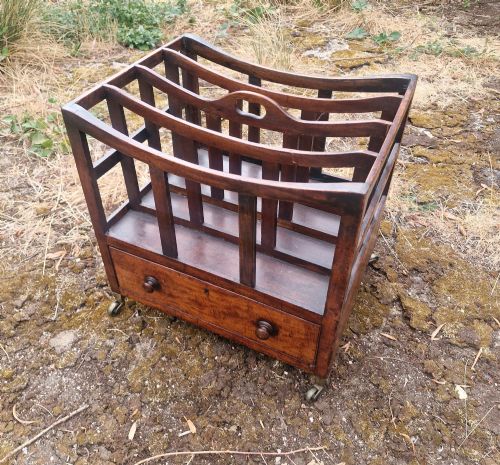
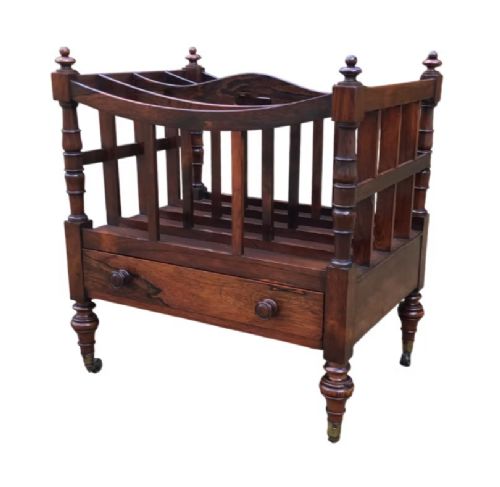
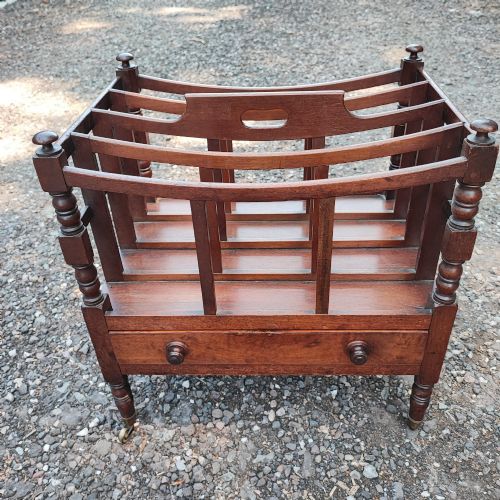
A period canterbury stand is a low piece of furniture designed to hold sheets of music, newspapers and magazines within upright dividers. The form originates in the late eighteenth century and continues through the Victorian, Edwardian and early twentieth-century eras in various woods.
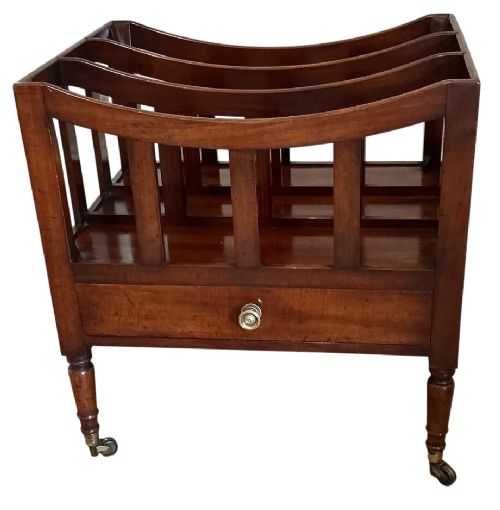
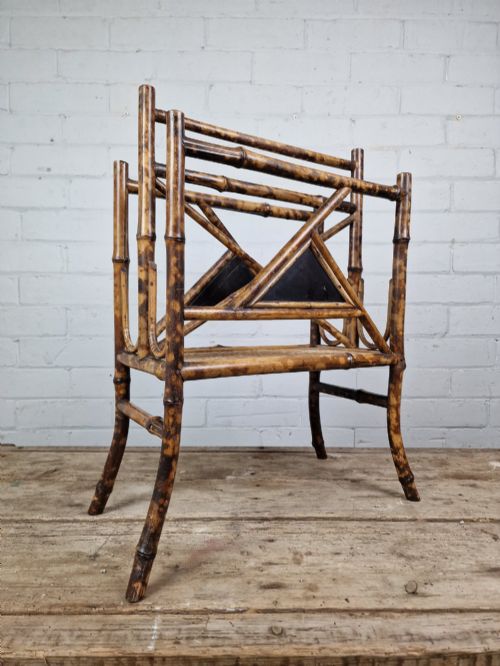
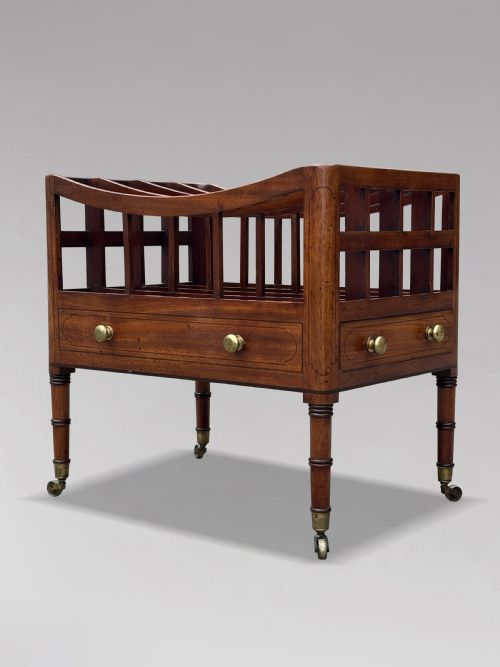
Regency examples appear frequently in mahogany and rosewood, often featuring boat-shaped compartments, turned supports and low castors for movement across a parlour. Later Edwardian and Victorian versions adapt the form to oak, walnut and bamboo, serving as combined magazine racks and display tables.
Markers of quality and execution
Quality rests upon timber selection and the crispness of turned or carved details rather than mere size. Richly figured rosewood and well-figured mahogany signify finer workshops, whereas plain oak or later softwood linings point to utilitarian production.
Proportion and stability define superior pieces, particularly in double-size or boat-shaped formats where weight distribution matters. Refined brass castors and tight joints separate bespoke Regency pieces from standard Edwardian and later catalogue furniture.
Period Canterbury Stand Retail Price Guide 2026
Typical asking prices for period canterbury stand among the pieces listed under this phrase on Sellingantiques today, from the lower quarter to the upper quarter. They describe what is for sale here now, not the wider market.
Listings feature pieces spanning the Georgian, Regency, William IV, Victorian, and Edwardian periods, executed in mahogany, rosewood, oak, walnut, and bamboo.
Gillows
The Period Canterbury Stand Glossary
- Canterbury
- A low multi-compartmented stand originally intended for sheet music and books, later adapted for newspapers and magazines.
- Boat-shaped
- A curved compartment profile reminiscent of a hull, commonly seen on Regency rosewood and mahogany canterburys.
- Etagere
- A set of open tiered shelves for displaying small objects, sometimes integrated into the upper section of a canterbury whatnot.
- Aesthetic Movement
- A late nineteenth-century design style favouring simplicity, oriental influence and materials like bamboo and lacquer.
Period Canterbury Stand: Frequently Asked Questions
What is a period canterbury stand used for?
These stands were originally built to hold folios of sheet music near a piano or harp in the drawing room. Over time, their partitioned bays made them equally suitable for holding daily newspapers, journals and magazines.
Today they function beside a sofa or armchair as practical storage that keeps periodicals upright and organised. Many examples also incorporate a single drawer beneath the racks for smaller items like reading spectacles or writing accessories.
How do I date a mahogany canterbury?
Dating relies on stylistic clues and timber choice rather than strict decades alone. Georgian and Regency pieces typically show dense, rich mahogany with fine brass castors and elegant slatted dividers.
Later Victorian and Edwardian versions often display heavier mouldings, different turning styles on the upright supports, or alternative woods such as oak and burr walnut.
Are all canterburys made of rosewood?
Rosewood appears frequently during the Regency and William IV periods, prized for its dark grain and polished finish. However, makers utilised many other timbers depending on the prevailing fashion of the era.
Mahogany remains common across eighteenth and nineteenth-century examples, while Edwardian and later pieces frequently employ oak, walnut, bamboo or painted finishes.
Can I use an antique canterbury for modern magazines?
The vertical compartments accommodate modern broadsheet newspapers, journals and weekly magazines quite comfortably. Their sturdy timber frames provide reliable daily support without straining the historical structure.
Placing them in a modern living space adds traditional cabinetry while keeping reading material tidy and accessible.