



Period Brown Wood Sideboard
A period brown wood sideboard anchors a dining room with rich timber and historic presence.
Period Brown Wood Sideboard
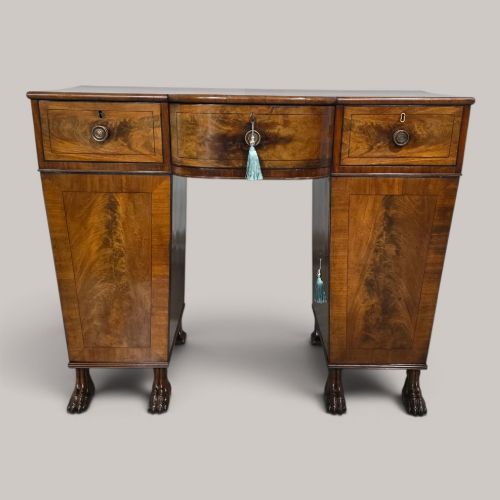
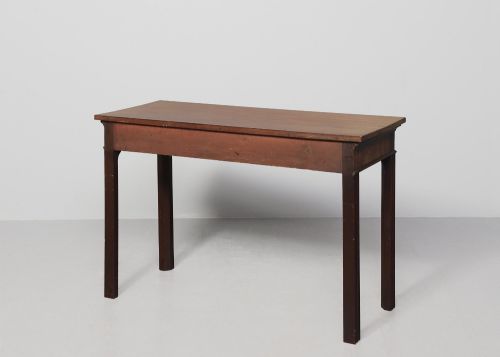
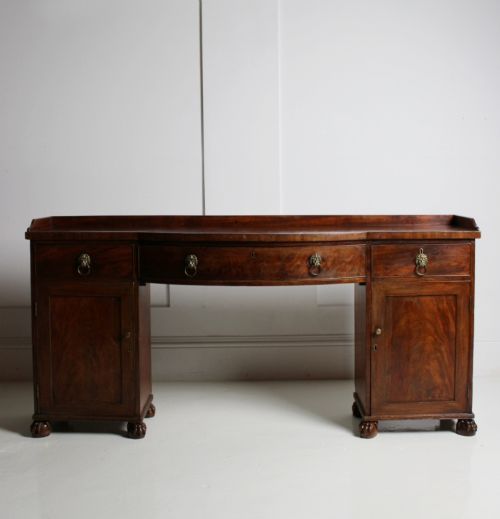
A period brown wood sideboard encompasses dining room storage furniture constructed from timbers like mahogany, goncalo alves, and burr elm across the eighteenth, nineteenth, and early twentieth centuries. These large storage forms range from classic bow and serpentine fronted sideboards to side cabinets, chiffoniers, and commodes.
The Regency and George III periods dominate the selection here, bringing formal British dining furniture into the domestic sphere alongside occasional continental pieces and Japanese tansu chests. Buyers encounter formal serving tables, credenzas, and credenza-style cabinets designed to hold dining silver, linen, and china.
Forms vary from straight-fronted Regency mahogany servers to grand serpentine George III pieces and demilune commodes inlaid with boxwood and satinwood. Each iteration reflects the specific formal dining habits and storage needs of its respective period.
How they were made
Cabinet makers utilised solid timbers alongside flame mahogany and exotic veneers such as amboyna and goncalo alves, laying them over sturdy structural woods to create figured surfaces. Drawer linings and interior partitions typically employed secondary softwoods or oak.
Decorative detailing relies on precision inlays of satinwood and boxwood, complemented by cast brass handles, escutcheons, and occasional iron mounts. French polishing or traditional wax finishes were applied to bring out the natural grain and deep brown colour of the timber.
Period Brown Wood Sideboard Retail Price Guide 2026
Typical asking prices for period brown wood sideboard among the pieces listed under this phrase on Sellingantiques today, from the lower quarter to the upper quarter. They describe what is for sale here now, not the wider market.
A kitchen tansu rubs shoulders with grand Georgian servers, proving historic meal prep had its own clever cabinetry.
What varies in quality
The tier of a piece depends on the choice of timber figure, such as highly figured flame mahogany or choice sections of burr elm, matched across drawer fronts and top panels. Cabinetry skill shows in the tightness of dovetail joints, the smoothness of drawer operation, and the precision of inlaid stringing.
Proportion and the restraint or ambition of the design separate standard utility items from high-style commission pieces made during the Georgian and Regency eras. Original brassware and untouched surface patination add considerable distinction to surviving examples.
The Period Brown Wood Sideboard Glossary
- Serpentine
- A front contour that curves outward in the centre and inward at the ends, creating a gentle undulating shape. This curvilinear form requires advanced cabinet making skill.
- Demilune
- A half-moon shape characteristic of commodes and sideboards from the Georgian period. Such pieces fit flush against a wall while offering a softer profile than a rectangular unit.
- Chiffonier
- A low storage cabinet developed during the Regency and Victorian eras, often featuring enclosed shelving below and a raised gallery or superstructure above.
- Tansu
- A traditional Japanese mobile storage chest constructed from woods such as keyaki, utilising iron hardware for structural reinforcement and locking mechanisms.
- Veneer
- A thin slice of figured wood applied over a stable secondary timber base to create decorative patterns on flat surfaces without warping.
Period Brown Wood Sideboard: Frequently Asked Questions
Where should I place a sideboard?
Sideboards suit dining rooms, large hallways, or living spaces where they provide surface display area and concealed storage for tableware or books.
Ensure adequate floor clearance behind doors and drawers so they open fully without obstruction from nearby furniture.
How do I clean mahogany?
Dust regularly with a soft, dry cloth and nourish the wood periodically using traditional beeswax to maintain the finish.
Avoid placing these items in direct sunlight or near heat sources, which can dry out the timber and cause veneers to lift.
What is a chiffonier?
A chiffonier is a compact enclosed cabinet that typically includes interior shelving and lower doors, evolving from earlier serving tables.
These pieces offer a practical footprint for smaller rooms while retaining period character through figured timber panels and brass mounts.
How do I date a sideboard?
Examine the construction methods, such as hand-cut dovetails on drawers, timber types, and overall decorative style relative to known periods.
Stylistic markers like neoclassical inlay or Regency brass lion-mask ring handles offer strong clues to a piece's decade of origin.