



Period Bronze Chandelier
These period bronze chandeliers bring heavy metalwork and brilliant glass together to illuminate a room with real presence.
Period Bronze Chandelier
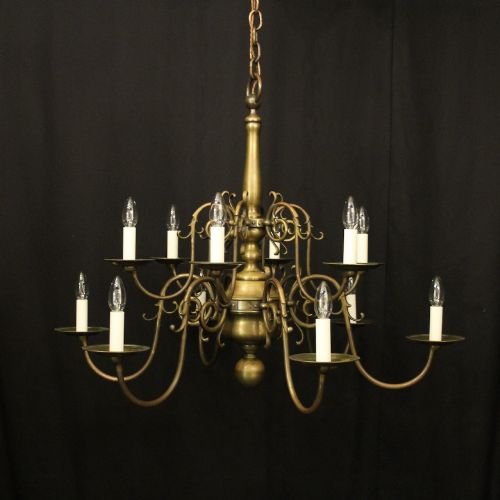
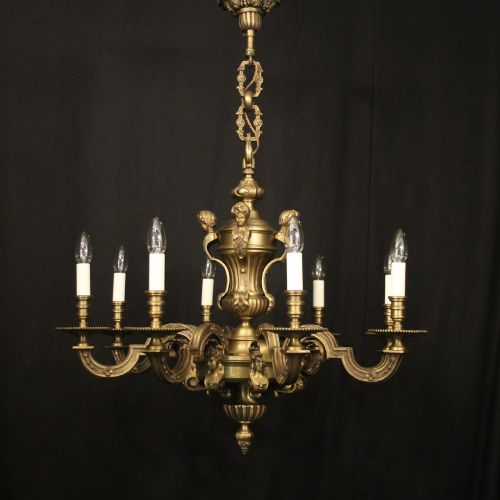
A period bronze chandelier provides overhead illumination through multiple candle arms or electrified sockets arranged in frames of cast metal. When buyers search for a period bronze chandelier, they encounter large multi-light fittings originating from the nineteenth and early twentieth centuries. These fixtures range from simple six-arm designs to massive fifteen-light arrangements hung with crystal.
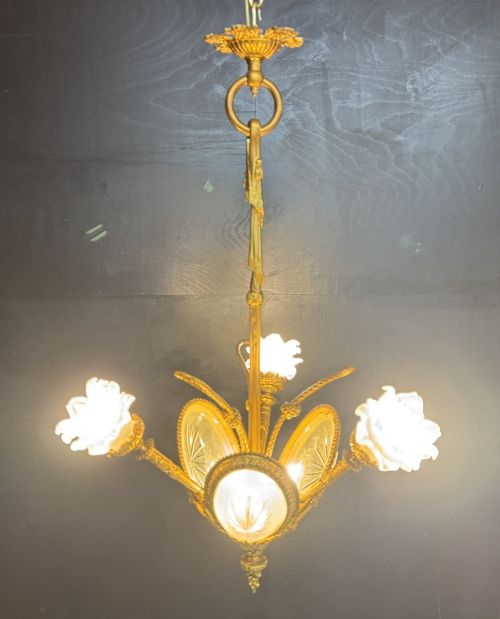
French workshops produced many of the surviving examples in styles such as Rococo Revival, Neoclassical, and Chateau. English makers also contributed substantial fixtures, including Edwardian lanterns and pairs of six-light chandeliers. Most pieces combine bronze or gilded bronze with glass pendants and drops to catch and reflect the light.
Ceiling lights and pendant lighting appear alongside standard chandeliers, often utilising matching brass or frosted glass elements. The forms vary from open cage frames to elaborate constructions ornamented with gilt bronze and cut glass shades. Buyers will find fixtures dated across the Victorian, Edwardian, and Art Deco eras.
Materials and construction methods
Foundries cast bronze and brass in sections before hand-finishing and assembling the arms, centres, and decorative mounts. Many components received a surface layer of gold leaf, gilt, or ormolu to create a rich metallic sheen. Gilded bronze and silver gilded bronze frames hold cut crystal drops and glass beads suspended on small wire pins.
Makers integrated various lighting mediums into these heavy frames as technology advanced, moving from early candle arrangements to later electrification. Some models incorporate frosted glass panels or specialised cut glass shades to diffuse the bulbous light output. Darker finishes, such as bronzed brass or dark cage frames, rely on the deep tone of the metal rather than surface gilding.
Period Bronze Chandelier Retail Price Guide 2026
Typical asking prices for period bronze chandelier among the pieces listed under this phrase on Sellingantiques today, from the lower quarter to the upper quarter. They describe what is for sale here now, not the wider market.
Listings feature pieces from the Victorian and Edwardian eras, alongside items dated from eighteen-hundred to nineteen-twenty.
Assessing quality in antique lighting
The crispness and depth of the metal casting distinguish superior chandeliers from standard production pieces. Finer examples display sharp chisel work on the bronze surfaces and intricate detailing in the foliate or classical mounts. The weight and clarity of the crystal drops also indicate higher standards, with genuine cut glass reflecting light sharply compared to moulded alternatives.
Construction methods reveal the underlying integrity of the fixture, particularly in how securely the arms attach to the central core. Multi-tiered frames with numerous lights, such as ten to fifteen-light configurations, demand robust internal engineering to support the heavy combination of bronze and crystal. Original hanging mechanisms and matched sets of glass shades further elevate a piece.
G.E.C
The Period Bronze Chandelier Glossary
- Bronze
- An alloy consisting primarily of copper, traditionally used for casting durable and ornate metalwork frames.
- Gilt Bronze
- Bronze that has been coated with a thin layer of gold or gold leaf to give a bright metallic finish.
- Ormolu
- A gilded bronze surface application popular in French decorative arts to imitate solid gold ornaments.
- Cage Frame
- An open metal framework structure enclosing the central stem and supporting multiple radiating light arms.
- Electrolier
- An antique lighting fixture originally designed for gas or candles that has been converted to electricity.
Period Bronze Chandelier: Frequently Asked Questions
What periods do these chandeliers come from?
The available fixtures span the nineteenth and early twentieth centuries, including Victorian, Edwardian, and Art Deco eras. Makers also produced pieces referencing earlier French styles like Louis the Fifteenth and the Flemish Renaissance.
Dates cluster around the nineteen-hundreds to the nineteen-twenties, alongside pieces attributed to the wider nineteenth century.
How many lights do these fixtures have?
The listings feature chandeliers ranging from six-light designs up to large fifteen-light configurations.
Most common are the six, eight, ten, twelve, and thirteen-light formats found in French and English country houses.
What materials are used besides bronze?
Makers combined bronze with brass, cut crystal, frosted glass, and silver gilding.
Some pieces feature dark metal cage frames or specialised cut glass shades paired with gilt bronze mounts.
Are these fixtures suitable for standard ceilings?
Many of these pieces are substantial hanging fittings designed for rooms with adequate vertical clearance.
Buyers should check individual dimensions, as weights and drop lengths vary significantly between cage frames, lanterns, and multi-arm chandeliers.