




Period Breakfast Table
A period breakfast table brings timber of deep grain and practical circular form into morning rooms and dining spaces alike.
Period Breakfast Table
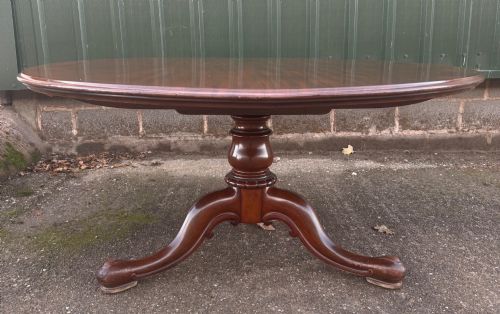
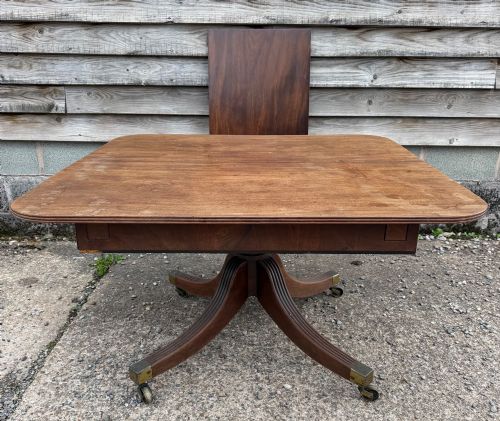
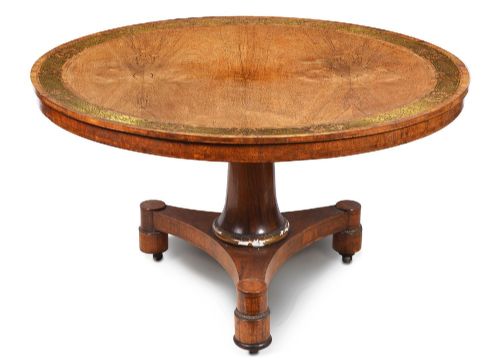
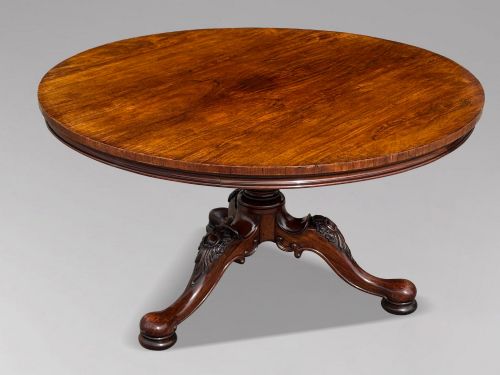
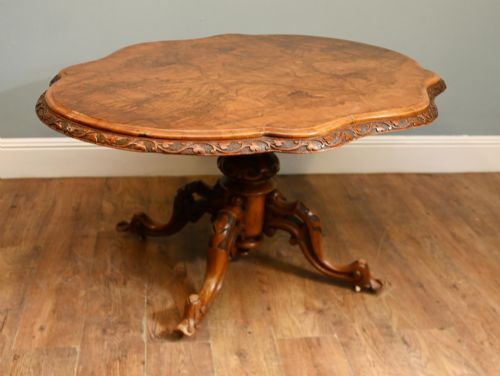
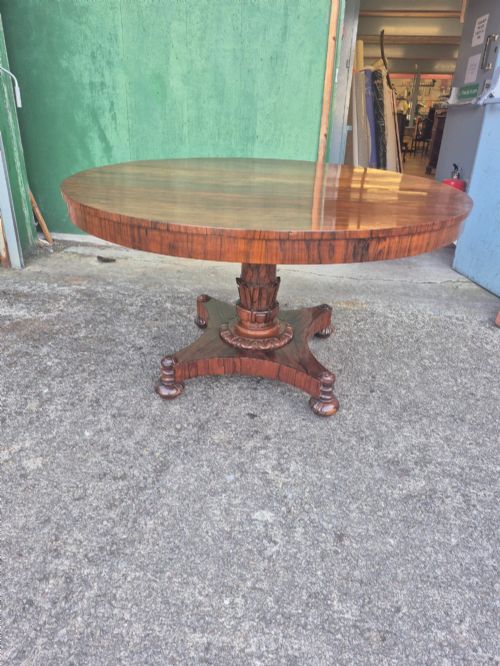
A period breakfast table is a versatile dining or centre piece primarily originating from the Georgian, Regency, and William IV eras. These tables frequently feature circular or oval tops supported by central pedestals or pillar bases, designed to accommodate morning meals or double as centre tables.
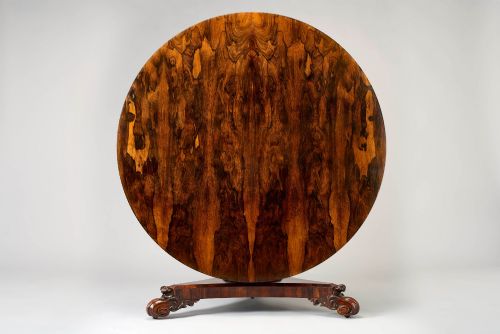
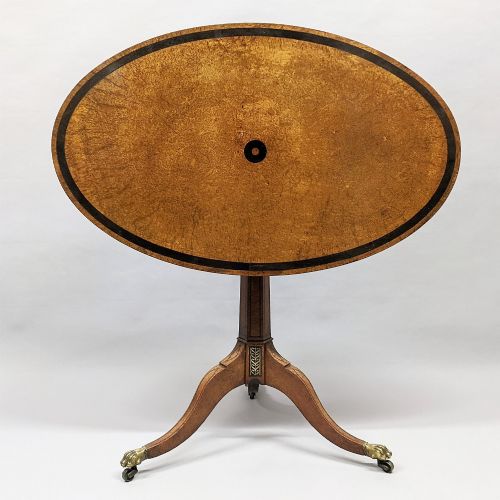
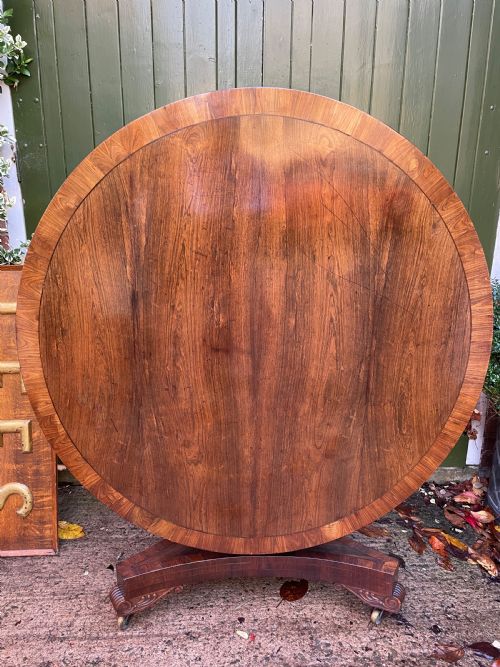
The version most commonly met on this page is the Regency or nineteenth-century rosewood and mahogany circular breakfast table. They span various diameters, sometimes incorporating tilt-top mechanisms that allow the surface to pivot upright when not in use.
Makers and cabinet makers of these periods utilised native and exotic timbers to construct tables that served multiple functions within the home. Whether styled in the manner of Sheraton or Chippendale, each piece reflects the domestic habits of the eighteenth and nineteenth centuries.
Materials and Construction
Cabinet makers constructed these tables using dense hardwoods such as mahogany and rosewood, frequently supplemented by exotic veneers including burr walnut, amboyna, and goncalo alves. These timbers were selected for their rich grain patterns and durability.
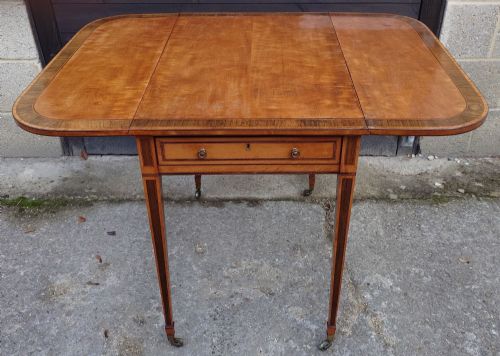
Surface decoration often involved contrasting stringing, satinwood banding, and intricate brass inlay set directly into the timber. Pedestal bases were carved from solid wood, terminating in tripod or platform supports with brass castors.
Tilt-top mechanisms relied on robust wooden catches and metal hinges that enabled the circular top to lock securely into a horizontal position or fold flat for storage.
Period Breakfast Table Retail Price Guide 2026
Typical asking prices for period breakfast table among the pieces listed under this phrase on Sellingantiques today, from the lower quarter to the upper quarter. They describe what is for sale here now, not the wider market.
Some tables tilt so neatly they spent half their lives disguised as giant wooden shields against the parlour wall.
Distinctions in Quality
The upper tier of the range is distinguished by the choice of timber figure, such as a single-piece mahogany top or highly figured rosewood, matched with precise brass inlay and meticulous cabinet work. Lesser examples rely on plainer veneers or simpler construction methods.
Proportion and stability define the architecture of a superior table, where the weight of the solid timber top is perfectly balanced by the pedestal and base. Finer pieces demonstrate crisp carving on the pillar and feet without losing structural integrity at the joints.
James Mein·Chippendale
The Period Breakfast Table Glossary
- Tilt-top
- A hinged tabletop mechanism that allows the surface to pivot vertically for storage against a wall. This design was particularly popular in smaller rooms.
- Pembroke table
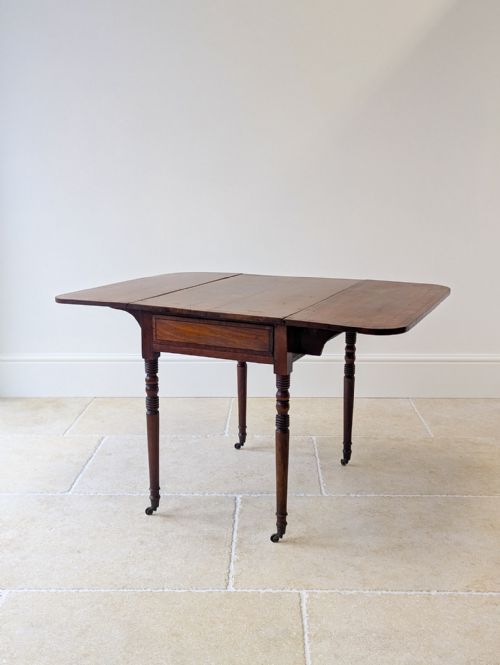
- A small occasional table featuring two hinged drop leaves on opposing sides. It often includes one or more small drawers.
- Centre table
- A freestanding table designed to be viewed from all sides and placed in the middle of a room rather than against a wall.
- Crossbanding
- A strip of veneer applied across the grain of the main surface as a decorative border. It frequently utilises contrasting timbers like satinwood.
- Brass inlay
- The technique of embedding thin strips or geometric patterns of brass into the wood surface for ornamentation. This is characteristic of Regency pieces.
Period Breakfast Table: Frequently Asked Questions
What is a period breakfast table?
A period breakfast table is a freestanding timber table from the Georgian, Regency, or Victorian eras, typically featuring a circular or oval top supported by a central pedestal.
These tables were originally used for morning dining but frequently doubled as centre tables or Pembroke tables within the principal rooms of the house.
How do you use a tilt top?
The tilt-top mechanism allows the heavy wooden surface to pivot from a horizontal dining position to a vertical plane by releasing a brass or wooden catch under the top.
This clever engineering enabled homeowners to push the table against the wall when breakfast concluded, reclaiming valuable floor space in the room.
How do I date a table?
Dating relies on observing the combination of timber, hardware, and stylistic details such as brass inlay, pedestal carving, and veneer selection.
For instance, rich rosewood surfaces combined with intricate brass work point toward the Regency period, while heavier proportions often indicate William IV or Victorian origins.
Where should I place one?
These tables sit naturally as freestanding centrepieces in entrance halls, drawing rooms, or dining spaces where they can be viewed from all angles.
Because many possess circular tops and single pedestals, chairs can be arranged easily around them without obstruction from corner legs.