

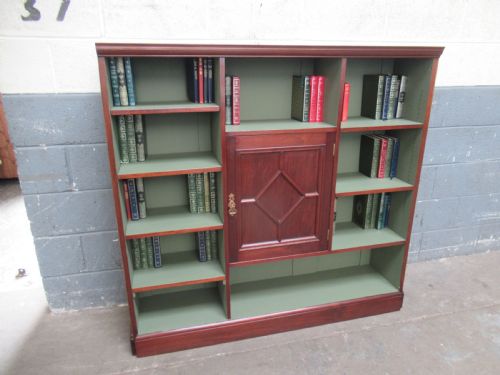


Period Book Shelf
A period book shelf brings warmth and utility to a room through rich timber and clean proportions.
Period Book Shelf
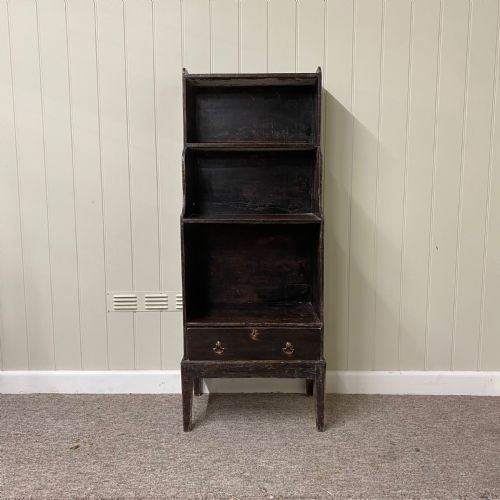
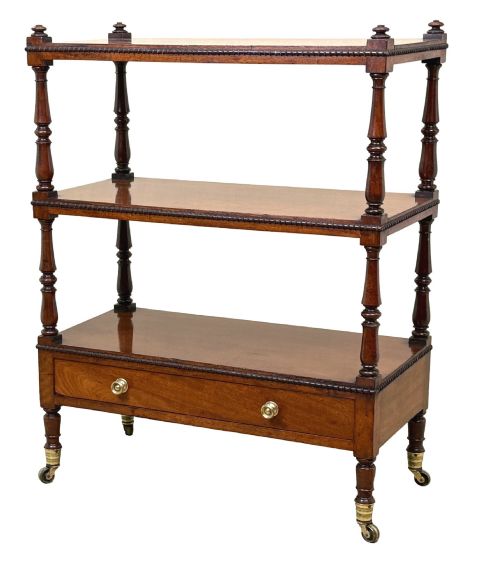
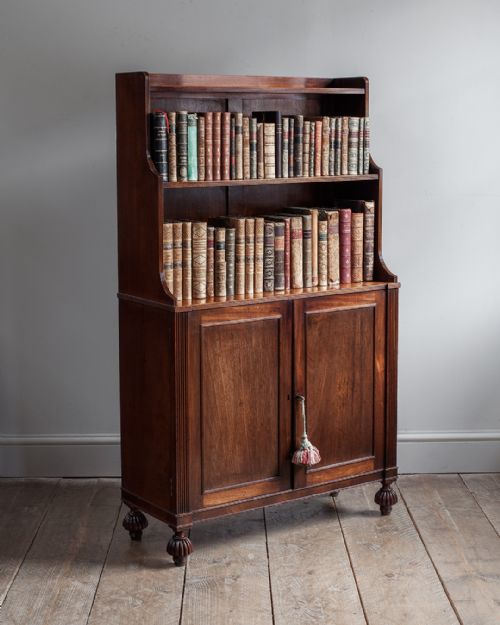
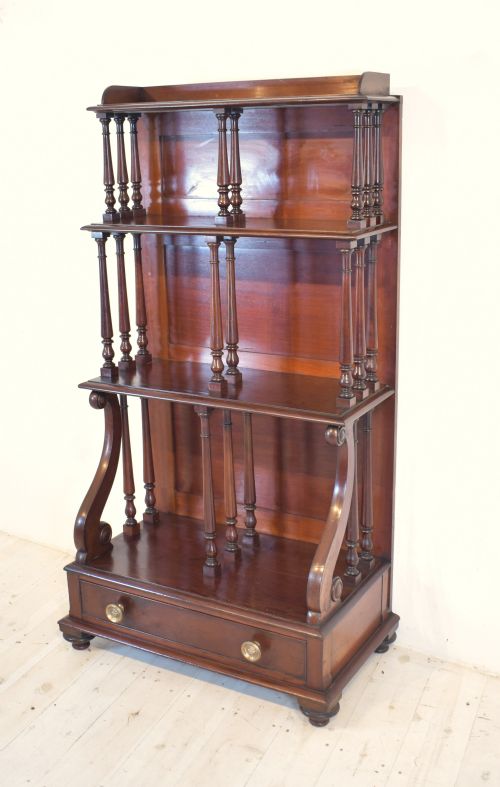
A period book shelf takes the form of open bookcases, multi-tiered étagères, and small side cabinets designed for displaying volumes and ornaments. These pieces span the Regency, George IV, and Edwardian eras, reflecting the domestic tastes of the nineteenth and early twentieth centuries.
The most common examples on this page are mahogany open bookcases and tiered whatnots from the Regency period. They offer adaptable shelving for everyday rooms while retaining the refined lines characteristic of classical cabinet work.
Makers of these items arranged shelves in graduated tiers or built compact cabinet bases to hold books and small possessions securely. Such designs suit modern interiors just as well as they suited the parlours and libraries for which they were first made.
How they were made
Cabinet makers built these pieces using solid timbers and veneers, relying heavily on mahogany and occasionally rosewood for their primary surfaces. Brass accents, leather trims, and parcel gilt details were added to enhance the visual depth of the woodwork.
Construction techniques focused on stability and grain alignment, joining upright supports to horizontal shelves with traditional joinery. Open shelving relied on sturdy structural uprights, while cabinet sections incorporated panelled doors and fitted interiors.
Period Book Shelf Retail Price Guide 2026
Typical asking prices for period book shelf among the pieces listed under this phrase on Sellingantiques today, from the lower quarter to the upper quarter. They describe what is for sale here now, not the wider market.
Listings feature pieces from the Georgian, Regency, and Edwardian periods, constructed in mahogany, rosewood, and paint.
What varies in quality
Quality rests in the selection of timber figure and the crispness of any applied gilding or brass work. Pieces with rich colour and balanced proportions display greater care from the original cabinet maker.
The Period Book Shelf Glossary
- Waterfall bookcase
- A set of open shelves where each tier steps back from the one below it, creating a cascading profile. This form gained popularity during the Regency period.
- Dummy books
- Faux book spines attached to cupboard doors or storage compartments to conceal a recess or cabinet. They give the appearance of a full library shelf.
Period Book Shelf: Frequently Asked Questions
What is a waterfall bookcase?
A waterfall bookcase is a stepped shelving unit where each upper tier is narrower than the shelf beneath it. This creates a cascading silhouette that saves floor space while keeping books visible.
Such pieces appeared frequently during the Regency era in figured mahogany or rosewood. They were designed for parlours and sitting rooms where heavy floor-to-ceiling cabinetry was unnecessary.
How do I use a whatnot?
A whatnot is a multi-tiered stand traditionally used for holding books, ornaments, and small household items. Its open shelves allow for easy access from multiple angles.
In a modern home, these pieces work well in corners or beside seating to display collections. Their slender uprights keep the furniture looking light within the room.
How do I identify Regency furniture?
Regency furniture dates from the early nineteenth century and is characterised by classical restraint, balanced proportions, and architectural details. Pieces often utilise figured mahogany, brass mounts, and subtle parcel gilding.
Makers drew inspiration from classical antiquity, resulting in clean lines and functional forms. Open bookcases and side cabinets from this era prioritise both utility and visual harmony.
Can I put these shelves in modern rooms?
These pieces adapt easily to contemporary interiors due to their compact footprints and warm timber tones. Open bookcases and low cabinets provide practical storage without overwhelming smaller spaces.
Placing books and objects on period shelves adds texture and history to a room. The natural grain of mahogany and rosewood complements both modern and traditional decor schemes.