






Period Bedside Drawers
Period bedside drawers unite practical storage with centuries of cabinet-making, offering compact surfaces and concealed compartments built from rich timbers.
Period Bedside Drawers
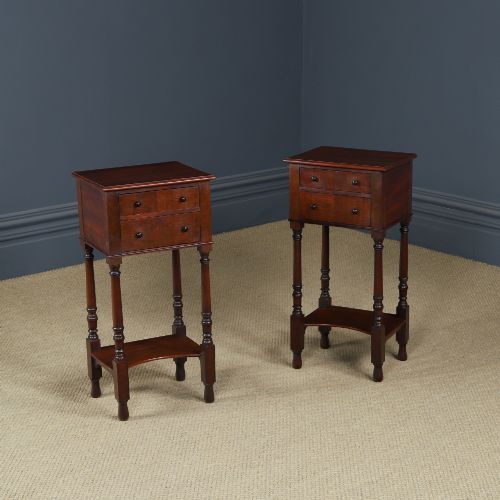
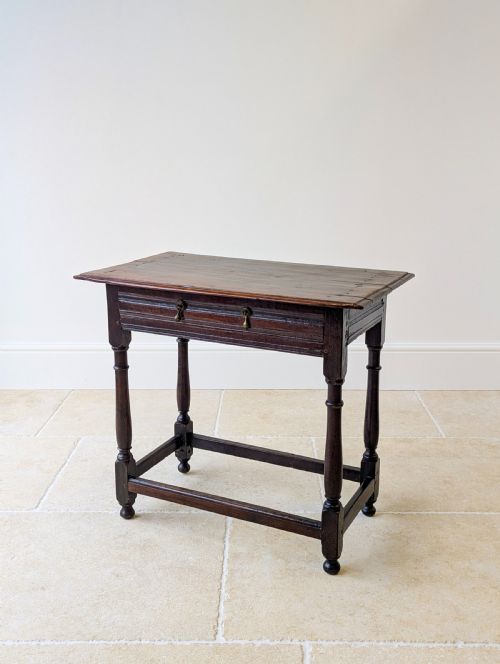
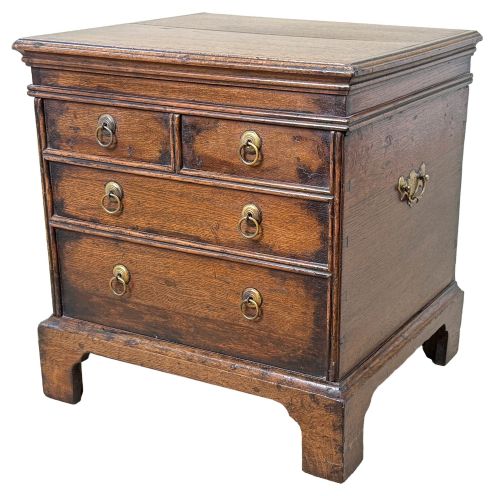
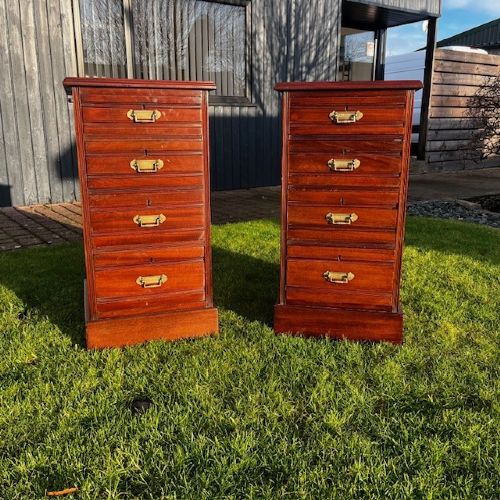
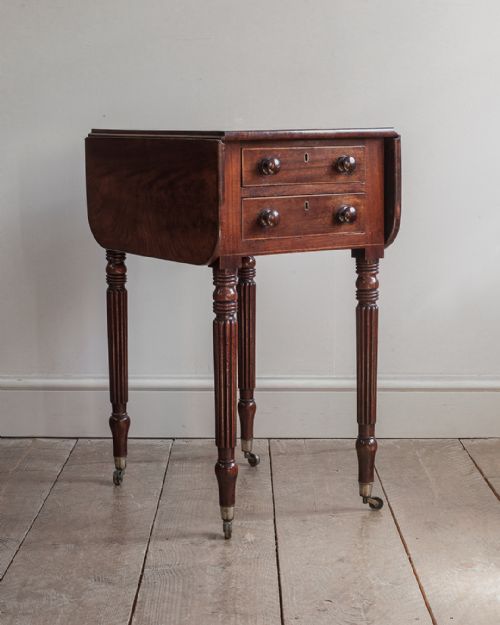
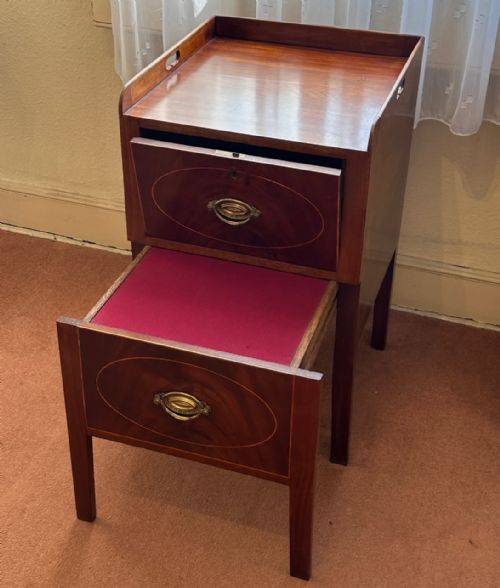
The most frequent examples on this page are mahogany bedside chests and cabinets dating from the Georgian and Regency periods, often featuring compact proportions and enclosed storage. Alongside these, oak side tables and lamp tables from the seventeenth and eighteenth centuries appear, adapted to modern bedside use through their modest scale.
Many of these items originated as close stools, commodes, or work tables before finding a permanent role beside the bed. Their forms vary from serpentine fronts and tray tops to simple rectangular lamp tables, reflecting the changing interior requirements of British homes over three centuries.
Materials and construction
Timbers such as mahogany and oak dominate the construction, selected for structural stability and rich grain patterns that respond well to hand-polishing. Craftsmen utilised solid wood and carefully cut veneers over secondary woods, applying ebony line inlay and brass fittings to define the edges and drawers.
Joinery techniques rely on traditional hand-cut dovetails for drawer construction and pegged mortise and tenon joints for frames. Surfaces often feature distinctive details like tray tops, pull-out steps, and leather inserts, shaped entirely by hand tools during the eighteenth and nineteenth centuries.
Period Bedside Drawers Retail Price Guide 2026
Typical asking prices for period bedside drawers among the pieces listed under this phrase on Sellingantiques today, from the lower quarter to the upper quarter. They describe what is for sale here now, not the wider market.
Listings feature woods including mahogany, oak, walnut, and ebony, supplemented by brass fittings, leather inserts, and fabric details.
Distinguishing quality
The distinction between standard examples and superior pieces rests on the crispness of the carving, the selection of timber veneers, and the preservation of original hardware. Superior items display well-figured mahogany grain matched symmetrically across drawer fronts, alongside precise dovetailing that remains tight after centuries of use.
Design sophistication also separates the range, with scarce forms such as concave fronts, serpentine shapes, or integrated pull-out steps commanding greater interest than simple rectangular tables. The survival of original brass handles, locks, and polished finishes indicates higher workshop standards and careful historical ownership.
The Period Bedside Drawers Glossary
- Close stool
- A piece of enclosed furniture containing a chamber pot, often disguised as a small chest or cabinet before later conversion into bedside storage.
- Commode
- A low cabinet with doors or drawers, originating in France and adapted in Britain during the Georgian period for bedroom and dressing room use.
- Tray-top
- A tabletop edged with a raised wooden gallery to prevent small items from rolling off, frequently found on eighteenth-century bedside tables and commodes.
- Serpentine front
- A furniture front curving outward in the centre and inward at the sides, requiring advanced woodworking skill to construct.
- Line inlay
- A narrow strip of contrasting timber or light-coloured wood set flush into the surface to create decorative geometric borders.
Period Bedside Drawers: Frequently Asked Questions
How do I spot a converted piece?
Examine the interior compartments and drawer configurations for alterations made to accommodate modern plumbing or storage needs.
Original hardware placement and undisturbed timber patination around hinges and joints generally indicate a piece retaining its original function.
Are these drawers suitable for daily use?
These historical pieces handle everyday bedside storage well, though their internal capacities often reflect eighteenth or nineteenth-century requirements.
Careful handling of antique drawer runners and avoidance of excessive moisture helps preserve the structure during daily use.
What timber is most common?
Mahogany appears most frequently across Georgian and Regency examples, valued for its deep reddish-brown tone and strong grain structure.
Earlier pieces from the seventeenth and eighteenth centuries rely predominantly on solid English oak.