

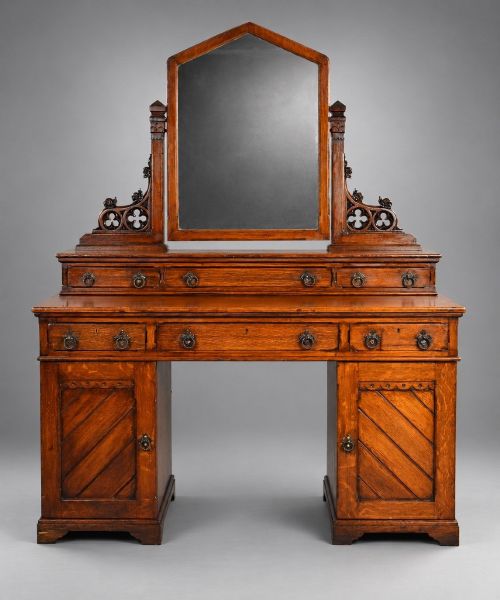
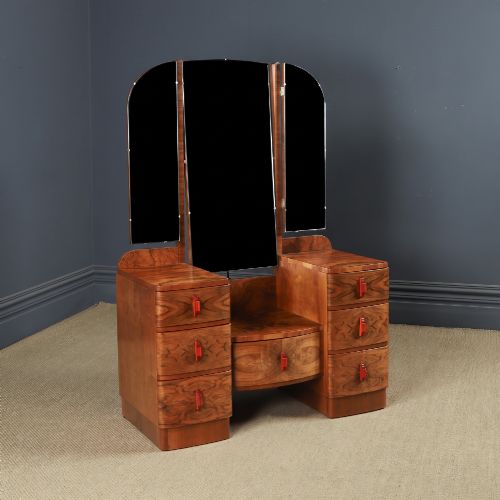
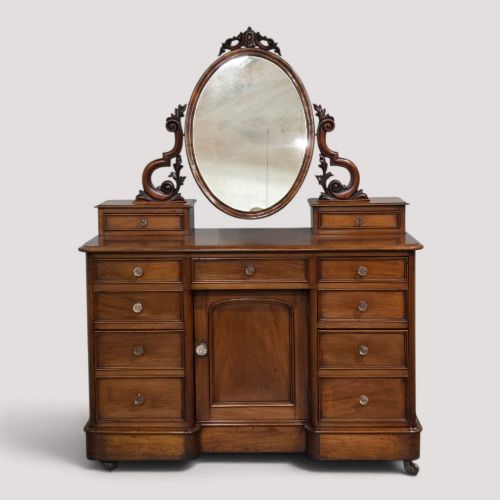
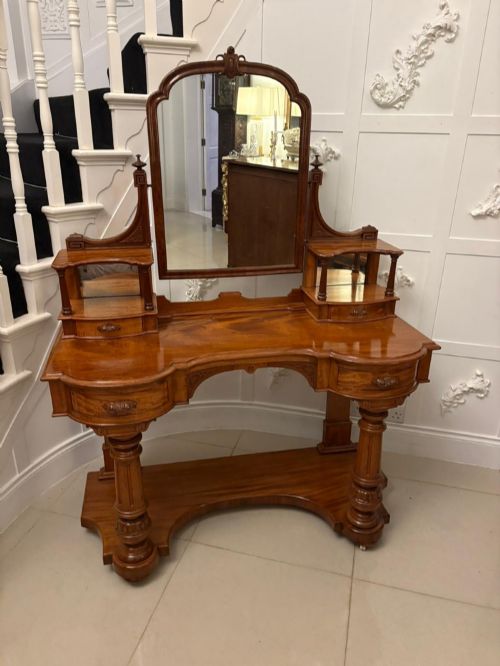
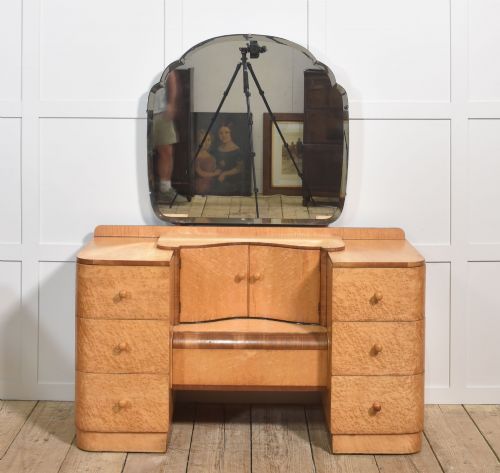


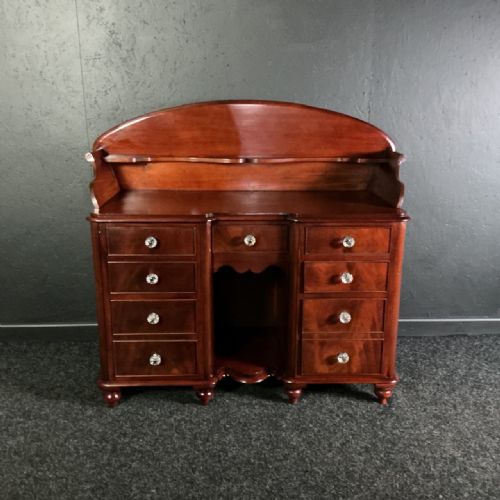


Pedestal Vanity Unit
A pedestal vanity unit brings heavy timber, fitted mirrors and dedicated morning routines into a modern bedroom with genuine period weight.
Pedestal Vanity Unit
A pedestal vanity unit encompasses antique dressing tables, washstands and shaving stands built with supporting side pedestals or upright cupboards. When searching for a pedestal vanity unit, buyers encounter diverse forms ranging from solid Victorian mahogany pieces to sleek Art Deco walnut designs.
The objects appearing on this page span the Victorian, Edwardian and 1930s periods, incorporating materials such as oak, walnut, mahogany, satinwood and mirror glass. Most examples integrate drawers flanking a central kneehole or a raised mirror assembly designed for daily grooming.
Makers and regional schools represented in the inventory include the Cotswold School, Swedish Grace, and prominent London cabinet makers such as Edwards and Roberts, James Shoolbred, and Harry and Lou Epstein. These pieces reflect shifting domestic habits across the nineteenth and twentieth centuries.
How they were made
Cabinet makers constructed these pieces using dense hardwoods including mahogany, walnut and oak, frequently applying finely figured veneers or satinwood inlays to decorative surfaces. Structural stability relied on traditional joinery methods that secured the heavy pedestals and supporting frames.
Glass production yielded the bevelled and sheet mirrors fitted to these dressing chests, while brass hardware provided functional pulls, handles and pivoting mirror brackets. Original decorative paintwork and stencilled details appear on specific nineteenth-century and painted iterations.
Pedestal Vanity Unit Retail Price Guide 2026
Typical asking prices for pedestal vanity unit among the pieces listed under this phrase on Sellingantiques today, from the lower quarter to the upper quarter. They describe what is for sale here now, not the wider market.
Listings span the nineteenth and twentieth centuries, uniting Victorian Gothic Revival, Edwardian inlaid satinwood, and 1930s Art Deco walnut forms.
What varies in quality
The grade of timber selection and the precision of veneer matching distinguish standard commercial output from pieces produced by premier cabinet makers. Figured walnut and burr walnut surfaces demand high joinery skill to maintain grain continuity across multiple drawer fronts and pedestal doors.
The survival of original glass mirrors, integrated hardware, and stencilled decoration significantly influences the integrity of an antique vanity. Pieces retaining their fitted interior compartments and original brass work demonstrate superior historical completeness.
Edwards and Roberts·James Shoolbred·Harry and Lou Epstein·Betty Joel
The Pedestal Vanity Unit Glossary
- Pedestal
- A structural support or column beneath a cabinet, often containing stacked drawers or a cupboard door. In vanity units, twin pedestals flank a central kneehole space.
- Kneehole
- The open central recess beneath the table top that allows a person to sit comfortably on a stool while using the mirror. This void separates the two storage pedestals.
- Marquetry
- Decorative inlay technique where thin pieces of wood veneer are fitted together to form pictorial or geometric patterns on the surface. It appears on select Victorian and Edwardian examples.
- Cheval mirror
- A full-length mirror mounted in a frame that tilts on vertical pivots, frequently incorporated into the upper superstructure of dressing tables and chests.
- Burr walnut
- Timber harvested from walnut tree growths that produce complex, swirling grain patterns. Cabinet makers prized this wood for high-status Victorian and Art Deco facades.
Pedestal Vanity Unit: Frequently Asked Questions
What is a pedestal vanity unit?
A pedestal vanity unit is an antique dressing table, washstand or shaving stand featuring structural side supports that typically house drawers or cupboards.
These pieces combine functional surface areas and mirrors with substantial timber construction originating from the Victorian period through to the 1930s.
How do I date a pedestal vanity unit?
Dating relies on identifying the prevailing style, timber choices, and construction techniques visible in the framework and drawer linings.
Victorian pieces often display heavy mahogany or burr walnut with gothic or carved motifs, whereas 1930s examples favour streamlined walnut or maple associated with Art Deco design.
Where should I place a vanity unit?
Bedrooms provide the natural setting for these pieces, particularly against walls with favourable natural light for the attached mirrors.
Allowance must be made for the depth of the pedestals and the swing space of associated stools or chair seating.
Are the mirrors original?
Many surviving pieces retain their original bevelled or plate glass mirrors, though some have experienced replacement over their lifespan.
Slight oxidation or foxing on the glass often indicates age and authenticity in Victorian and Edwardian examples.