



Pedestal Toilet Mirror
These pedestal toilet mirror designs offer adjustable glass for everyday grooming, bringing period craftsmanship straight to the dressing table.
Pedestal Toilet Mirror
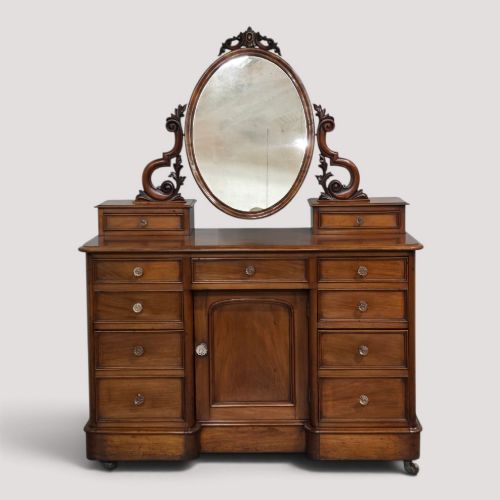
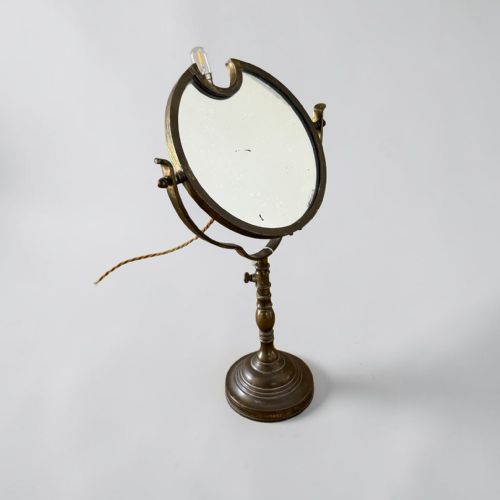
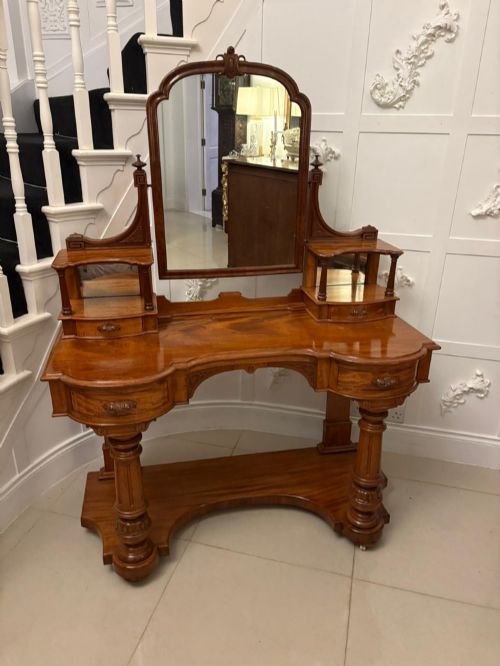
A pedestal toilet mirror serves as a tabletop or freestanding glass for personal grooming and dressing. These objects appear in forms such as shaving stands, vanity mirrors, and dressing table mirrors.
The selection on this page leans heavily toward nineteenth-century and early twentieth-century examples. Victorian and Edwardian pieces dominate the listings alongside occasional French Empire iterations.
Makers shaped these items for practical use in bedrooms and dressing rooms. Mahogany and brass recur frequently as the primary structural and decorative media.
How they were made
Cabinetmakers utilised solid mahogany and satinwood to construct sturdy frames and tripod or pedestal bases. Skilled joiners carved decorative details into the wood whilst brass hardware provided pivoting and telescopic movement.
Foundries cast bronze and ormolu for the heavier French Empire examples, incorporating marble bases for stability. Glassmakers bevelled and silvered mirror plates to fit precisely within adjustable frames.
Victorian gentlemen apparently needed very sturdy tripod stands to endure the morning shave.
What varies in quality
The sophistication of the timber grain and the crispness of the carved ornamentation define the upper tier of these mirrors. Superior examples display thoughtful proportions and robust pivoting mechanisms that hold the glass steady at any angle.
Simpler pieces rely on plain mahogany frames and basic brass brackets without decorative enrichment. The grade of the original mirror glass and the weight of the supporting stand distinguish standard utility items from finer parlour pieces.
The Pedestal Toilet Mirror Glossary
- Pedestal toilet mirror
- A tabletop or freestanding glass mounted on a central pillar or stand designed for dressing rooms. These items allow users to adjust the angle of reflection.
- Shaving stand
- A specialised form of mirror often fitted with telescopic or adjustable height mechanisms for gentlemen's grooming. They frequently incorporate tripod bases or small platforms.
- Ormolu
- Finely chased gilt bronze applied as a decorative mount on French Empire pieces. This technique creates a rich golden contrast against darker materials.
- Telescopic
- A descriptor for stands that can be raised or lowered vertically via a sliding rod. This mechanism allowed users to customise the height of the glass.
Pedestal Toilet Mirror: Frequently Asked Questions
Where were pedestal toilet mirrors used?
These mirrors sat primarily on dressing tables, chests of drawers, or washstands in nineteenth-century bedrooms. They provided a moveable source of reflection for personal grooming before electric lighting became common.
Larger versions stood independently on the floor or on dedicated tables, allowing users to check their attire from multiple angles.
How do I adjust the mirror?
Most period examples utilise side screws or pivot pins fitted into the upright arms of the frame. Tightening or loosening these brass fixings controls the tension that holds the glass in position.
Telescopic models feature a central thumb screw on the vertical shaft to raise or lower the entire frame.
What is the difference between a shaving stand and a vanity mirror?
Shaving stands often feature taller, narrower proportions and adjustable or telescopic stems intended for standing use. They frequently appear with tripod bases or small ledges for shaving equipment.
Vanity mirrors generally rest broader on rectangular or bow-fronted wooden box bases that incorporate small storage drawers.
How do I date a Victorian mirror?
Victorian pieces often display characteristic timber choices such as rich dark mahogany or later satinwood. Cabinet construction methods, dovetailing on any drawers, and the style of the brass fittings offer clues to the specific decade.
Heavier carved motifs point toward mid-nineteenth-century revival styles, whilst simpler lines often suggest later Victorian or Edwardian manufacture.