

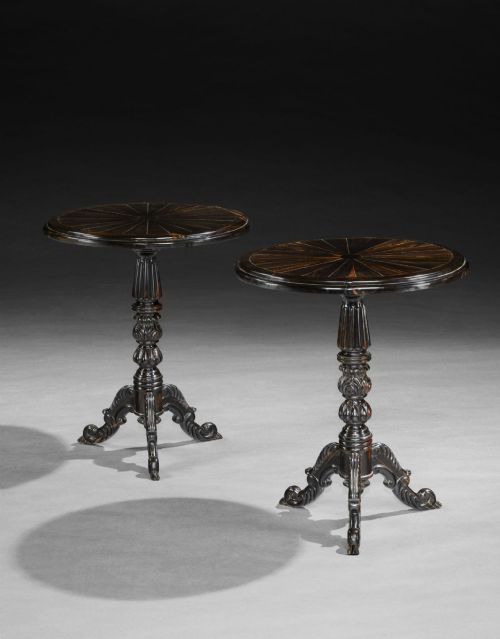
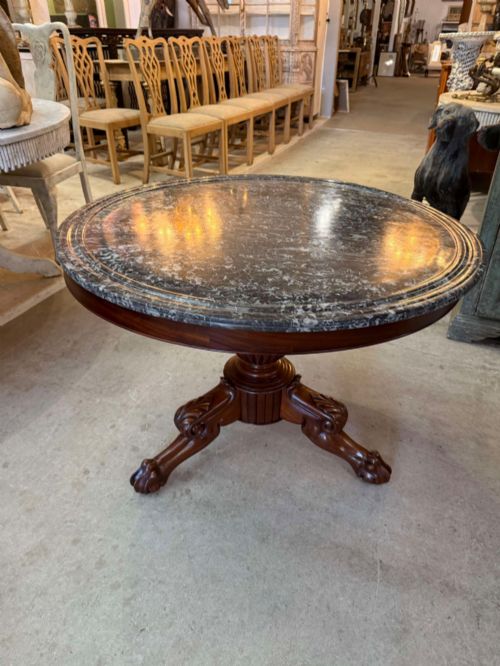
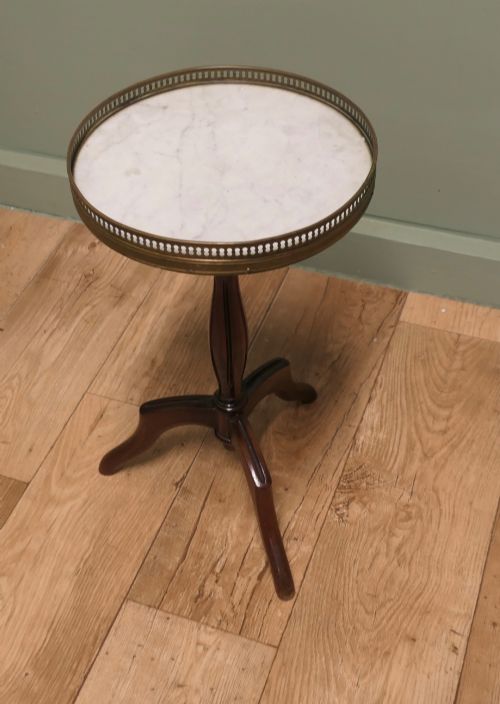
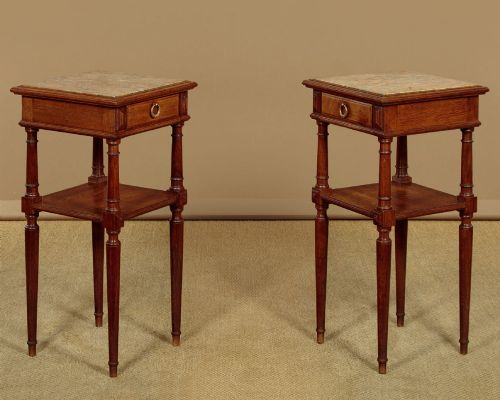
Pedestal Gueridon Table
A pedestal gueridon table brings classic French poise to a room, offering a circular top raised on a single central support.
Pedestal Gueridon Table
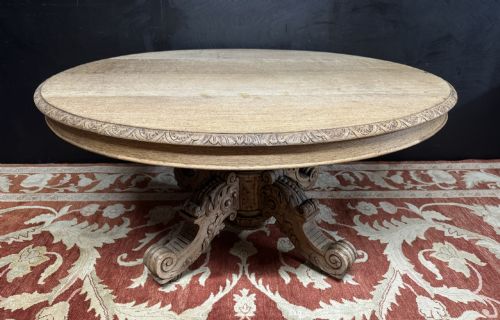
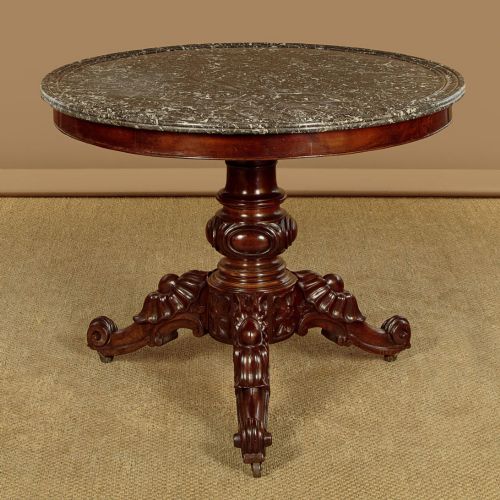
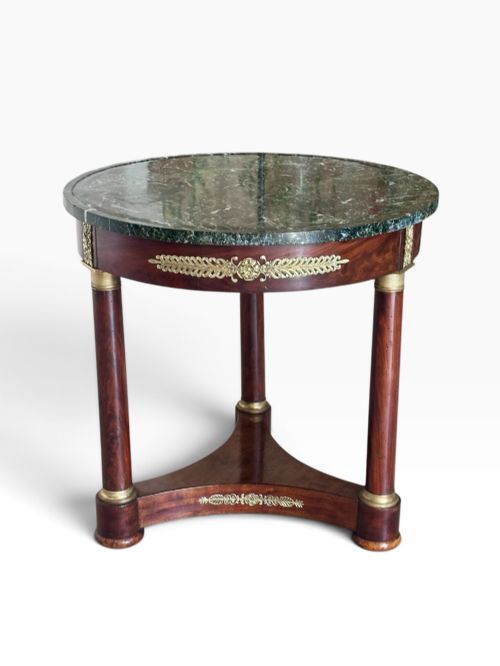
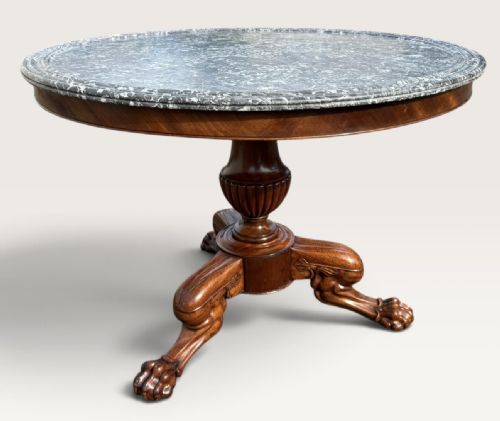
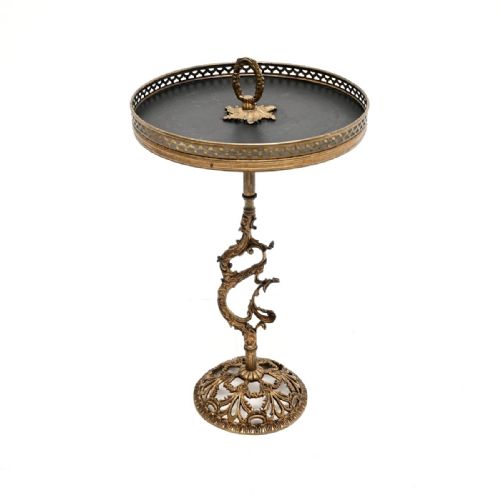
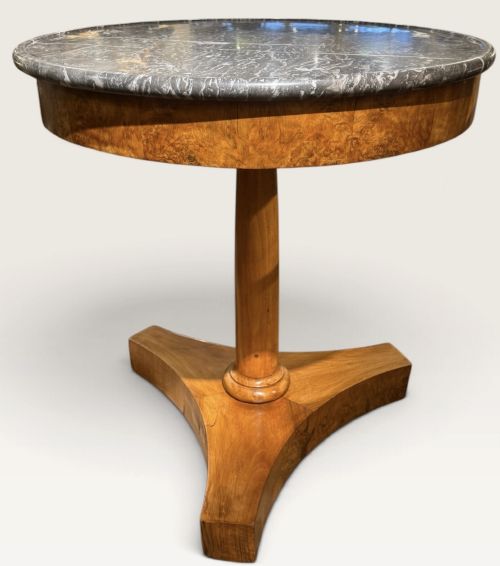
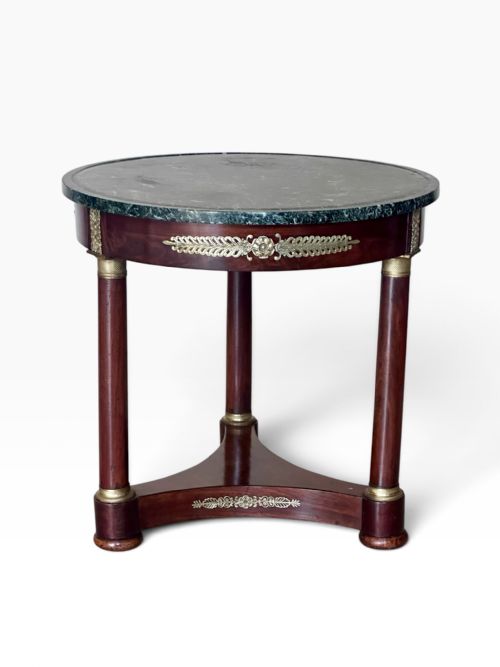
A pedestal gueridon table is primarily a circular French form designed to stand free in a room as a centre table, occasional table or lamp table. Most pieces encountered span the nineteenth century, drawing on French Empire, Louis Philippe and Regency styles with central column supports.
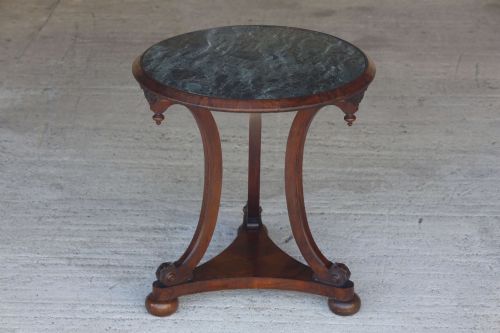
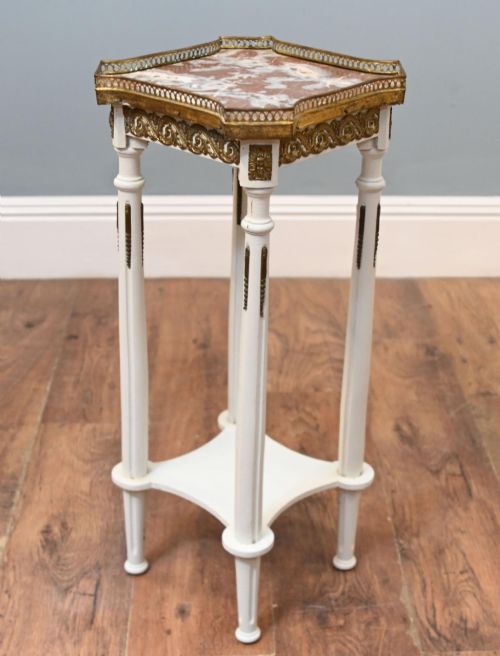
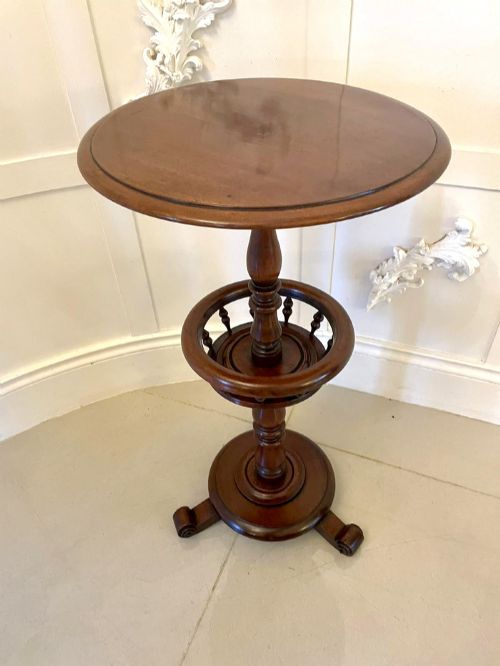
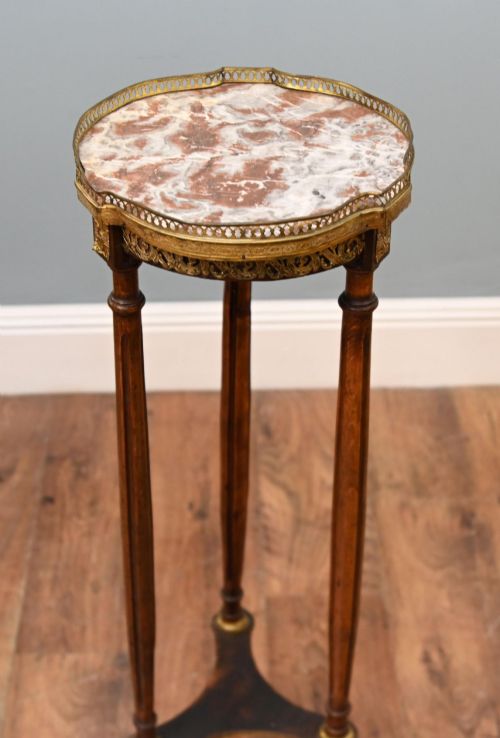
Makers and workshops across France and Britain produced these circular tables in varying diameters, often pairing a stone top with a timber base. Alongside standard centre tables, the selection includes smaller plant stands, pedestals and tripod tables resting on three feet.
Materials and Construction
Construction relies heavily on timbers such as mahogany, walnut and oak, frequently turned or carved to form the central pedestal. Many examples incorporate inset marble or leather tops, held within wooden rims or bordered by chased or gilded brass mounts.
Ornaments of ormolu, brass and gold leaf accent the woodwork, while specific variants utilise specialised materials like birch, lime wood, burr elm, onyx and bronze.
Pedestal Gueridon Table Retail Price Guide 2026
Typical asking prices for pedestal gueridon table among the pieces listed under this phrase on Sellingantiques today, from the lower quarter to the upper quarter. They describe what is for sale here now, not the wider market.
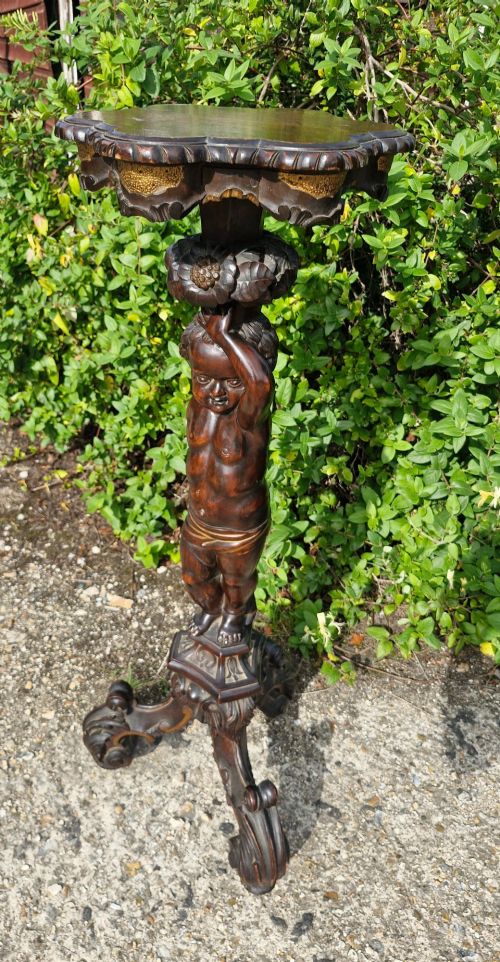
Some nineteenth-century makers experimented with carved Blackamoor figures as pedestals, adding unexpected drama to an otherwise traditional parlour table.
Distinctions in Execution
Quality rests upon the crispness of the carving on the pedestal base and the selection of figured veneers or solid timbers for the circular top. Superior examples display tighter joinery, better weight distribution and finely cast bronze or ormolu mounts rather than plain or stamped metal.
The integrity of the stone top also dictates worth, where a thick, veined marble slab with an intact edge profile surpasses a later replacement. The precision of the turning on the central column and the stability of the tripod or plinth base separate standard utility pieces from finer salon furniture.
A Hugnet Paris·François Linke·Thomas Hope
The Pedestal Gueridon Table Glossary
- Gueridon
- A small French table, typically circular and supported by a single central pillar or pedestal. The form originated in the seventeenth century and remained popular throughout the nineteenth century.
- Ormolu
- Gilded bronze mounted onto furniture as decorative enrichment. The technique involves applying a mercury and gold amalgam to cast bronze before heating.
- Tripod table
- Any table supported by three legs or a three-footed pedestal base. They appear frequently among nineteenth-century occasional and centre tables.
- Centre table
- A freestanding piece designed to be viewed from all sides rather than pushed against a wall. These occupy the middle of a room, often holding lamps or decorative objects.
Pedestal Gueridon Table: Frequently Asked Questions
What is a pedestal gueridon table used for?
These tables function as central display surfaces in a room, holding lamps, books or decorative objects. Their circular tops and single pedestals allow them to sit independently away from walls.
They also serve as occasional or side tables in drawing rooms and hallways, providing a compact surface without blocking walkways.
How do I identify a nineteenth-century piece?
Look at the construction methods underneath, including hand-cut screws, timber shrinkage and traditional joinery. Nineteenth-century examples often feature dense mahogany, walnut or birch paired with heavy marble slabs.
Style indicators such as French Empire or Louis Philippe proportions also point directly to this era. Secondary woods inside the frame offer further clues to the period.
Are the marble tops original?
Original marble tops generally fit snugly into the wooden rebate with matching edges and weight distribution suited to the base. They show uniform ageing, minor surface wear and matching patination to the underlying frame.
Replacement slabs often sit slightly out of alignment or display different thickness and veining compared to period peers.
Where should I place a tripod table?
A tripod base allows the table to stand firmly on antique floorboards without wobbling. Position it beside a seating area as a lamp table or in an open corner as a plant stand.
Because the design lacks corners, it fits comfortably into tighter spaces where a rectangular table would obstruct movement.